
Soothe Digestion Naturally: Peppermint Oil Benefits & Safety
Peppermint Oil for Digestive Discomfort: Benefits, Safety, and Uses
Gastrointestinal discomfort is a pervasive health concern affecting millions worldwide, manifesting as bloating, gas, abdominal pain, and irregular bowel movements. While conventional treatments exist, many individuals seek natural, evidence-based alternatives. Peppermint oil (Mentha × piperita L.) stands out as a time-honored botanical remedy with substantial scientific backing for digestive health. This article examines the mechanisms, clinical evidence, safety profile, and practical applications of peppermint oil for digestive discomfort.
What is Peppermint Oil?
Peppermint oil is a volatile essential oil extracted from the aerial parts of the peppermint plant through steam distillation. Its primary active constituents are menthol (30–50%), menthone (15–30%), and smaller amounts of eucalyptol, limonene, and neomenthol. These compounds contribute to the oil’s characteristic cooling sensation, antispasmodic properties, and carminative (gas-relieving) effects.
Mechanism of Action: How Peppermint Oil Works
Peppermint oil exerts its digestive benefits through multiple physiological pathways:
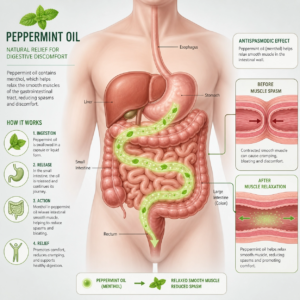
- Antispasmodic Effect: Menthol acts as a calcium channel blocker, relaxing smooth muscle in the gastrointestinal tract. A 2019 study in Digestive Diseases and Sciences demonstrated that peppermint oil significantly reduces colonic spasms via inhibition of L-type calcium channels, comparable to conventional antispasmodics like hyoscine butylbromide.
- Carminative Action: The oil helps expel gas from the intestines by relaxing the lower esophageal sphincter and promoting the passage of flatus. This reduces bloating and abdominal distension.
- Anti-inflammatory Properties: Peppermint oil exhibits anti-inflammatory activity by downregulating pro-inflammatory cytokines such as TNF-α and IL-6, as shown in animal models of colitis. This may benefit inflammatory bowel conditions.
- Antimicrobial Effects: Menthol and menthone demonstrate antibacterial activity against Helicobacter pylori, Escherichia coli, and Salmonella species, potentially supporting gut microbiome balance.
H2: Evidence-Based Benefits for Digestive Discomfort
H3: Irritable Bowel Syndrome (IBS)
IBS is a functional gastrointestinal disorder characterized by abdominal pain, bloating, and altered bowel habits. Peppermint oil is among the most researched natural interventions for IBS.
- A 2020 meta-analysis published in BMC Complementary Medicine and Therapies pooled data from 12 randomized controlled trials (RCTs) involving 835 participants. Results showed that peppermint oil significantly reduced IBS symptoms compared to placebo, with a relative risk reduction of 42% for global symptom improvement.
- Enteric-coated peppermint oil capsules are particularly effective because they release the oil in the small intestine rather than the stomach, reducing the risk of heartburn. A landmark 2016 RCT in The American Journal of Gastroenterology found that 63% of patients taking enteric-coated peppermint oil (two capsules three times daily) reported moderate to significant symptom relief versus 31% with placebo.
H3: Functional Dyspepsia
Functional dyspepsia involves upper abdominal discomfort, early satiety, and nausea. Peppermint oil, often combined with caraway oil, shows promise.
- A 2022 systematic review in Frontiers in Pharmacology analyzed 8 RCTs on peppermint and caraway oil for dyspepsia. The combination was more effective than placebo for reducing epigastric pain and postprandial fullness, with an effect size of 0.64 (moderate).
- The proposed mechanism involves accelerated gastric emptying and relaxation of the gastric fundus, as confirmed by a 2018 gastric emptying study using scintigraphy.
H3: Nausea and Vomiting
While ginger is more recognized for nausea, peppermint oil offers adjunctive benefits:
- Inhalation of peppermint oil aroma reduced postoperative nausea in 57% of patients compared to 37% in the placebo group, per a 2017 RCT in Journal of PeriAnesthesia Nursing.
- For chemotherapy-induced nausea, a 2020 study in Complementary Therapies in Medicine found that topical peppermint oil applied to the abdomen reduced nausea severity by 40% when used with standard antiemetics.
H3: Bloating and Flatulence
- A 2019 crossover trial in Nutrients demonstrated that enteric-coated peppermint oil reduces abdominal bloating by 30% more than placebo over 4 weeks, with improvements in stool frequency and consistency.
- Peppermint oil’s carminative effect is rapid: many users report noticeable gas relief within 30–60 minutes of ingestion.
H2: Practical Uses and Administration
H3: Forms of Peppermint Oil
| Form | Typical Dosage | Best For |
|---|---|---|
| Enteric-coated capsules | 0.2–0.4 mL (182–225 mg) taken 1–3 times daily | IBS, functional dyspepsia |
| Gastro-resistant softgels | 0.4–0.8 mL as needed before meals | Bloating, flatulence |
| Topical (diluted) | 2–5 drops in a carrier oil (e.g., coconut, jojoba) applied to abdomen | Nausea, localized cramping |
| Aromatherapy (inhalation) | 3–5 drops in a diffuser or hot water for steam | Nausea, motion sickness |
Dosage Guidelines:
- For IBS: Enteric-coated capsules containing 0.2–0.4 mL (187–374 mg) of peppermint oil, taken 30–60 minutes before meals, up to three times daily.
- For acute bloating: 0.4–0.8 mL in a capsule or 5–10 drops of diluted oil massaged clockwise on the abdomen.
- Duration: Most clinical trials lasted 4–8 weeks; extended use beyond 3 months is not well-studied.
H3: How to Use Safely
- For Oral Intake: Always choose enteric-coated or gastro-resistant formulations to prevent gastric irritation. Swallow capsules whole with water.
- For Topical Use: Dilute 1 part peppermint oil with 3–4 parts carrier oil (e.g., fractionated coconut oil) to avoid skin irritation.
- For Inhalation: Add 3–5 drops to a diffuser or bowl of hot water; inhale for 5–10 minutes.
H2: Potential Side Effects & Precautions
While generally safe when used appropriately, peppermint oil carries specific risks that demand attention.
Side Effects
| Side Effect | Frequency | Description |
|---|---|---|
| Heartburn/GERD | Common (10–30%) | Most frequent adverse effect, especially with non-enteric capsules; menthol relaxes the lower esophageal sphincter |
| Perianal irritation | Uncommon (1–5%) | Cooling sensation at the rectum due to unabsorbed menthol |
| Allergic reaction | Rare (<1%) | Skin rash, urticaria, angioedema |
| Headache | Rare | May occur with high doses or prolonged use |
| Nephrotoxicity | Extremely rare | Only with massive overdoses (>100 mL undiluted oil) |
Contraindications
- Gastroesophageal Reflux Disease (GERD): Peppermint oil may worsen heartburn by relaxing the esophageal sphincter. Avoid oral forms or use enteric-coated capsules only.
- Gallstones: Peppermint oil may stimulate bile secretion; use with caution in cholelithiasis.
- Hiatal Hernia: Increased risk of acid reflux.
- Pregnancy and Lactation: Safety data are limited. Topical use in small amounts is likely safe, but oral use should be avoided during the first trimester. Consult a healthcare provider.
Drug Interactions
- Cyclosporine: Peppermint oil may reduce cyclosporine levels through accelerated metabolism (CYP3A4 induction).
- Antacids and Proton Pump Inhibitors: May alter gastric pH, potentially affecting the release of enteric-coated capsules.
- Iron Supplements: Peppermint may reduce iron absorption; space intake by 2 hours.
Special Populations
- Children under 8 years: Avoid oral peppermint oil due to risk of laryngospasm and respiratory depression (from menthol). Topical use is permitted only when well-diluted.
- Elderly: Increased risk of dry mouth and dental erosion from menthol lozenges.
H2: Interactions with Medications and Conditions
- Anticoagulants (e.g., warfarin): Menthol may theoretically enhance anticoagulant effects; monitor INR if using topically in large amounts.
- Diabetes Medications: Peppermint oil may lower blood sugar; use caution with hypoglycemic agents.
- Liver Disease: Peppermint oil is metabolized in the liver; avoid excessive doses.

H2: Frequently Asked Questions (FAQ)
Q1: How quickly does peppermint oil work for bloating?
Most users report relief within 30–60 minutes after oral ingestion. Enteric-coated capsules may take slightly longer