Hantavirus May 2026 Update: Immune Support for Calm Wellness
Hantavirus May 2026 Update: What You Need to Know & Natural Immune Support Strategies
Introduction
In May 2026, news broke about a confirmed outbreak of Hantavirus among passengers on a cruise ship traveling through the South Atlantic Ocean. While headlines may feel alarming, the World Health Organization (WHO) has clearly stated that this incident is not a pandemic and remains isolated. The risk to the general public remains extremely low. At HealthMedHub, we believe in staying informed without fear. Understanding the facts about Hantavirus—its transmission, symptoms, and prevention—empowers you to protect your health naturally and confidently.
What is Hantavirus & How It Spreads
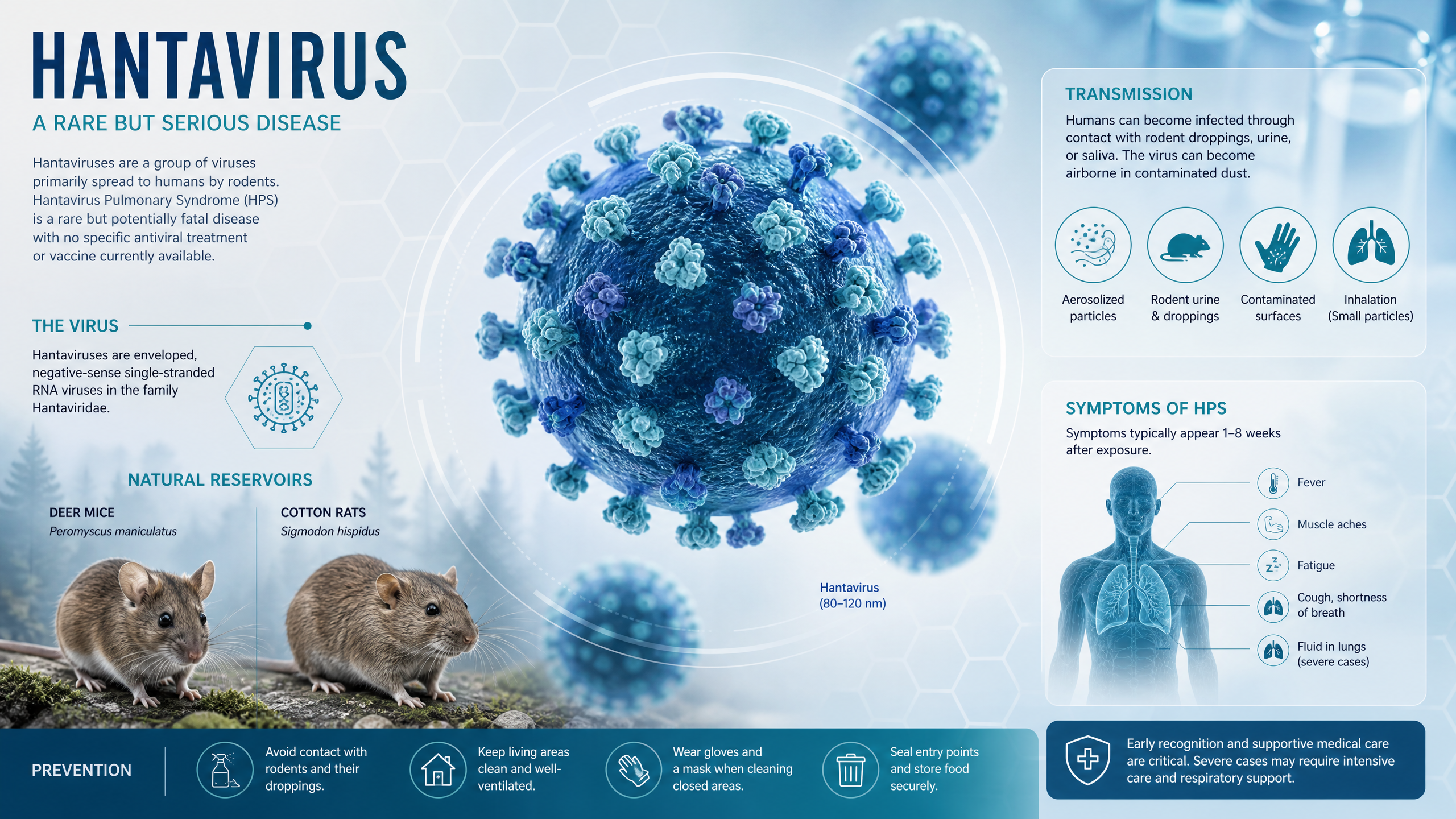
Hantavirus is a family of viruses that can cause severe respiratory and kidney diseases in humans. According to the provided Arabic text, the virus is primarily carried by wild rodents, particularly deer mice, cotton rats, and rice rats. Humans typically contract Hantavirus by inhaling aerosolized particles from rodent urine, droppings, or nesting materials. The virus does not spread from person to person in most strains, making direct human-to-human transmission exceedingly rare.
Key transmission facts:
- Exposure occurs when disturbing rodent habitats (e.g., cleaning sheds, cabins, or barns)
- Inhalation of dust contaminated with rodent excretions is the primary route
- The virus cannot survive long in sunlight or dry environments
- No foodborne or waterborne transmission is documented
Recognizing the Signs: Flu-Like Symptoms and Severe Syndromes
Hantavirus infection begins with non-specific flu-like symptoms that appear 1–8 weeks after exposure. The provided text highlights two severe clinical outcomes depending on the viral strain:
Early Symptoms (Days 1–5)
- Sudden fever (101°F–104°F)
- Severe muscle aches, especially in the thighs, hips, and back
- Headache, dizziness, and chills
- Nausea, vomiting, or abdominal pain
Hantavirus Pulmonary Syndrome (HPS)
This severe respiratory syndrome affects primarily the lungs. Symptoms progress rapidly:
- Dry cough and shortness of breath
- Rapid heart rate and low blood pressure
- Fluid accumulation in the lungs (pulmonary edema)
- Fatality rate: 30–50% without early hospitalization
Hemorrhagic Fever with Renal Syndrome (HFRS)
This form impacts the kidneys and blood vessels:
- Bleeding tendencies (nosebleeds, gum bleeding)
- Severe back or abdominal pain
- Low blood pressure (hypotension)
- Acute kidney failure in severe cases
Critical reminder: If you experience any respiratory distress after potential rodent exposure, seek immediate hospital care. Time is life-saving.
Practical Prevention: Rodent Control & Hygiene Tips
Prevention focuses on avoiding rodent contact and safely cleaning up potential contamination. The provided Arabic text outlines these essential steps:
Rodent-Proofing Your Environment
- Seal all holes larger than a quarter-inch in walls, floors, and around pipes
- Store food in rodent-proof containers (metal or glass)
- Keep garbage bins tightly sealed and away from living areas
- Remove woodpiles, brush, and debris from near your home
Safe Cleaning Practices (NEVER sweep or vacuum)
- Wear gloves and a mask (N95 or better) when cleaning rodent areas
- Spray droppings with bleach solution (1 part bleach to 10 parts water) before removal
- Let bleach sit for 5 minutes before wiping up
- Use wet mopping instead of dry sweeping
Outdoor Precautions
- Avoid disturbing rodent nests in sheds, cabins, or campsites
- Keep camping gear off the ground
- Do not touch dead rodents with bare hands
The Holistic Approach: Naturally Supporting Your Immune System
Important: There is currently no cure or vaccine for Hantavirus. The treatment for active infection is strictly supportive medical care in a hospital setting. However, maintaining a robust immune system is foundational for overall health and may help your body better handle any viral exposure.
Hydration: Your Body’s First Defense
Proper hydration supports mucous membranes in your respiratory tract, which act as a barrier against inhaled pathogens. Aim for at least 8–10 glasses of filtered water daily. Herbal teas like ginger or elderberry can add immune-supportive antioxidants.
Nutrient-Dense Superfoods for Immune Resilience
Focus on whole foods rich in key nutrients that bolster immune function:
| Nutrient | Food Sources | Immune Role |
|---|---|---|
| Vitamin C | Citrus, bell peppers, kiwi | Stimulates white blood cell production |
| Zinc | Pumpkin seeds, chickpeas, oysters | Supports immune cell signaling |
| Selenium | Brazil nuts, tuna, sunflower seeds | Reduces oxidative stress |
| Quercetin | Onions, apples, green tea | Natural antiviral and anti-inflammatory |
| Vitamin D | Sunlight, fatty fish, mushrooms | Regulates immune response |
Stress Reduction & Restorative Sleep
Chronic stress weakens immune surveillance. Incorporate these practices:
- Mindful breathing (4-7-8 technique for 5 minutes daily)
- Priority sleep of 7–9 hours per night (deep sleep boosts T-cell activity)
- Moderate exercise like walking or yoga (avoid overexertion during illness)
Herbal Allies (Use with Caution)
While no herb treats Hantavirus, these may support overall immune health:
- Echinacea (short-term use for acute stress)
- Astragalus (traditional for respiratory defense)
- Reishi mushroom (adaptogenic immune modulator)
Always consult a holistic health practitioner before starting new supplements.
Potential Side Effects & Precautions
When implementing immune-supportive strategies, be aware of potential interactions:
- High-dose vitamin C may cause digestive upset (start with 500mg daily)
- Zinc supplements can interfere with copper absorption; limit to 40mg daily
- Echinacea may interact with immunosuppressant medications
- Herbal teas can reduce absorption of blood thinners (e.g., warfarin)
- Essential oils (like eucalyptus) must be diluted properly to avoid respiratory irritation
Special precautions:
- Pregnant or nursing women should consult their healthcare provider before taking any supplement
- People with autoimmune conditions should avoid immune-stimulating herbs
- Children are more sensitive to certain herbs; lower doses are necessary
Medical Disclaimer
The content provided on HealthMedHub is for informational purposes only and is not intended as a substitute for professional medical advice, diagnosis, or treatment. Hantavirus is a serious medical emergency requiring immediate hospitalization. Natural approaches described here are for general immune support and do not prevent, treat, or cure Hantavirus. Always seek the advice of your physician or qualified health provider with any questions you may have regarding a medical condition.
References
- World Health Organization. (2026). Hantavirus Outbreak Update: Cruise Ship Incident. Geneva: WHO.
- Centers for Disease Control and Prevention. (2025). Hantavirus: Clinical Features and Diagnosis. Atlanta, GA.
- Jonsson, C. B., et al. (2020). “Hantavirus pulmonary syndrome: pathogenesis, diagnosis, and treatment.” Clinical Microbiology Reviews, 33(2), e00019-20.
- Schmaljohn, C., & Hjelle, B. (2017). “Hantaviruses: a global disease problem.” Emerging Infectious Diseases, 23(8), 1319-1326.
- National Institutes of Health. (2024). Dietary Supplements for Immune Support. Office of Dietary Supplements.