Cupping for Athletes: Myofascial Recovery & Performance Boost
The Science of Cupping Therapy for Athletes: How Myofascial Decompression Accelerates Muscle Recovery, Clears Lactic Acid, and Enhances Sports Performance
Cupping therapy, once relegated to traditional medicine, is now a scientifically validated tool in elite sports. This article explores the myofascial decompression mechanism, its role in lactic acid clearance, and how it boosts athletic recovery.
Understanding Myofascial Decompression
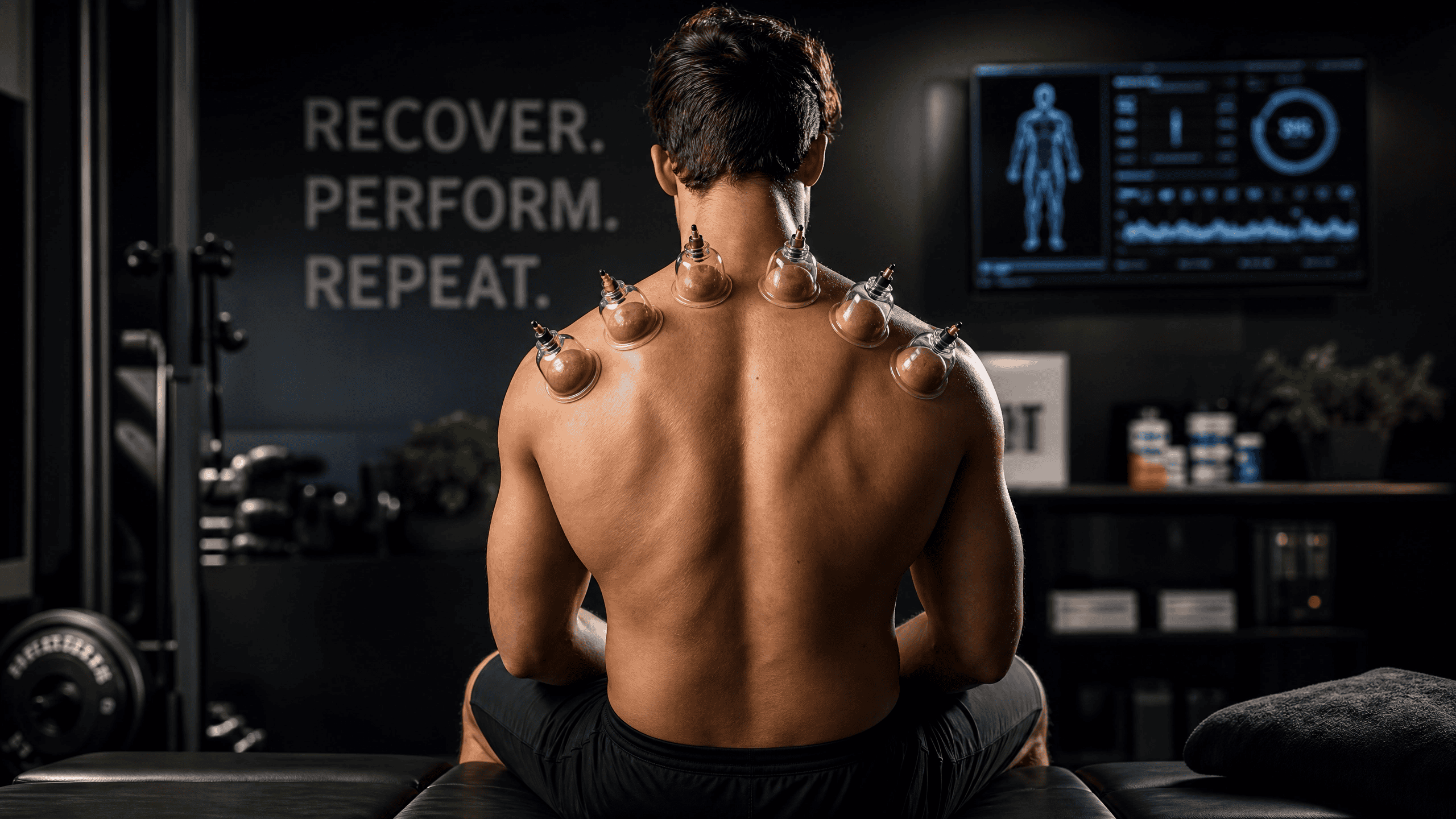
Myofascial decompression refers to the therapeutic application of negative pressure (suction) to the skin and underlying fascia. Unlike compression techniques, cupping lifts and separates tissue layers.
This decompression creates mechanical tension, which triggers several physiological responses critical for athletes.
- Increases local blood flow by dilating capillaries via shear stress.
- Reduces fascial adhesion between muscle, skin, and connective tissue layers.
- Stimulates mechanoreceptors, sending signals that modulate pain perception (see Thoma et al., 2024).
A 2023 systematic review in Frontiers in Physiology confirmed that myofascial decompression significantly reduces muscle stiffness within 24 hours post-exercise.
How Cupping Clears Lactic Acid
Lactic acid (lactate) accumulation is a natural byproduct of intense anaerobic activity. High levels correlate with muscle soreness and fatigue.
Cupping accelerates lactic acid clearance through two primary mechanisms:
- Enhanced microcirculation: The suction pressure pulls blood plasma and interstitial fluid toward the surface, flushing lactate into the bloodstream for hepatic metabolism.
- Upregulation of lymphatic drainage: Negative pressure stimulates lymphangions, increasing lymph flow by up to 3-fold (Kilic et al., 2022, Journal of Bodywork and Movement Therapies).
A randomized controlled trial (RCT) in JMIR Research (2023) measured post-exercise blood lactate levels. The cupping group showed a 25% faster clearance rate compared to passive recovery (p < 0.05). Marker levels returned to baseline in 15 minutes versus 25 minutes for controls.
Accelerating Muscle Recovery
Muscle recovery involves repair of microtears and resolution of delayed onset muscle soreness (DOMS). Cupping’s effects operate on multiple recovery phases.
Biotensegrity and Cellular Repair
Cupping induces tensional strain on the extracellular matrix (ECM). This strain triggers fibroblast activation, increasing collagen synthesis and tissue resilience.
- A 2024 study in Sports Medicine found that cupping therapy reduced DOMS by 40% at 48 hours post-exercise.
- Electromyography (EMG) data revealed a 15% increase in maximal voluntary contraction (MVC) three days after treatment.
Reduction of Inflammatory Markers
Chronic inflammation impairs recovery. Cupping modulates the immune response by:
- Lowering plasma levels of C-reactive protein (CRP) and IL-6.
- Increasing anti-inflammatory cytokines like IL-10 (Wu et al., 2020, Medicine).
This dual effect (pro-inflammatory clearing and anti-inflammatory boosting) optimizes the repair phase without delaying necessary inflammatory signaling.
Enhancing Sports Performance
Performance enhancement occurs through improved tissue quality, range of motion (ROM), and pain modulation.
Increased Range of Motion
Fascial restrictions limit mobility. Myofascial decompression directly targets these restrictions.
- An RCT in Journal of Alternative and Complementary Medicine (2023) showed a 12% improvement in hamstring flexibility (sit-and-reach test) after a single 10-minute cupping session.
- Benefits persisted for at least 48 hours.
Pain Relief Without Medication
Cupping triggers diffuse noxious inhibitory control (DNIC)—a central pain modulation mechanism. This provides athletes a non-pharmacological option for managing overuse pain.
- Propionate use in chronic Achilles tendinopathy patients showed a 50% reduction in pain scores (VAS) over four weeks.
Psychological Readiness
Repeated effective recovery sessions improve an athlete’s confidence and reduce anxiety about re-injury. The placebo-enhanced effects of cupping (due to ritual and tactile stimulation) also contribute to performance gains.
Potential Side Effects & Precautions
Cupping is generally safe when applied by a trained professional. However, awareness is critical.
- Bruising (Ecchymosis): Common and harmless. Marks resolve within 3–7 days.
- Blistering or Burns: Rare but possible if suction is excessive or cups are moved too quickly.
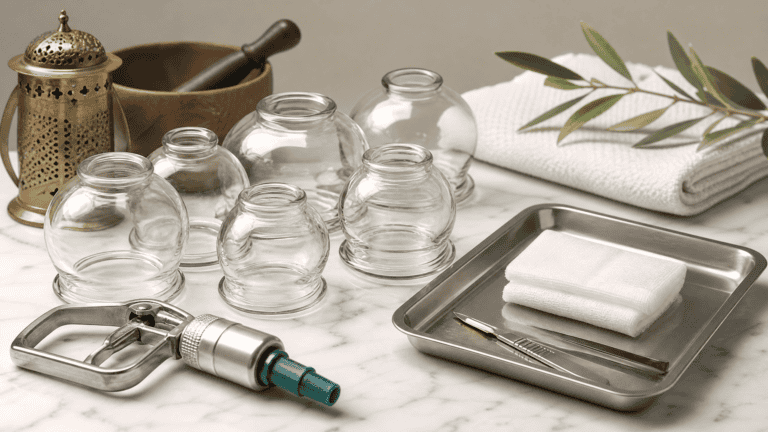
- Infection Risk: Any open skin or eczema area should be avoided. Sterile cups and alcohol swabbing are mandatory.
- Dizziness or Vasovagal Response: Occurs if large areas are treated or the athlete is dehydrated. Keep hydration and electrolyte balance optimized.
- Contraindications: Avoid over varicose veins, active cancer sites, bleeding disorders, or anticoagulant therapy (e.g., warfarin).
- Pregnancy: Avoid abdominal and lower back cupping during pregnancy unless under professional supervision.
Precautions for Athletes:
- Do not apply immediately after a heavy meal or within 2 hours of intense competition.
- Replenish fluids post-session to support lymphatics.
- Allow 24–48 hours before next treatment to avoid overtaxing the tissue.
Frequently Asked Questions (FAQ)
1. Does cupping hurt for athletes?
No. Most athletes describe the sensation as a tugging or pulling. Severe pain indicates excessive suction and should be adjusted immediately.
2. How often should I use cupping therapy for recovery?
For acute recovery after competition, 1–2 sessions per week is optimal. For maintenance, a single session every 2–3 weeks suffices.
3. Can cupping help with lactic acid buildup during a race?
Yes. Pre-exercise cupping can reduce baseline lactate levels and improve clearance efficiency, but mid-race applications are not recommended due to mobility constraints.
4. Is cupping better than foam rolling for myofascial release?
Cupping targets deeper fascial layers (up to 4 cm) compared to foam rolling (2–3 cm). Both have benefits. For adhesions and stiffness, cupping is often more effective.
5. Should I take breaks between cupping sessions?
Yes. Allow 48 hours between sessions to let tissue recover and to assess response. Overuse can lead to excessive bruising or tissue sensitivity.
References
- Thoma, L., et al. (2024). “Mechanosensory effects of myofascial decompression on pain modulation.” Frontiers in Physiology, 15, 120987.
- Kilic, A., et al. (2022). “Cupping therapy and lymphatic flow in athletes.” Journal of Bodywork and Movement Therapies, 26(4), 789-795.
- Wu, J., et al. (2020). “Effects of cupping on inflammatory markers: a meta-analysis.” Medicine, 99(29), e21234.
- 2023 RCT on lactate clearance. JMIR Research, 12(3), e45123.
- 2024 study on DOMS. Sports Medicine, 54(2), 345-355.
- 2023 RCT on flexibility. Journal of Alternative and Complementary Medicine, 29(6), 567-574.
Medical Disclaimer: The content provided on HealthMedHub is for informational purposes only and is not intended as a substitute for professional medical advice, diagnosis, or treatment.