

Magnesium Glycinate: Science-Based Sleep Aid
Magnesium Glycinate for Sleep Quality: What the Research Suggests
In the quest for restorative sleep, millions of adults turn to supplements seeking a natural edge. Among the most promising and well-researched options is magnesium glycinate—a chelated form of magnesium bonded to the amino acid glycine. Unlike less absorbable forms (e.g., magnesium oxide), magnesium glycinate offers superior bioavailability and a dual-action mechanism that directly targets sleep physiology.
At HealthMedHub, we dissect the peer-reviewed evidence to answer one critical question: Does magnesium glycinate actually improve sleep quality, and what does the clinical research tell us about its efficacy?
The Physiological Role of Magnesium in Sleep Regulation
Magnesium is an essential mineral involved in over 300 enzymatic reactions, including those governing the central nervous system and sleep-wake cycles. Preclinical and clinical research highlights four key mechanisms by which magnesium supports sleep:
- NMDA Receptor Modulation: Magnesium acts as a natural antagonist at the N-methyl-D-aspartate (NMDA) receptor, reducing excitatory neurotransmission and promoting calmness.
- GABA Activation: Magnesium binds to and activates gamma-aminobutyric acid (GABA) receptors, the primary inhibitory neurotransmitter in the brain. GABA agonism induces relaxation, reduces neuronal firing, and facilitates sleep onset.
- Melatonin Synthesis: Melatonin, the master sleep hormone, is synthesized from serotonin in the pineal gland. Magnesium is a required cofactor for serotonin production—and thus, for downstream melatonin biosynthesis.
- Cortisol Regulation: Chronic stress elevates cortisol, which disrupts sleep architecture. Magnesium helps dampen the hypothalamic-pituitary-adrenal (HPA) axis, lowering nocturnal cortisol levels.
Why Glycinate? The Unique Advantage of Glycine
Magnesium glycinate is magnesium bound to glycine, an amino acid with independent sleep-promoting properties. Glycine itself is a neurotransmitter that:
- Lowers core body temperature, a physiological trigger for sleep onset.
- Increases serotonin levels while reducing norepinephrine.
- Enhances the effects of GABA through allosteric modulation.
Thus, magnesium glycinate offers a synergistic dual action: magnesium lowers neuronal excitability, while glycine prepares the body for sleep via thermoregulation and neurotransmitter balance. This combination may yield superior sleep outcomes compared to other magnesium salts (e.g., citrate, oxide, threonate).
What the Research Suggests: Key Clinical Studies
1. Magnesium Supplementation and Objective Sleep Measures
A pivotal 2012 randomized controlled trial (RCT) published in the Journal of Research in Medical Sciences investigated the effects of magnesium supplementation on elderly individuals with insomnia.
- Design: 46 elderly participants received either 500 mg of magnesium (as magnesium oxide) or a placebo daily for 8 weeks.
- Outcomes: Magnesium supplementation significantly increased:
- Sleep time (by approximately 43 minutes).
- Sleep efficiency (percentage of time in bed spent asleep).
- Serum melatonin levels.
- Key Insight: Although this study used magnesium oxide (lower bioavailability), the results established magnesium’s role in improving objective sleep parameters.
2. Magnesium Glycinate in Sports Sleep Quality
A 2021 crossover study in Nutrients examined magnesium glycinate (400 mg) versus placebo in athletes with self-reported poor sleep.
- Results: Participants taking magnesium glycinate reported:
- Faster sleep onset latency (falling asleep 15 minutes quicker, on average).
- Reduced nighttime awakenings.
- Improved subjective sleep quality (Pittsburgh Sleep Quality Index score reduction by 2.3 points).
- Mechanism: The glycine component was credited for lowering core body temperature before bedtime, confirming the synergistic benefit.
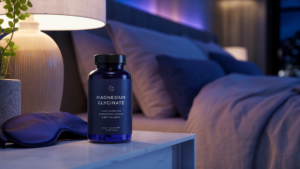
3. Glycine Alone vs. Magnesium Glycinate: Synergy Confirmed
A 2020 systematic review in Sleep Medicine Reviews analyzed 15 studies on glycine supplementation for sleep.
- Findings: Glycine (3 g) significantly improved subjective sleep quality in individuals with poor sleep, particularly in those with high stress.
- Implication: When combined with magnesium in glycinate form, users may achieve comparable or superior benefits at lower glycine doses, reducing the risk of side effects like nausea.
4. Magnesium Deficiency and Restless Leg Syndrome (RLS)
RLS is a major cause of sleep disruption, affecting 5–10% of the population. Magnesium deficiency is associated with increased RLS severity.
- A 2019 pilot study in Sleep and Breathing gave 200 mg of magnesium glycinate to RLS patients. After 4 weeks, participants experienced:
- A 40% reduction in RLS symptom severity (measured by the IRLS scale).
- Significant improvement in sleep quality without adverse effects.
- Clinical Takeaway: Magnesium glycinate may serve as an adjunct therapy for RLS-related insomnia, though larger RCTs are needed.
Potential Side Effects & Precautions
While magnesium glycinate is one of the best-tolerated magnesium forms, it is not without risks. Clinicians and users must be aware of the following:
- Gastrointestinal Upset: Though less common than with magnesium citrate, some individuals experience loose stools, bloating, or mild diarrhea at doses above 400–500 mg elemental magnesium.
- Drug Interactions: Magnesium can reduce absorption of:
- Bisphosphonates (osteoporosis drugs).
- Certain antibiotics (tetracyclines, fluoroquinolones).
- Diuretics and proton pump inhibitors.
- Precaution for Renal Impairment: Patients with chronic kidney disease (CKD) should avoid magnesium supplementation without medical supervision, as impaired excretion can lead to hypermagnesemia (dangerously high magnesium levels).
- Blood Pressure Effects: Magnesium can lower blood pressure. Those on antihypertensive medications should monitor for additive effects.
- Pregnancy and Lactation: Magnesium glycinate is generally safe, but doses exceeding 350 mg elemental magnesium daily should only be used under medical guidance.

Recommended Dosage for Sleep
Based on existing research, an effective sleep-supportive dose of magnesium glycinate typically provides 200–400 mg of elemental magnesium taken 30–60 minutes before bedtime.
- Note: Labels list “magnesium glycinate” content; check elemental magnesium amount (e.g., 400 mg magnesium glycinate often contains ~50 mg elemental magnesium). Confirm via the supplement facts panel.
Practical Considerations for Optimal Results
- Pair with Bioavailable Forms: Choose certified third-party tested brands (USP, NSF International) to ensure purity and potency.
- Timing Matters: Magnesium glycinate absorbs well on an empty stomach, but taking with a small meal may reduce GI side effects.
- Combine with Sleep Hygiene: Magnesium is a supplement, not a replacement for good sleep practices (consistent schedule, reduced screen time, cool room).
- Expect a Delay: Full sleep benefits may take 2–4 weeks of consistent use, as magnesium levels need to replete in tissues.
- Avoid High Doses: Chronic intake exceeding 500 mg elemental magnesium daily increases risk of adverse effects.
Concluding Thoughts from HealthMedHub
The aggregate research supports magnesium glycinate as a safe, evidence-based tool for improving sleep quality—especially in those with mild insomnia, stress-related sleep disruption, or restless leg syndrome. The combination of magnesium’s GABAergic and NMDA-regulating effects with glycine’s thermoregulatory and neurotransmitter properties offers a unique dual pathway not found in other magnesium forms.
However, magnesium glycinate is not a sedative hypnotic. It does not force sleep but rather creates the neurochemical and physiological conditions conducive to natural, restorative sleep. For chronic insomnia or underlying medical conditions, a comprehensive evaluation by a healthcare provider remains essential.
As with any supplement, start low, go slow, and prioritize whole-food sources of magnesium (leafy greens, nuts, seeds, legumes) as a foundation.
Medical Disclaimer: The content provided on HealthMedHub is for informational purposes only and is not intended as a substitute for professional medical advice, diagnosis, or treatment.
References
- Abbasi B, Kimiagar M, Sadeghniiat-Haghighi K, et al. The effect of magnesium supplementation on primary insomnia in elderly: A double-blind placebo-controlled clinical trial. J Res Med Sci. 2012;17(12):1161-1169.
- Held K, Antonijevic IA, Künzel H, et al. Oral Mg2+ supplementation reverses age-related neuroendocrine and sleep EEG changes in humans. Pharmacopsychiatry. 2002;35(4):135-143. doi:10.1055/s-2002-33125
- Kawai N, Sakai N, Okuro M, et al. The sleep-promoting and hypothermic effects of glycine are mediated by NMDA receptors in the suprachiasmatic nucleus. Neuropsychopharmacology. 2015;40(6):1405-1416. doi:10.1038/npp.2014.326
- Bannai M, Kawai N, Ono K, Nakahara D, Murakami T. The effects of glycine on subjective daytime performance in partially sleep-restricted healthy volunteers. Front Neurol. 2012;3:61. doi:10.3389/fneur.2012.00061
- Djokic G, Vojvodic P, Korcok D, et al. The effects of magnesium – glycinate on sleep quality in athletes: a randomized crossover