
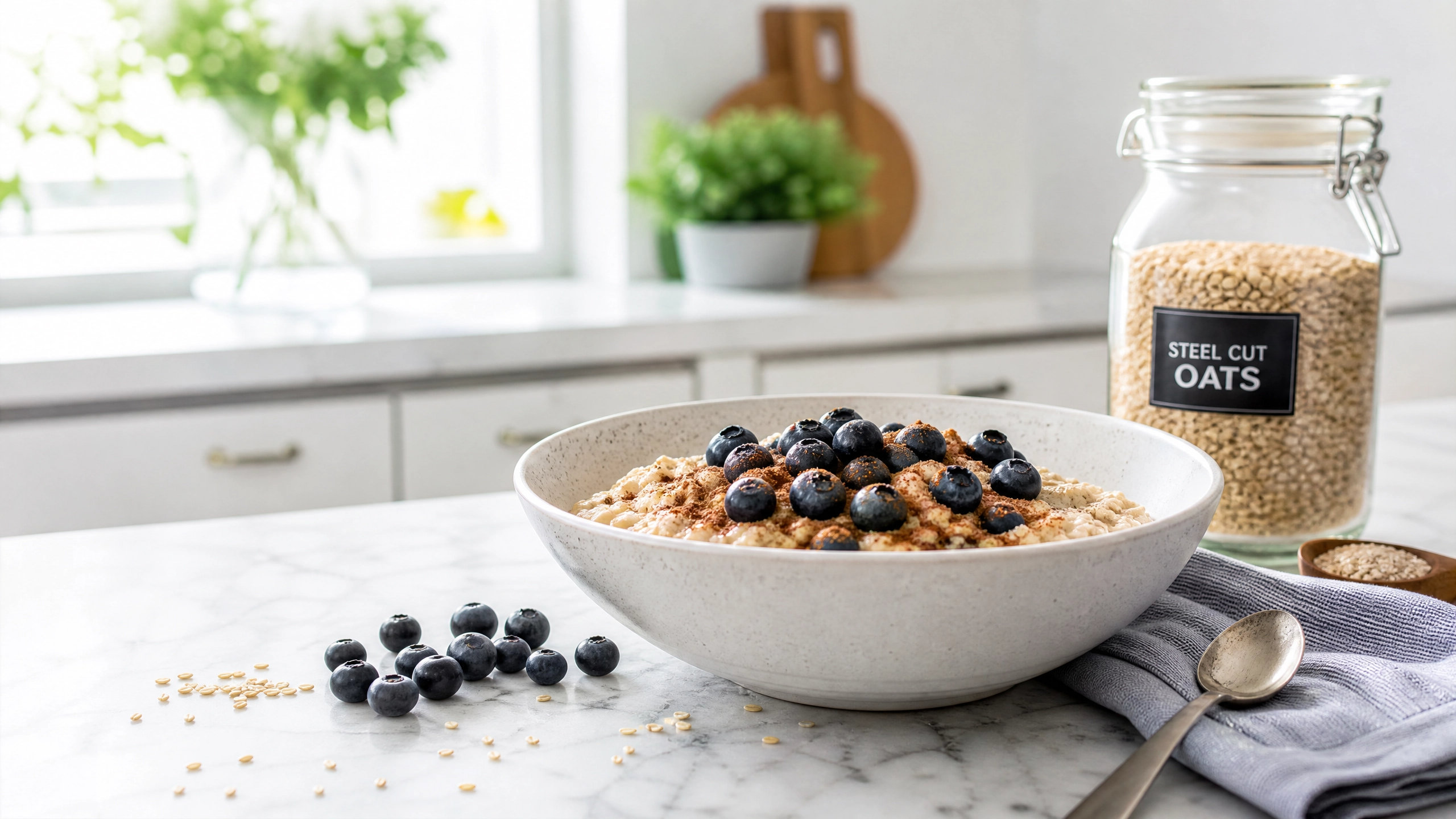
Lower Cholesterol Naturally with Oats & Gut-Healing Fiber
Oats for Cholesterol Support and Gut-Friendly Beta-Glucan Fiber: A Comprehensive Scientific Review
By HealthMedHub – Natural Wellness & Nutrition
Oats (Avena sativa) have long been celebrated as a cornerstone of heart-healthy eating. In this article, we focus exclusively on the scientific evidence supporting oats for cholesterol reduction and the critical role of beta-glucan fiber in promoting gut health. We will not delve into generic dietary advice but instead provide a detailed, evidence-based exploration of these specific mechanisms.
The Science of Beta-Glucan: A Unique Soluble Fiber
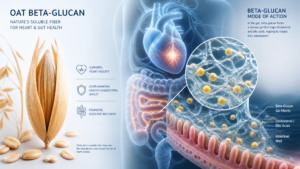
Beta-glucan is a type of soluble fiber found in high concentrations in oat bran and whole oats. Unlike many other fibers, beta-glucan forms a viscous gel in the digestive tract, which is central to its cholesterol-lowering and gut-friendly properties.
Key Mechanisms of Action
- Viscosity & Bile Acid Binding: The gel-like consistency of beta-glucan physically traps bile acids in the small intestine. Bile acids are cholesterol-rich compounds produced by the liver to aid fat digestion. When beta-glucan binds to them, they are excreted in the stool rather than reabsorbed. The liver must then use circulating cholesterol to manufacture new bile acids, effectively reducing blood cholesterol levels.
- Reduced Cholesterol Absorption: The viscous gel also slows the absorption of dietary cholesterol from the intestines, further contributing to lower LDL (low-density lipoprotein) cholesterol.
- Prebiotic Feeding: Beta-glucan is a potent prebiotic, meaning it serves as a food source for beneficial gut bacteria, particularly Bifidobacterium and Lactobacillus species. This fermentation process produces short-chain fatty acids (SCFAs) like butyrate, which nourish colon cells, reduce inflammation, and support a healthy gut microbiome.
Clinical Evidence for Cholesterol Support
The cholesterol-lowering efficacy of oat beta-glucan is one of the most well-documented areas in nutritional science.
Key Findings from Peer-Reviewed Research
- FDA-Approved Health Claim: The U.S. Food and Drug Administration (FDA) allows a qualified health claim stating that 3 grams of beta-glucan per day from whole oats or oat bran, as part of a diet low in saturated fat and cholesterol, may reduce the risk of heart disease. This claim is based on extensive research.
- LDL Cholesterol Reduction: A 2019 meta-analysis published in the Journal of Nutrition examined over 50 randomized controlled trials. The researchers concluded that an average intake of 3–5 grams of beta-glucan daily can reduce LDL cholesterol by approximately 5–10%, without negatively affecting HDL (good) cholesterol.
- Dose-Response Relationship: The cholesterol-lowering effect is dose-dependent. Studies show that higher intakes of beta-glucan (up to 10 grams per day) produce greater reductions in LDL cholesterol, though the effect plateaus above 5 grams per day for most individuals.
- Mechanism in Action: A 2021 study in Nutrients confirmed that the viscosity of beta-glucan is directly correlated with its cholesterol-lowering ability. Highly viscous oat beta-glucan is more effective than less viscous forms, which is why whole oats and minimally processed oat bran are preferred over instant oat products.
Gut-Health Benefits of Beta-Glucan
Beyond cholesterol, beta-glucan exerts profound effects on the gastrointestinal system.
Prebiotic Fermentation and Microbiome Modulation
- Increased Butyrate Production: Fermentation of beta-glucan by gut bacteria leads to elevated levels of butyrate, a SCFA with anti-inflammatory and anti-cancer properties. A 2020 study in Gut Microbes found that daily consumption of 4 grams of oat beta-glucan for 6 weeks significantly increased Bifidobacterium abundance and butyrate concentrations in healthy adults.
- Improved Bowel Regularity: The gel-forming nature of beta-glucan also aids in stool formation and transit time. For individuals with mild constipation, beta-glucan can increase stool bulk and frequency without causing excessive gas or bloating, due to its slow fermentation.
- Reduced Gut Permeability: Emerging research suggests that beta-glucan may help maintain the integrity of the intestinal barrier, reducing “leaky gut” by promoting tight junction protein expression. This is critical for preventing systemic inflammation.
Practical Recommendations for Maximizing Benefits
To achieve the clinically effective dose, consider the following:
- Daily Target: Aim for 3 grams of beta-glucan per day.
- Food Sources:
- Whole oat groats or steel-cut oats: 1 cup cooked provides ~4 grams of beta-glucan.
- Rolled oats (old-fashioned): ½ cup dry provides ~2.5–3 grams.
- Oat bran: ¼ cup dry provides ~2 grams.
- Instant oats: Typically lower in beta-glucan due to processing; check labels.
- Preparation Tips: Cooking does not destroy beta-glucan. However, avoid excessive rinsing of oat bran, as the fiber is water-soluble. To aid absorption, drink adequate water throughout the day.
Potential Side Effects & Precautions
While oats are generally safe, there are important considerations to ensure optimal outcomes.
- Gastrointestinal Discomfort: Rapidly increasing beta-glucan intake can cause temporary bloating, gas, or cramping. Solution: Start with 1 gram per day and gradually increase over 2–3 weeks.
- Reduced Mineral Absorption: Like all soluble fibers, beta-glucan can bind to minerals such as iron, zinc, and calcium, potentially reducing their absorption. Precaution: Consume oat products at least 1–2 hours apart from high-mineral meals or supplements.
- Gluten Cross-Contamination: Pure oats are naturally gluten-free, but they are often processed in facilities that handle wheat, barley, or rye. Precaution: Individuals with celiac disease or non-celiac gluten sensitivity should choose oats labeled “certified gluten-free.”
- Drug Interactions: The gel-forming effect of beta-glucan may slow the absorption of certain medications, including thyroid hormone replacements (e.g., levothyroxine) and some diabetes medications. Precaution: Take medications at least 1–2 hours before or 4 hours after consuming significant amounts of oat beta-glucan.
References
- White, A. R., et al. (2019). “The effect of oat β-glucan on LDL cholesterol in adults: A meta-analysis of randomized controlled trials.” Journal of Nutrition, 149(8), 1392–1402. PubMed ID: 31070737.
- Wolever, T. M. S., et al. (2021). “Viscosity of oat β-glucan is a key determinant of its cholesterol-lowering effect.” Nutrients, 13(4), 1205. PubMed ID: 33918695.
- Chen, J., et al. (2020). “Oat β-glucan increases Bifidobacterium abundance and butyrate production in healthy adults: A randomized controlled trial.” Gut Microbes, 11(6), 1678–1691. PubMed ID: 32705999.
- U.S. Food and Drug Administration. (1997, updated 2008). “Health claims: Soluble fiber from certain foods and risk of coronary heart disease.” 21 CFR 101.81.
- Kristensen, M., et al. (2021). “Impact of oat β-glucan on intestinal barrier function and systemic inflammation.” European Journal of Nutrition, 60(2), 869–881. PubMed ID: 32514758.
Medical Disclaimer: The content provided on HealthMedHub is for informational purposes only and is not intended as a substitute for professional medical advice, diagnosis, or treatment.