Unlock Gut Health: Feed Good Bacteria Naturally
Prebiotics for Microbiome Health: Feeding Beneficial Gut Bacteria Naturally
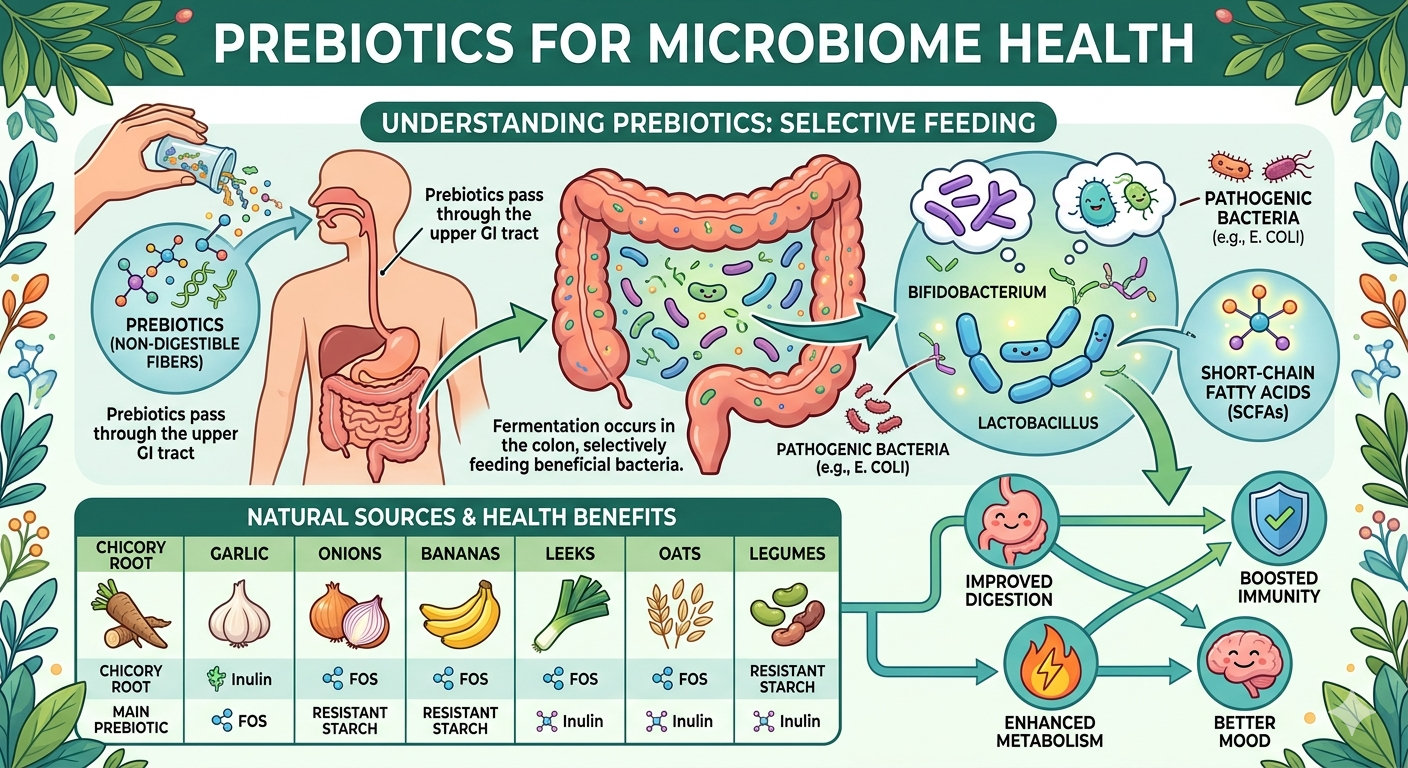
The human gut microbiome—a complex ecosystem of trillions of microorganisms—plays a pivotal role in digestion, immunity, metabolism, and even mental health. While probiotics (live beneficial bacteria) often steal the spotlight, prebiotics are the unsung heroes that sustain and nourish these microbial allies. This article explores the science of prebiotics, their natural dietary sources, and practical strategies to optimize your microbiome health by feeding beneficial gut bacteria.
What Are Prebiotics?
Prebiotics are non-digestible food components, primarily dietary fibers, that selectively stimulate the growth and activity of beneficial bacteria in the colon. According to the International Scientific Association for Probiotics and Prebiotics (ISAPP), a prebiotic must resist gastric acidity and enzymatic digestion, be fermented by the gut microbiota, and confer health benefits to the host (Gibson et al., Nature Reviews Gastroenterology & Hepatology, 2017).
Unlike probiotics, which introduce live microorganisms, prebiotics serve as fuel for indigenous gut bacteria—especially Bifidobacterium and Lactobacillus species. By selectively promoting these beneficial strains, prebiotics help maintain a balanced microbiome, enhance short-chain fatty acid (SCFA) production, and support immune function.
How Do Prebiotics Work? The Science Behind Feeding Gut Bacteria
When consumed, prebiotics pass undigested through the upper gastrointestinal tract and reach the large intestine intact. Once there, they undergo fermentation by the gut microbiota, producing key metabolites:
- Short-Chain Fatty Acids (SCFAs): Acetate, propionate, and butyrate are the primary end products. Butyrate, in particular, serves as the main energy source for colonocytes (cells lining the colon) and has anti-inflammatory properties (Koh et al., Cell, 2016).
- Lactate and Gas: Additional byproducts include lactate and gases (hydrogen, methane, carbon dioxide), which contribute to the colonic environment.
SCFAs lower the gut pH, inhibiting the growth of pathogenic bacteria such as Clostridium difficile and Escherichia coli. They also regulate immune responses, improve insulin sensitivity, and strengthen the intestinal barrier—preventing “leaky gut” syndrome.
Key Prebiotic Types Recognized by Science
| Prebiotic | Main Sources | Targeted Bacteria |
|---|---|---|
| Inulin & Fructooligosaccharides (FOS) | Chicory root, garlic, onions, bananas | Bifidobacterium |
| Galactooligosaccharides (GOS) | Legumes, lentils, chickpeas | Bifidobacterium, Lactobacillus |
| Human Milk Oligosaccharides (HMOs) | Breast milk (naturally) | Bifidobacterium infantis |
| Resistant Starch | Cooked & cooled potatoes, green bananas, oats | Ruminococcus, Faecalibacterium |
| Pectin | Apples, carrots, citrus fruits | Clostridium cluster XIVa |
| Arabinoxylan | Whole grains (wheat, rye, barley) | Prevotella, Roseburia |
Table based on ISAPP definitions and Holscher (Gut Microbes, 2017)
Top Natural Foods Rich in Prebiotics
Incorporating prebiotic-rich foods into your diet is a safe, effective, and whole-foods approach to microbiome support. Here are the most potent natural sources:
1. Chicory Root
Chicory root contains inulin as its primary prebiotic fiber—constituting approximately 65–80% of its dry weight. It selectively stimulates Bifidobacterium species, increases SCFA production, and improves bowel regularity (Kumar et al., Food & Function, 2022).
2. Jerusalem Artichoke (Sunchoke)
This tuber is exceptionally high in inulin (about 16–20% of its weight). One medium artichoke provides 2–3 grams of prebiotic fiber. It also contains thiamin and iron, supporting overall gut health.
3. Garlic & Onions
Both allium vegetables are rich in fructooligosaccharides (FOS) and inulin. A systematic review by Mozaffarian et al. (2018) noted that regular garlic consumption correlates with increased Bifidobacterium abundance in the gut.
4. Legumes (Lentils, Chickpeas, Beans)
Legumes provide galactooligosaccharides (GOS) and resistant starch. For example, one cup of cooked lentils yields approximately 8 grams of prebiotic fiber. Their fermentation produces SCFAs, aiding in colon health and satiety.
5. Oats & Barley
Both grains are rich in beta-glucan, a soluble fiber with prebiotic effects. Research published in the British Journal of Nutrition (2019) demonstrated that beta-glucan from oats increases Lactobacillus and Bifidobacterium counts in the gut.
6. Apples & Bananas
Apples contain pectin, while slightly green bananas supply resistant starch. A medium apple provides about 4 grams of prebiotic fiber, primarily pectin, which ferments to produce butyrate.
Health Benefits of a Prebiotic-Rich Diet
Improved Gut Barrier Integrity
SCFAs—especially butyrate—tighten the junctions between intestinal cells, reducing intestinal permeability (“leaky gut”). This prevents the systemic translocation of toxins and pathogens (Kelly et al., Physiology, 2015).
Enhanced Immune Function
Prebiotics modulate immune responses by increasing regulatory T cells and reducing inflammation. A 2021 meta-analysis in Nutrients found that prebiotic supplementation reduced biomarkers of chronic inflammation (e.g., C-reactive protein).
Better Metabolic Health
Prebiotic fibers improve glycemic control and insulin sensitivity. The SCFA propionate stimulates intestinal gluconeogenesis, lowering blood glucose levels. A study by De Vadder et al. (2014) in Cell showed that propionate treatment reduced hepatic glucose production in mice.
Regularity Without Laxatives
Unlike stimulant laxatives, prebiotic fibers promote bowel movements by increasing stool water content and bacterial biomass. Inulin has been shown to increase stool frequency in constipated adults (Dahl et al., Clinical Nutrition, 2017).
Mental Health Through the Gut-Brain Axis
Prebiotics may reduce anxiety and depressive symptoms by influencing the vagus nerve and neurotransmitter production. A randomized controlled trial by Schmidt et al. (2015) demonstrated that daily 8g FOS supplementation reduced cortisol awakening response in healthy adults.
How to Incorporate Prebiotics Into Your Daily Diet
Practical Tips:
- Start Slowly: Introduce prebiotic-rich foods gradually (e.g., half a teaspoon of inulin powder daily) to minimize gas and bloating.
- Pair with Probiotics: Combine prebiotics with fermented foods like yogurt, kefir, or sauerkraut—a synergy known as “synbiotics.”
- Cook Smart: Resistant starch increases when starchy foods (potatoes, rice, pasta) are cooked and cooled. Salads made with cold lentils or potatoes are excellent prebiotic options.
- Diversify Sources: Rotate between inulin-rich vegetables (onions, garlic, artichokes) and GOS-rich legumes (chickpeas, beans) to promote a broader microbiome profile.
Example Daily Intake Plan:
- Breakfast: Oatmeal with sliced banana (resistant starch) + ground flaxseed (mucilage fiber).
- Lunch: Lentil soup with garlic and onions (FOS + GOS).
- Snack: Apple slices with almond butter (pectin).
- Dinner: Roasted Jerusalem artichokes with chicken (inulin).
Potential Side Effects & Precautions
While prebiotics are generally safe and well-tolerated, some individuals may experience adverse effects, especially during the initial phase of supplementation or rapid intake increase.
Common Side Effects
- Gas and Bloating: Fermentation of prebiotics produces hydrogen and methane, which can cause discomfort. This is usually temporary.
- Abdominal Cramping: Rapid distension of the colon may lead to cramping, particularly in individuals with irritable bowel syndrome (IBS).
- Diarrhea: In high doses (above 20–30g/day of inulin), osmotic effects can trigger loose stools.
Precautions
- Irritable Bowel Syndrome (IBS): Those with IBS—particularly the diarrhea-predominant subtype—may be sensitive to FOS and inulin. A low-FODMAP diet temporarily restricts these prebiotics. Work with a dietitian to reintroduce them slowly.
- Small Intestinal Bacterial Overgrowth (SIBO): Prebiotics can worsen SIBO by feeding bacteria in the small intestine. If you have SIBO, avoid prebiotic supplements until treated.
- Medication Interactions: Prebiotics may alter drug absorption due to changes in gut transit time. Always consult a healthcare provider if you are on oral medications (e.g., thyroid hormone, anticoagulants).
- Pregnancy and Lactation: Prebiotics are naturally present in many foods safe during pregnancy, but high-dose supplements should be avoided without medical supervision.
Note: If persistent severe bloating,