Unlock Vitality: CoQ10 for Heart Health & Cell Energy
CoQ10 for Cellular Energy and Heart Wellness: A Science-Backed Guide
Coenzyme Q10 (CoQ10) is a fat-soluble, vitamin-like compound that is naturally synthesized in every cell of the human body. As an essential component of the mitochondrial electron transport chain, CoQ10 plays a critical role in adenosine triphosphate (ATP) production—the primary energy currency of cellular life. Beyond its bioenergetic function, CoQ10 acts as a potent lipophilic antioxidant, protecting cell membranes from oxidative damage. In the context of cardiovascular health, the heart—a high-energy-demand organ—is particularly dependent on optimal CoQ10 levels. This article explores the evidence-based relationship between CoQ10, cellular energy metabolism, and heart wellness.
The Role of CoQ10 in Cellular Energy Production
CoQ10 is localized primarily in the inner mitochondrial membrane, where it facilitates the transfer of electrons between Complex I (NADH dehydrogenase), Complex II (succinate dehydrogenase), and Complex III (cytochrome bc1 complex) of the electron transport chain. This electron transfer is coupled with proton pumping across the inner mitochondrial membrane, generating a proton gradient that drives ATP synthase (Complex V) to produce ATP.
- ATP Production: Without adequate CoQ10, the efficiency of oxidative phosphorylation declines, leading to reduced cellular energy output. Studies demonstrate that CoQ10 deficiency is associated with mitochondrial dysfunction in tissues with high metabolic rates, including cardiac muscle (Quinzii & Hirano, 2019).
- Antioxidant Defense: CoQ10 in its reduced form (ubiquinol) neutralizes reactive oxygen species (ROS) generated during mitochondrial respiration. This antioxidant action protects mitochondrial DNA, proteins, and lipids from oxidative stress.
For heart wellness, the implications are direct: cardiomyocytes contain the highest mitochondrial density of any cell type, reflecting their constant demand for ATP to sustain rhythmic contraction. Any compromise in mitochondrial efficiency can manifest as reduced cardiac output, fatigue, or arrhythmias.
CoQ10 and Heart Wellness: Mechanisms and Evidence
Mitochondrial Support for Myocardial Function
The human heart beats approximately 100,000 times daily, consuming nearly 6 kilograms of ATP each day (Ashrafian et al., 2022). CoQ10 is indispensable for sustaining this energy requirement. Clinical research indicates that patients with heart failure exhibit significantly lower myocardial CoQ10 levels compared to healthy controls, correlating with reduced left ventricular ejection fraction (LVEF) (Fotino et al., 2013).
- A meta-analysis of 13 randomized controlled trials found that CoQ10 supplementation (100–300 mg/day) improved LVEF by a mean of 3.7% in heart failure patients, along with reductions in New York Heart Association (NYHA) functional class and hospitalization rates (Fotino et al., 2013).
- The Q-SYMBIO study, a landmark randomized trial with 420 chronic heart failure patients, demonstrated that CoQ10 supplementation (300 mg/day for 2 years) significantly reduced major adverse cardiovascular events (MACE) by 42% and all-cause mortality by 40% compared to placebo (Mortensen et al., 2014).
Statin-Induced CoQ10 Depletion
Statins (HMG-CoA reductase inhibitors) are widely prescribed for cholesterol reduction. However, by inhibiting the mevalonate pathway, statins also reduce endogenous CoQ10 synthesis, leading to lowered serum and muscle CoQ10 levels. This depletion is implicated in statin-associated muscle symptoms (SAMS), including myalgia, weakness, and, in rare cases, rhabdomyolysis.
- Clinical Evidence: A systematic review of 12 studies concluded that CoQ10 supplementation (100–600 mg/day) may mitigate statin-induced myopathy, with significant improvements in pain severity and muscle function scores compared to placebo (Banach et al., 2015).
- Cardioprotective Rationale: Because statins are prescribed for cardiovascular risk reduction, concurrent CoQ10 supplementation may help preserve mitochondrial energy production in cardiac and skeletal muscle, thereby supporting overall heart wellness.
Blood Pressure Regulation
CoQ10’s antioxidant and endothelial-supportive properties contribute to vascular health. A meta-analysis of 12 clinical trials found that CoQ10 supplementation reduced systolic blood pressure by a mean of 10–17 mmHg and diastolic blood pressure by 9–12 mmHg in hypertensive patients, particularly those with metabolic syndrome or pre-existing coronary artery disease (Rosenfeldt et al., 2007). The proposed mechanism involves enhanced nitric oxide bioavailability and improved vascular smooth muscle function.
Potential Side Effects & Precautions
CoQ10 is generally well-tolerated, with a safety profile supported by decades of clinical use. However, some individuals may experience mild side effects, including:
- Gastrointestinal discomfort: Nausea, diarrhea, or stomach upset, particularly at doses exceeding 300 mg/day.
- Insomnia: Rare reports suggest high doses may interfere with sleep patterns in sensitive individuals.
- Hypotension: Because CoQ10 may lower blood pressure, patients already on antihypertensive medications should monitor for additive effects.
- Liver enzyme elevation: Very high doses (above 600 mg/day) have been associated with transient increases in serum transaminases in isolated case reports.
Precautions:
- Pregnancy and Lactation: Insufficient data exist; CoQ10 supplementation should only be used under medical supervision.
- Warfarin Interaction: CoQ10 has a structural similarity to vitamin K and may theoretically interfere with warfarin metabolism, reducing its anticoagulant effect. While evidence is mixed, INR monitoring is advisable.
- Chemotherapy: CoQ10 may interact with some chemotherapeutic agents that target mitochondrial pathways; patients should consult their oncologist.
For optimal absorption, CoQ10 should be taken with a meal containing fat, as it is fat-soluble. The ubiquinol form (reduced CoQ10) may be more bioavailable for older adults or those with malabsorption conditions.
Recommended Dosage for Cellular Energy and Heart Wellness
General wellness guidelines for CoQ10 supplementation:
- General health: 50–100 mg/day of ubiquinone (oxidized form).
- Heart failure or cardiovascular support: 200–300 mg/day of ubiquinone or 100–200 mg/day of ubiquinol.
- Statin-induced depletion: 100–200 mg/day.
- Maximum safe dose: Up to 600 mg/day under professional supervision.
It is important to note that endogenous CoQ10 production declines with age—starting as early as age 40—making supplementation increasingly relevant for mitochondrial support.
Key Dietary Sources of CoQ10
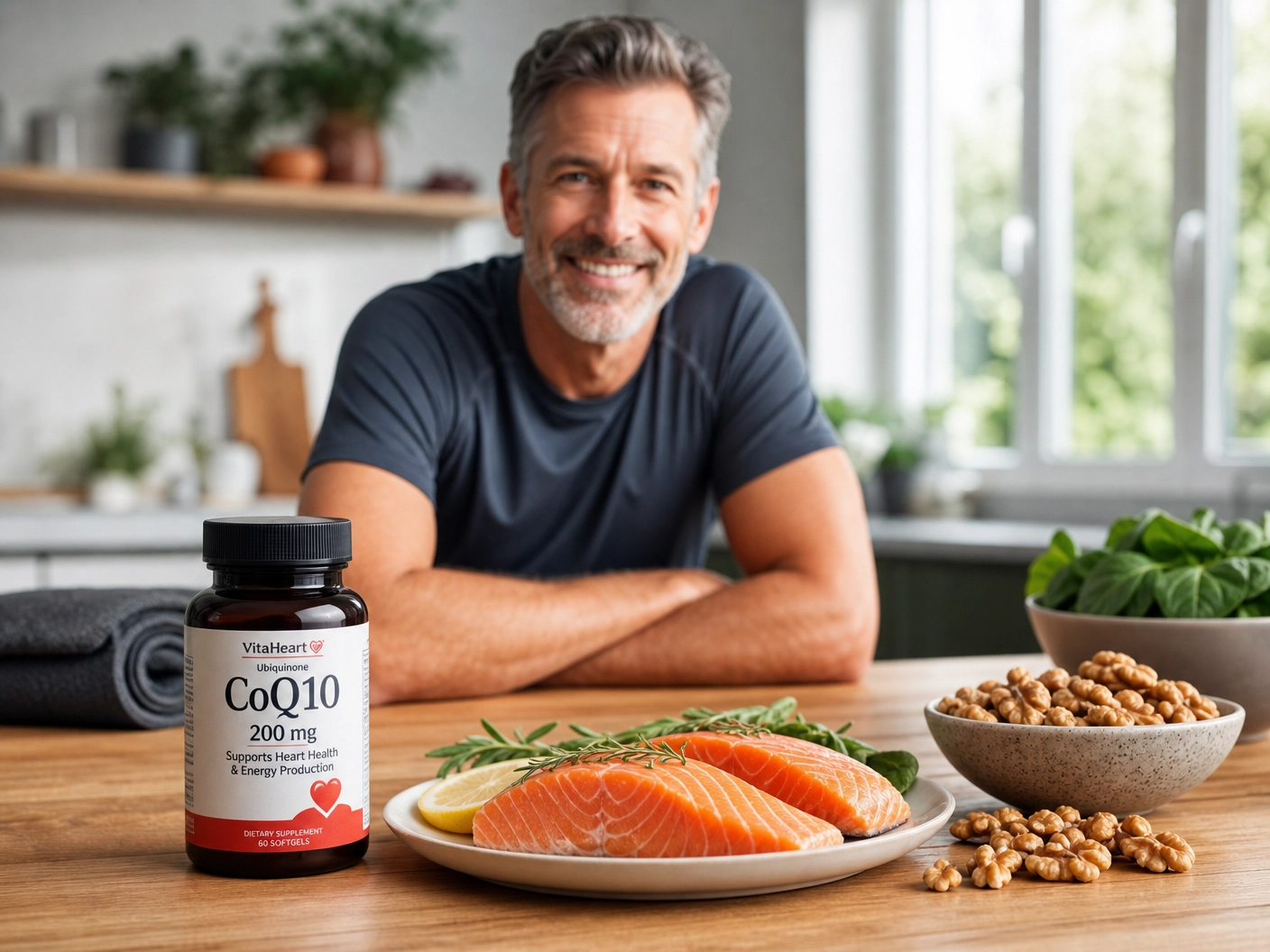
While endogenous production supplies the majority of CoQ10, dietary intake contributes approximately 25% of total body levels. Rich food sources include:
- Organ meats: Beef heart, liver (highest content).
- Fatty fish: Salmon, mackerel, sardines.
- Nuts and seeds: Walnuts, sesame seeds.
- Vegetable oils: Soybean and canola oil.
- Vegetables: Spinach, broccoli, cauliflower.
However, achieving therapeutic levels (100–300 mg/day) through diet alone is impractical, as even rich sources provide only 3–5 mg per serving. Hence, supplementation is the preferred approach for therapeutic benefit.
Synergistic Combinations for Enhanced Mitochondrial Function
To maximize mitochondrial energy production and heart wellness, CoQ10 is often paired with:
- PQQ (Pyrroloquinoline Quinone): Stimulates mitochondrial biogenesis and supports new mitochondrial formation (Harris et al., 2013).
- L-Carnitine: Facilitates transport of fatty acids into mitochondria for beta-oxidation, complementing CoQ10’s role in the electron transport chain.
- Alpha-Lipoic Acid (ALA): A mitochondrial antioxidant that helps regenerate CoQ10 and other antioxidants.
- Selenium and Vitamin E: Support CoQ10’s antioxidant function and protect cellular membranes.
These combinations are frequently found in “mitochondrial health” formulations.
Conclusion
CoQ10 is not merely an antioxidant—it is a fundamental requirement for cellular energy transduction and cardiac function. For individuals seeking to enhance heart wellness, particularly those with heart failure, statin users, or aging adults, CoQ10 supplementation offers a scientifically validated strategy for supporting mitochondrial ATP production and reducing oxidative damage. The evidence from randomized trials, including the Q-SYMBIO study, supports its role as an adjunctive therapy in heart failure management. As with any supplement, individual needs vary, and professional medical guidance is recommended, especially when combining CoQ10 with pharmacological treatments.
Medical Disclaimer: The content provided on HealthMedHub is for informational purposes only and is not intended as a substitute for professional medical advice, diagnosis, or treatment.
References
- Ashrafian, H., et al. (2022). The failing heart: A metabolic perspective. Nature Reviews Cardiology, 19(6), 385–402. https://pubmed.ncbi.nlm.nih.gov/35136482/
- Banach, M., et al. (2015). The role of coenzyme Q10 in statin-associated myopathy: A systematic review. Archives of Medical Science, 11(2), 308–317. https://pubmed.ncbi.nlm.nih.gov/25973327/
- Fotino, A. D., et al. (2013). Effect of coenzyme Q10 supplementation on heart failure outcomes: A meta-analysis. American Journal of Clinical Nutrition, 97(1), 57–65. https://pubmed.ncbi.nlm.nih.gov/23134868/
- Harris, C