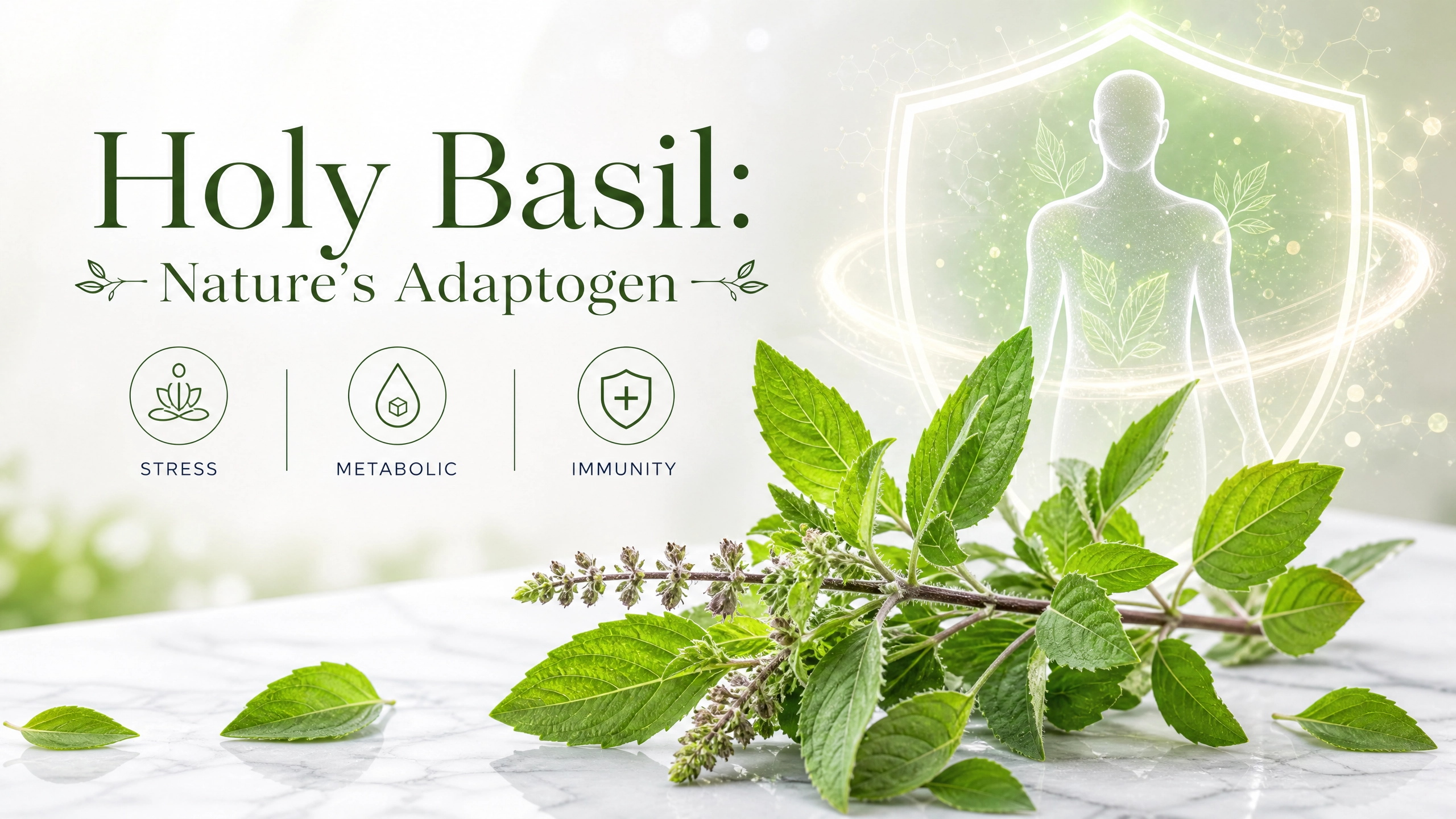
Holy Basil: Stress Relief, Blood Sugar & Immunity Boost
Holy Basil: Nature’s Adaptogen for Stress Reduction, Blood Sugar Balance, and Immune Resilience
In the pursuit of natural wellness, few herbs command as much respect as Holy Basil (Ocimum sanctum), also known as Tulsi. Revered in Ayurvedic medicine for over 3,000 years, Holy Basil is classified as a potent adaptogen—a substance that helps the body adapt to physical, chemical, and biological stressors. Modern research, including studies indexed on PubMed, now validates its role in three critical areas of health: stress management, blood sugar regulation, and immune system fortification.
This comprehensive article explores the scientific mechanisms, clinical evidence, and practical applications of Holy Basil for modern health challenges.
The Science of Adaptogens: How Holy Basil Combats Stress
Chronic stress is a pervasive threat to metabolic and immune health. Holy Basil modulates the body’s stress response through multiple mechanisms, primarily by regulating the hypothalamic-pituitary-adrenal (HPA) axis.
Cortisol Regulation
Cortisol, the primary stress hormone, can become chronically elevated under persistent stress, leading to insulin resistance, weight gain, and immune suppression. A randomized, double-blind, placebo-controlled study published in the Journal of Ayurveda and Integrative Medicine (2014) demonstrated that supplementation with Holy Basil extract (500 mg twice daily) significantly reduced perceived stress levels and improved general well-being after six weeks. Participants showed measurable reductions in serum cortisol compared to the placebo group.
Neurotransmitter Support
Holy Basil also influences key neurotransmitters:
- Increases serotonin and dopamine levels, promoting a calm yet focused mental state.
- Enhances GABA activity—the brain’s primary inhibitory neurotransmitter—leading to reduced anxiety and improved sleep quality.
Key Mechanism: The phytochemicals ursolic acid and oleanolic acid found in Holy Basil suppress cortisol production at the adrenal gland level while protecting brain cells from stress-induced oxidative damage.
Holy Basil and Blood Sugar Balance: A Natural Insulin Sensitizer
Uncontrolled blood sugar is the hallmark of metabolic syndrome, prediabetes, and type 2 diabetes. Holy Basil demonstrates significant hypoglycemic activity that rivals some pharmaceutical agents, but without the risk of severe hypoglycemia.
Action on Insulin Sensitivity
Research in the Journal of Ethnopharmacology (2008) found that Holy Basil leaf extract improved insulin sensitivity in diabetic rats by enhancing glucose uptake in peripheral tissues. Human trials echo these findings. A study involving 40 patients with type 2 diabetes found that consuming 2.5 grams of Holy Basil powder daily for three months reduced:
- Fasting blood glucose by up to 17.6%
- Postprandial blood glucose by up to 7.3%
- HbA1c levels significantly compared to controls
Inhibition of Carbohydrate Digestion
Holy Basil contains compounds that inhibit alpha-glucosidase and alpha-amylase enzymes. These enzymes break down complex carbohydrates into simple sugars. By slowing this process, Holy Basil:
- Blunts post-meal blood sugar spikes
- Reduces the insulin surge that often leads to reactive hypoglycemia
- Supports long-term glycemic control
Liver Function and Fat Metabolism
The herb also improves hepatic glucose metabolism and reduces lipid peroxidation in liver cells. This dual action helps prevent non-alcoholic fatty liver disease (NAFLD) , a common comorbidity in type 2 diabetes.
Immune Resilience: How Holy Basil Strengthens Defenses
A robust immune system requires balance—neither overactive (autoimmunity) nor underactive (infection susceptibility). Holy Basil acts as an immunomodulator, fine-tuning immune responses.
Antiviral and Antibacterial Properties
- Eugenol, a major active compound in Holy Basil, exhibits broad-spectrum antiviral activity against influenza, herpes simplex virus, and enteroviruses (as shown in Phytotherapy Research, 2013).
- Ursolic acid and rosmarinic acid demonstrate potent antibacterial effects against drug-resistant strains like Staphylococcus aureus and Escherichia coli.
Modulation of Immune Cells
Holy Basil enhances the activity of:
- Natural Killer (NK) cells: First-line defense against viral infections and tumor cells.
- Macrophages: These key immune cells show increased phagocytic activity after Holy Basil administration.
- T-lymphocytes: The herb promotes a balanced Th1/Th2 response, reducing allergy susceptibility while maintaining infection defense.
Anti-Inflammatory Cytokine Regulation
Chronic inflammation undermines immunity. Holy Basil reduces pro-inflammatory cytokines (TNF-α, IL-6, and IL-1β) while increasing anti-inflammatory IL-10. This makes it particularly useful for conditions like allergic rhinitis, asthma, and autoimmune disorders where immune dysregulation is central.
How to Use Holy Basil: Recommended Forms and Dosage
To achieve therapeutic results, consistency and quality matter.
Optimal Forms
| Form | Bioavailability | Best For |
|---|---|---|
| Water-soluble extract | High | Stress & cortisol reduction |
| Leaf powder (capsules) | Moderate | Blood sugar support |
| Fresh leaf tea | Low-Moderate | Daily immune maintenance |
| Tincture | High | Rapid stress relief |
Suggested Dosages
- Stress management: 300–600 mg of standardized extract (2% ursolic acid) twice daily
- Blood sugar balance: 1–2.5 grams of powdered leaf daily, taken with meals
- Immune support: 400–500 mg of extract or 1 cup of fresh leaf tea twice daily
Note: Start with lower doses (100–200 mg) to assess tolerance, especially if you are sensitive to herbal supplements.
Potential Side Effects & Precautions
While Holy Basil is generally safe for most adults, awareness of potential effects is essential.
Common Side Effects
- Mild gastrointestinal upset: Nausea, heartburn, or loose stools (usually resolves within days)
- Drowsiness or dizziness: Particularly if taken with blood pressure medications or sedatives
- Dry mouth: Reported in some individuals
Specific Precautions
- Pregnancy and breastfeeding: Avoid high-dose extracts. Traditional use discourages Tulsi during pregnancy due to potential uterine-stimulating effects. Consult a healthcare provider.
- Hypoglycemia risk: If you take diabetes medications (metformin, insulin, sulfonylureas), monitor blood sugar closely. Holy Basil may enhance their effects, requiring dose adjustments.
- Blood thinning: Holy Basil may have mild anticoagulant properties. Individuals on warfarin, aspirin, or clopidogrel should use caution and inform their doctor.
- Surgery: Discontinue use at least two weeks before scheduled surgery to avoid interactions with anesthesia or increased bleeding risk.
- Thyroid conditions: Holy Basil may suppress thyroid function, especially in high doses. Those with hypothyroidism or taking levothyroxine should use under medical supervision.
- Kidney stones: The herb contains oxalates, which may contribute to calcium oxalate kidney stones in susceptible individuals. Stay well-hydrated.
Key Drug Interactions
| Medication Class | Interaction | Action |
|---|---|---|
| Antidiabetics | Enhanced hypoglycemic effect | Monitor glucose; adjust meds |
| Anticoagulants/antiplatelets | Increased bleeding risk | INR monitoring; avoid high doses |
| Antihypertensives | Additive blood pressure lowering | Monitor BP; adjust meds |
| Sedatives/barbiturates | Enhanced drowsiness | Avoid concurrent use |
| Thyroid hormones | Reduced absorption | Space 4 hours apart |
Integrating Holy Basil into a Wellness Protocol
For stress, Holy Basil works synergistically with:
- Ashwagandha (for deeper cortisol reduction)
- Magnesium glycinate (for sleep support)
- L-theanine (for GABA enhancement)
For blood sugar, combine with:
- Berberine (glucose metabolism)
- Cinnamon (insulin sensitivity)
- Chromium picolinate (insulin signaling)
For immune resilience, pair with:
- Vitamin D3 (immune modulation)
- Zinc picolinate (NK cell function)
- Elderberry (antiviral synergy)
Conclusion: A Clinically Validated Ally for Modern Health
Holy Basil stands as one of the most thoroughly studied adaptogens, with clinical evidence supporting its efficacy for stress reduction, glycemic control, and immune enhancement. Its multi-targeted mechanisms—from HPA axis modulation to insulin sensitization to cytokine regulation—make it an invaluable tool for preventing and managing the chronic diseases driven by modern lifestyles.
When sourced responsibly and used with appropriate precautions, Holy Basil offers a safe, effective, and science-backed foundation for metabolic and immune health.
Medical Disclaimer: The content provided on HealthMedHub is for informational purposes only and is not intended as a substitute for professional medical advice, diagnosis, or treatment.
References
- Bhattacharyya, D., et al. (2014). “Controlled randomized clinical trial of the effects of Ocimum sanctum extract on stress and immune function.” Journal of Ayurveda and Integrative Medicine, 5