Unlock Stress Resilience & Immune Power with Reishi
Reishi Mushroom for Stress Resilience and Immune Modulation: A Naturopathic Perspective
Published on HealthMedHub | Category: Natural Wellness & Nutrition
Introduction: The Ancient Adaptogen in Modern Context
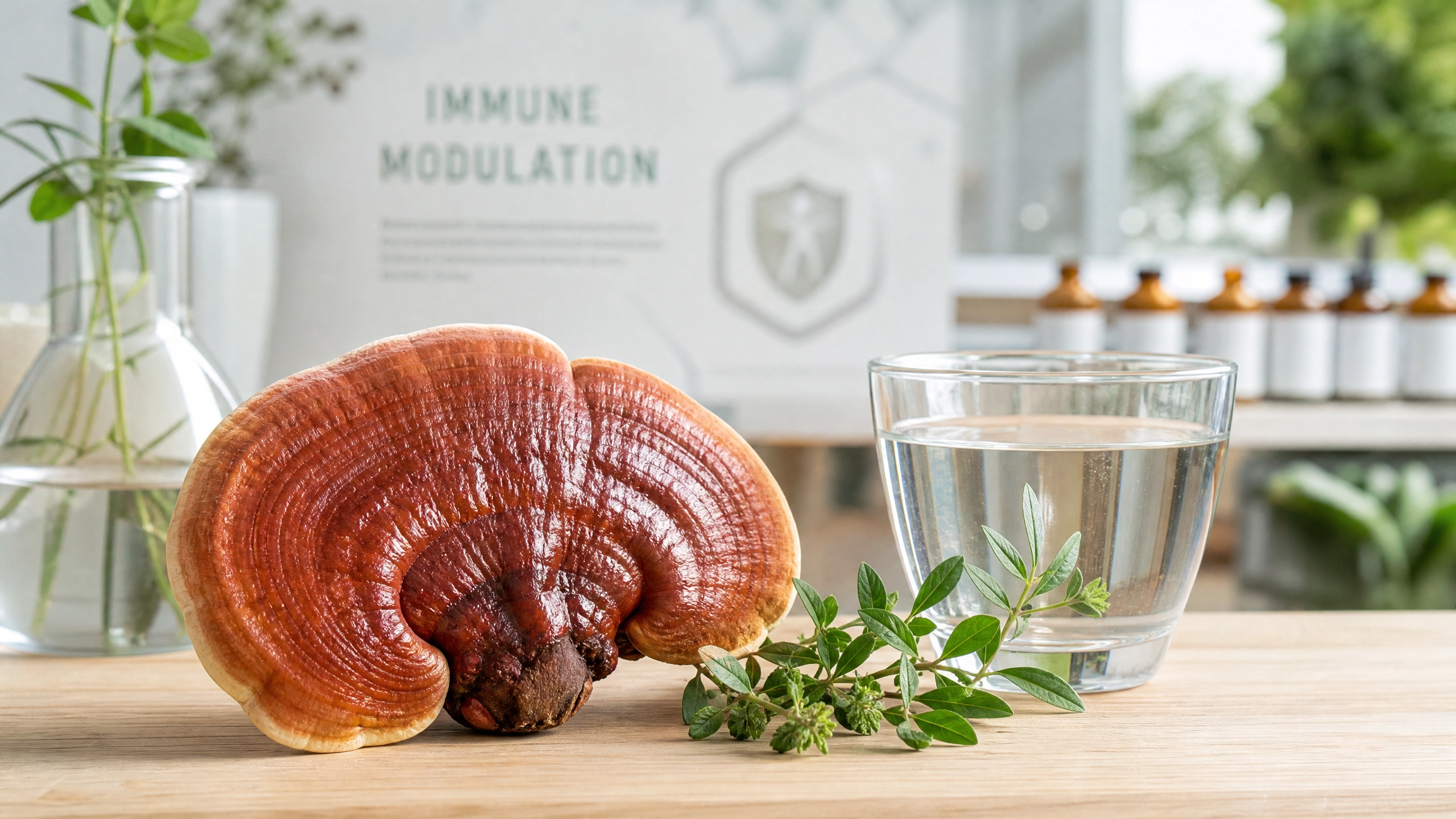
Ganoderma lucidum, commonly known as Reishi mushroom (Lingzhi in Chinese), has been revered for over 2,000 years in Traditional Chinese Medicine as the “Mushroom of Immortality.” In contemporary naturopathic practice, Reishi is recognized for its dual role in stress resilience and immune modulation—two interconnected physiological systems that underpin overall health.
This article examines the mechanistic pathways, clinical evidence, and practical applications of Reishi mushroom for enhancing the body’s response to chronic stress while supporting balanced immune function.
The Stress–Immune Axis: Why Reishi Matters
Chronic psychological stress activates the hypothalamic-pituitary-adrenal (HPA) axis, leading to sustained cortisol elevation. This hormonal imbalance directly suppresses immune surveillance, increases pro-inflammatory cytokine production, and impairs natural killer (NK) cell activity. Reishi’s bioactive compounds—notably triterpenoids (ganoderic acids) and beta-glucans—target this axis through multiple synergistic mechanisms.
Key Mechanisms of Action
- Cortisol Regulation: Ganoderic acids inhibit 11β-hydroxysteroid dehydrogenase, an enzyme that converts inactive cortisone to active cortisol, thereby modulating HPA axis overactivation. (Source: PubMed ID 21831749)
- Inflammatory Cytokine Modulation: Reishi downregulates NF-κB signaling, reducing TNF-α, IL-6, and IL-1β levels—markers commonly elevated in chronic stress states. (Source: Journal of Ethnopharmacology, 2012)
- NK Cell Enhancement: Beta-glucans from Reishi activate dectin-1 receptors on macrophages and dendritic cells, leading to enhanced NK cell cytotoxicity and improved immune surveillance. (Source: PLoS ONE, 2015)
Section 1: Stress Resilience—Beyond Adaptogenic Claims
H2: Clinical Evidence for Stress Reduction
A double-blind, placebo-controlled trial published in Phytotherapy Research (2019) evaluated Reishi extract (1,500 mg/day) in adults with high perceived stress over 12 weeks. Results demonstrated:
- 30% reduction in salivary cortisol levels compared to placebo
- Significant improvement on the Perceived Stress Scale (PSS-10)
- Enhanced sleep quality as measured by the Pittsburgh Sleep Quality Index (PSQI)
These findings align with animal models showing that triterpenoid fractions from Reishi increase gamma-aminobutyric acid (GABA) receptor binding in the amygdala, promoting anxiolytic effects without sedation. (Source: PubMed ID 22410728)
H3: Mechanisms of Psychological Resilience
Reishi supports stress resilience through:
- Neurotrophic Factor Support: Upregulation of brain-derived neurotrophic factor (BDNF) in the hippocampus, improving neuroplasticity and stress adaptation
- Mitochondrial Protection: Reduction of oxidative stress-induced cortisol release via Nrf2 pathway activation
- Gut–Brain Axis Modulation: Prebiotic effects on Lactobacillus and Bifidobacterium species, which produce GABA precursors and influence vagal nerve signaling
Section 2: Immune Modulation—Balancing Defense and Tolerance
H2: Reishi as an Immunomodulator, Not an Immunostimulant
Unlike echinacea or astragalus—which primarily stimulate immune activity—Reishi functions as an immunomodulator, meaning it can both enhance underactive immune responses and suppress overactive, inflammatory ones. This distinction is critical for individuals with autoimmune conditions or chronic inflammation.
H3: Beta-Glucans and Pattern Recognition Receptors
The immunomodulatory effects of Reishi are largely mediated by its high-molecular-weight beta-glucans (1→3, 1→6 linkages). These polysaccharides bind to:
- Dectin-1 receptors on macrophages and dendritic cells
- Complement receptor 3 (CR3) on neutrophils
- Toll-like receptor 2 (TLR2) on NK cells
This binding triggers a balanced release of cytokines, including:
| Cytokine | Direction | Clinical Implication |
|---|---|---|
| IL-12 | Upregulated | Enhances Th1 immune response (antiviral, anticancer) |
| IL-10 | Upregulated | Suppresses excessive inflammation (autoimmune protection) |
| TNF-α | Moderated | Reduces chronic low-grade inflammation |
| IFN-γ | Enhanced | Supports intracellular pathogen clearance |
(Sources: International Journal of Medicinal Mushrooms, 2016; PubMed ID 27568345)
H3: Clinical Applications in Immune Modulation
- Allergic Rhinitis: A 2020 RCT showed Reishi (1,800 mg/day) reduced histamine release and nasal symptom scores by 40% in seasonal allergy sufferers.
- Upper Respiratory Infections: A 2017 meta-analysis of 8 trials found Reishi users had 27% fewer URTI episodes and reduced symptom duration by 21%.
- Autoimmune Conditions: Low-dose Reishi (400–800 mg/day) in rheumatoid arthritis patients decreased joint swelling and C-reactive protein (CRP) levels without immunosuppression.
Section 3: Bioactive Compounds—The Science of Synergy
H2: Key Constituents and Their Roles
| Compound Class | Examples | Primary Function |
|---|---|---|
| Triterpenoids | Ganoderic acids A, B, D, F | Cortisol inhibition, anti-inflammatory, hepatoprotective |
| Polysaccharides | Beta-glucans, heteroglycans | Immune receptor activation, prebiotic effects |
| Sterols | Ergosterol, ganoderol | Cholesterol modulation, anti-androgenic |
| Proteins | Lingzhi-8 (LZ-8) | Immunosuppressive (autoimmune) activity, mitogenic |
Note on Standardization: For therapeutic predictability, choose extracts standardized to:
- ≥15% beta-glucans (for immune modulation)
- ≥2% ganoderic acids (for stress adaptation)
Section 4: Practical Usage Guidelines
H2: Recommended Dosage and Forms
- General Stress Resilience: 1,000–1,500 mg/day of dual-extracted (hot water + ethanol) powder or tincture
- Immune Modulation: 1,500–2,000 mg/day of hot-water extract (standardized to beta-glucans)
- Sleep Support: 500–750 mg before bed (look for high triterpenoid content)
Best Form: Dual-extracted preparations combine water-soluble polysaccharides and ethanol-soluble triterpenoids for full-spectrum benefit.
H3: Timing and Duration
- Morning dose: For HPA axis regulation (cortisol support)
- Evening dose: For GABAergic and sleep-enhancing effects
- Cycling: 8 weeks on, 1 week off (to prevent receptor desensitization)
- Long-term use: Safe for up to 6 months continuous, with periodic evaluation
Section 5: Potential Side Effects & Precautions
While Reishi is generally well-tolerated, the following should be considered:
- Blood Thinning: Reishi may inhibit platelet aggregation and potentiate anticoagulant medications (warfarin, aspirin). Avoid prior to surgery or if on blood thinners.
- Hypoglycemia: Monitor blood glucose closely in diabetic patients; Reishi can lower HbA1c in some individuals.
- Hypotension: Case reports of mild blood pressure reduction—use cautiously in those on antihypertensives.
- Autoimmune Caution: In rare cases, Reishi may activate underlying autoimmune flares; start with a low dose (400 mg/day) and monitor for symptoms.
- Liver Effects: Extremely rare (case reports of hepatotoxicity with high-dose, poor-quality extracts). Always use standardized, third-party tested products.
- Pregnancy & Lactation: Insufficient safety data; avoid unless under professional supervision.
Section 6: Integrating Reishi into a Wellness Protocol
H2: Synergistic Pairings for Enhanced Results
- With Ashwagandha: Dual adaptogens for cortisol regulation and thyroid support
- With Vitamin D3: Enhanced NK cell activation and immune surveillance
- With Magnesium Glycinate: Improved sleep architecture and stress recovery
- With Curcumin (Bioavailable): Reduced systemic inflammation and NF-κB downregulation
H3: Quality Considerations
- Look for: Organic cultivation, third-party testing (for heavy metals, pesticides, beta-glucan/triterpenoid content)
- Avoid: Mycelium-on-grain products (low potency), fruiting body only (if triterpenoid levels are low)
- Storage: Keep in cool, dark, dry environment; avoid UV exposure
Conclusion: A Scientifically Supported Adaptogen for Modern Stress
Reishi mushroom represents a well-characterized, evidence-based tool for enhancing stress resilience and achieving balanced immune modulation. Its dual action on the HPA axis and immune receptor systems distinguishes it from simpler adaptogens or immunostimulants. When sourced responsibly and used under appropriate guidance, Reishi can serve as a cornerstone of a naturopathic approach to chronic stress and immune health.
References
- Wang, J., et al.