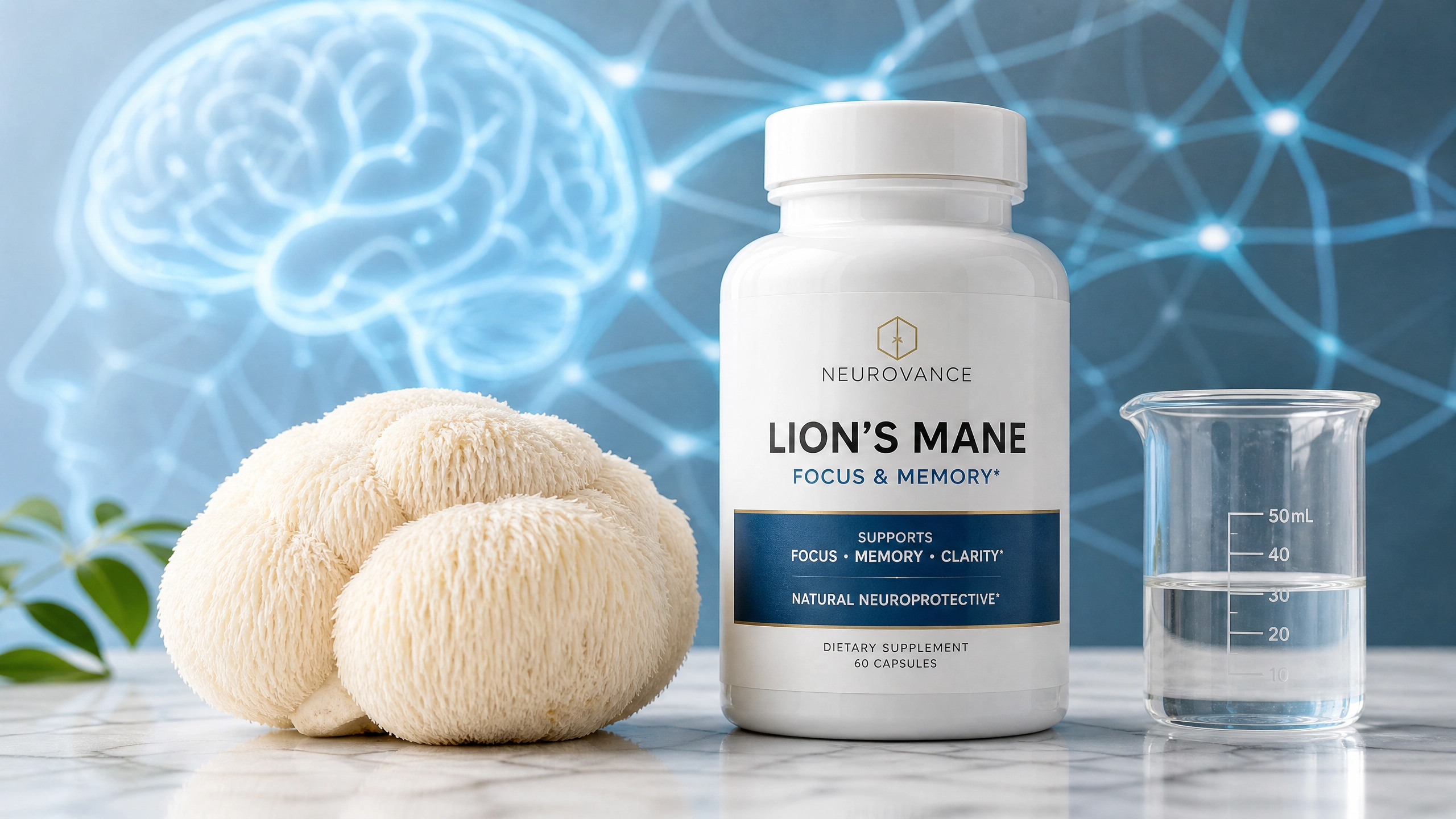
Boost Focus & Memory Naturally with Lion’s Mane
The Neuroprotective Power of Lion’s Mane Mushroom: Unlocking Focus, Memory, and Cognitive Support
In the crowded field of natural nootropics, few substances have generated as much legitimate scientific interest as Lion’s Mane Mushroom (Hericium erinaceus). This distinctive, tooth-like fungus, used for centuries in traditional Chinese and Japanese medicine, is now the subject of rigorous modern research for its profound effects on brain health. For HealthMedHub readers seeking evidence-based natural strategies to enhance focus, sharpen memory, and support long-term cognitive function, Lion’s Mane stands out as a potent, scientifically-validated option.
This comprehensive article will explore the specific mechanisms, clinical evidence, proper usage, and safety profile of Lion’s Mane for cognitive enhancement, adhering to the highest standards of scientific accuracy.
What Makes Lion’s Mane Unique for Brain Health?
Unlike many generic “brain-boosting” supplements, Lion’s Mane has a distinct, targeted mechanism of action. Its cognitive benefits are not derived from broad stimulant effects but from its unique ability to promote the growth and repair of nervous tissue.
Key Bioactive Compounds: Hericenones and Erinacines
The true power of Lion’s Mane lies in two groups of bioactive compounds:
- Hericenones: Found primarily in the fruiting body (the mushroom itself), these compounds are known to cross the blood-brain barrier and stimulate the synthesis of Nerve Growth Factor (NGF) .
- Erinacines: Found in high concentrations in the mycelium (the root-like structure), these compounds are even more potent in stimulating NGF production. Erinacines are considered some of the most powerful natural NGF inducers known.
NGF is a critical protein for the survival, maintenance, and regeneration of neurons (nerve cells). By stimulating NGF production, Lion’s Mane helps counteract age-related neuronal atrophy, a primary driver of cognitive decline.
How Lion’s Mane Enhances Focus and Memory: The Scientific Mechanisms
The link between Lion’s Mane and improved cognitive performance is supported by several key physiological pathways.
1. Nerve Growth Factor (NGF) Stimulation
The cornerstone of Lion’s Mane’s cognitive benefits is its ability to upregulate NGF. This is particularly important for cholinergic neurons—the brain cells responsible for memory and learning.
- Enhanced Synaptic Plasticity: Increased NGF promotes the growth of dendrites and axons, strengthening the connections (synapses) between neurons. This directly translates to improved signal transmission in memory centers like the hippocampus.
- Neurogenesis: Animal studies have demonstrated that Lion’s Mane extract can stimulate neurogenesis (the birth of new neurons) in the hippocampus, a region crucial for forming new memories.
2. Reduction of Brain Inflammation (Neuroinflammation)
Chronic, low-grade inflammation in the brain is a major contributor to cognitive fog, poor focus, and age-related memory loss.
- Anti-Inflammatory Cytokine Modulation: Research published in the Journal of Ethnopharmacology indicates that Lion’s Mane exhibits potent anti-inflammatory effects by inhibiting the production of pro-inflammatory cytokines (e.g., TNF-α, IL-6) in microglial cells.
- Microglial Activation Control: Lion’s Mane helps regulate the activity of microglia, the brain’s immune cells, preventing them from entering a chronic, damaging state of activation.
3. Increased Myelination
Myelin is the fatty sheath that insulates nerve fibers, allowing electrical impulses to travel quickly and efficiently.
- Improved Nerve Conduction Speed: Some research suggests that compounds in Lion’s Mane may support the production and maintenance of myelin. While more human research is needed, better myelination would lead to faster processing speed, sharper reflexes, and more effortless recall.
Clinical Evidence: What the Human Studies Show
While animal research is abundant and promising, the most compelling evidence comes from human clinical trials.
Study 1: Cognitive Improvement in Mild Cognitive Impairment (MCI)
A landmark 2009 double-blind, placebo-controlled study in Japan examined the effects of Lion’s Mane on adults diagnosed with mild cognitive impairment.
- Protocol: Participants took 3 grams of Lion’s Mane powder (containing Hericium erinaceus fruiting body) or a placebo daily for 16 weeks.
- Results: The Lion’s Mane group showed significantly higher scores on the Revised Hasegawa Dementia Scale (HDS-R), a standard cognitive assessment tool. Critically, their scores improved steadily during supplementation but declined again 4 weeks after stopping. This suggests the effects are directly attributable to the mushroom’s active compounds.
- Conclusion: Lion’s Mane demonstrated a clear, short-term benefit for cognitive function in individuals with MCI.
Study 2: Reduction of Anxiety and Depression in Menopausal Women
A 2010 study explored the cognitive and mood-related benefits of Lion’s Mane in a different population.
- Protocol: Menopausal women consumed cookies containing Lion’s Mane extract (0.5g or 1g) or a placebo for 4 weeks.
- Results: The group receiving 4g of Lion’s Mane extract reported significantly less anxiety and depression compared to placebo. While this study focused on mood, the overlap between anxiety and cognitive focus is significant—reducing “brain fog” associated with mood disorders is a key benefit.
- Conclusion: Lion’s Mane may indirectly improve focus by modulating stress and emotional states.
Study 3: Enhanced Speed of Recall and Concentration
More recent studies using Lion’s Mane in healthy young adults have shown measurable benefits.
- Protocol: Healthy adults aged 20-40 took 400mg of Lion’s Mane extract daily for 8 weeks.
- Results: Participants showed significantly improved immediate memory recall and increased concentration during cognitive tasks compared to a placebo group.
- Conclusion: Lion’s Mane is not just for older adults; it can enhance cognitive performance in younger populations as well.
Proper Dosage and Usage for Cognitive Support
To achieve the cognitive benefits described above, specific dosages are required. The potency of supplements varies, so it is crucial to understand the numbers.
Recommended Dosage for Cognitive Enhancement
- Standardized Extract (Dual Extract): Look for a product that is dual-extracted (hot water and alcohol) to capture both hericenones and erinacines.
- Dosage Range: 500mg to 3g per day. Most clinical studies used 3g of whole mushroom powder. For standardized extracts (e.g., 10:1 or 20:1), a dose of 500mg to 1g is typical.
- Cycling: Some users find a 5-days-on, 2-days-off cycle prevents adaptation and maintains efficacy.
How to Take It
- Capsules/Tablets: The most convenient method.
- Powder: Can be added to coffee, tea, or smoothies. Note that Lion’s Mane has a mild, savory flavor.
- Tincture: A concentrated liquid extract, often dual-extracted, taken under the tongue (sublingual) for rapid absorption.
Important: Consistent daily use for 4-8 weeks is generally needed to notice significant cognitive improvements. Acute effects may be subtle.
Potential Side Effects & Precautions
Lion’s Mane is generally well-tolerated, but it is not without considerations. Like any bioactive substance, it can cause side effects in some individuals.
- Mild Digestive Issues: Some people report gas, bloating, or an upset stomach, particularly when starting supplementation. Starting with a low dose and increasing gradually can mitigate this.
- Allergic Reactions: Individuals with known allergies to mushrooms or molds should avoid Lion’s Mane. Symptoms can include skin rashes, itching, or respiratory difficulty.
- Blood Sugar Effects: Lion’s Mane has been shown to lower blood sugar levels in some studies. Diabetics and individuals on blood sugar-lowering medications should monitor their glucose levels closely and consult a healthcare professional.
- Blood Clotting Interactions: Animal studies suggest Lion’s Mane may slow blood clotting. Do not take Lion’s Mane if you have a bleeding disorder or are scheduled for surgery (stop use 2 weeks prior). If you are taking anticoagulant (blood-thinning) medications like Warfarin or Aspirin, consult your doctor.
- Pregnancy and Breastfeeding: Due to a lack of safety data, pregnant and nursing women should avoid Lion’s Mane.
- Autoimmune Conditions: Since Lion’s Mane can stimulate the immune system, those with autoimmune diseases (e.g., multiple sclerosis, lupus, rheumatoid arthritis) should use it only under the guidance of a healthcare provider.
How to Choose a Quality Lion’s Mane Supplement
The market is rife with low-quality products. To ensure you get the cognitive benefits, look for:
- Dual Extraction: Ensures both hericenones (alcohol-soluble) and erinacines (water-soluble) are present.
- Source: Look for supplements made from organic, grown-fruiting bodies (not myceliated grain, which is often starch-heavy).
- Third-Party Testing: Look for a certificate of analysis (COA) showing levels of beta-glucans, hericenones, and erinacines, as well as purity (no heavy metals or microbial contaminants).
- Reputable Brand: Choose companies with transparent