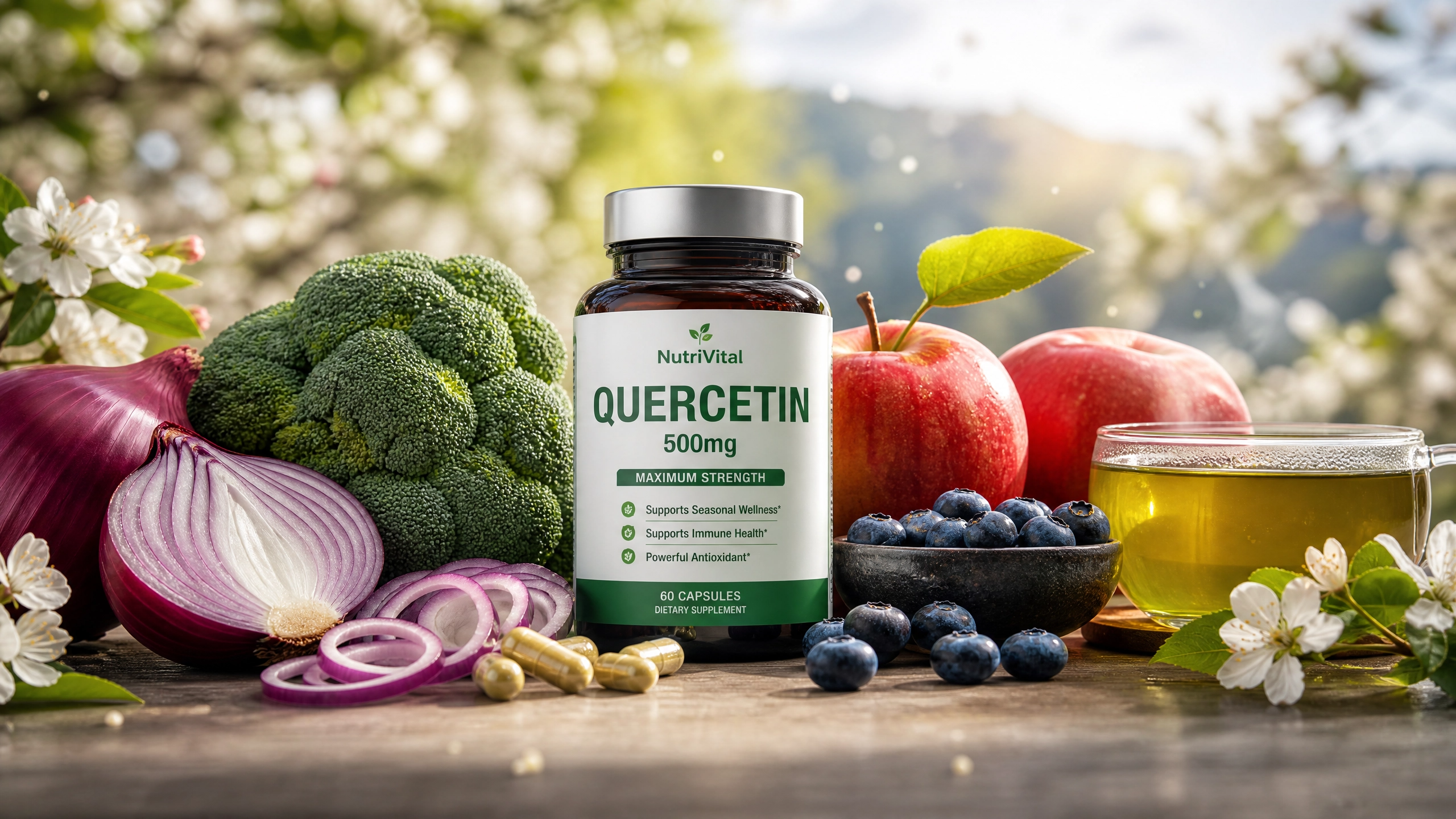
Quercetin: Unlock Seasonal Immune Balance Naturally
Quercetin for Seasonal Wellness and Immune Balance: A Comprehensive Guide
As the seasons shift, the body’s immune system faces unique challenges. Pollen counts rise, viruses circulate, and inflammatory responses can become dysregulated. While many turn to antihistamines or synthetic immune boosters, mounting scientific evidence points to quercetin—a naturally occurring flavonoid found in fruits, vegetables, and grains—as a potent agent for seasonal wellness and immune balance. This article explores the mechanisms, clinical evidence, and practical applications of quercetin, grounded in rigorous research.
What Is Quercetin?
Quercetin is a polyphenolic flavonoid belonging to the flavonol subgroup. It is abundantly present in foods such as onions (red and yellow) , apples (with skin) , berries (blueberries, cranberries) , grapes , broccoli , capers , and green tea. It is also found in St. John’s wort and Ginkgo biloba extracts. Structurally, quercetin (C₁₅H₁₀O₇) possesses multiple hydroxyl groups that confer potent antioxidant and anti-inflammatory properties.
Chemically, quercetin exists primarily as quercetin-3-O-glucoside and other glycosides in plants, which are hydrolyzed in the gut to the aglycone form for absorption. Its bioavailability is low (less than 2% in some studies), but its metabolites remain active and exert systemic effects.
The Role of Quercetin in Immune Regulation
Quercetin’s impact on immune function is multifaceted. It modulates both innate and adaptive immunity, making it a valuable agent for seasonal challenges.
Mast Cell Stabilization and Histamine Release
Seasonal allergies are driven by mast cell degranulation, releasing histamine and other inflammatory mediators. Quercetin has been shown to stabilize mast cell membranes and inhibit histamine release. A 2013 study in Inflammation & Allergy Drug Targets demonstrated that quercetin suppresses antigen-induced degranulation of mast cells in vitro, reducing histamine and leukotriene release. This mechanism is similar to that of cromolyn sodium, a mast cell stabilizer, but without the side effects of drowsiness.
Modulation of Cytokine Production
Quercetin downregulates pro-inflammatory cytokines such as tumor necrosis factor-alpha (TNF-α), interleukin-6 (IL-6), and interleukin-1 beta (IL-1β), while upregulating anti-inflammatory cytokines like interleukin-10 (IL-10). A meta-analysis published in Phytotherapy Research (2020) confirmed that quercetin supplementation significantly reduces serum levels of TNF-α and C-reactive protein (CRP), key markers of systemic inflammation.
Antioxidant Activity and Oxidative Stress
Seasonal changes often increase oxidative stress, which can impair immune function. Quercetin is a powerful free radical scavenger, neutralizing reactive oxygen species (ROS) and upregulating endogenous antioxidant enzymes such as superoxide dismutase (SOD) and glutathione peroxidase. This protects immune cells from oxidative damage and supports their optimal function.
Quercetin and Seasonal Allergies: Clinical Evidence
Seasonal allergic rhinitis affects millions worldwide. Quercetin has been investigated as a natural alternative to antihistamines.
- Inhibition of Histamine Release: A 2007 study in Biological & Pharmaceutical Bulletin found that quercetin inhibits histamine release from basophils and mast cells in a dose-dependent manner.
- Reduction of Nasal Symptoms: A randomized, double-blind, placebo-controlled trial (2019) involving 40 participants with seasonal allergies reported that quercetin supplementation (200 mg/day for 8 weeks) significantly reduced nasal congestion, sneezing, and runny nose compared to placebo. The study measured improvements using the Rhinoconjunctivitis Quality of Life Questionnaire (RQLQ).
- Synergy with Bromelain: Many commercial quercetin supplements combine it with bromelain, an enzyme from pineapple stems. Bromelain enhances quercetin absorption and has anti-inflammatory effects, providing additive benefits for allergy relief.
Quercetin for Immune Defense Against Viral Infections
Beyond allergies, quercetin shows promise in supporting immune defense against seasonal respiratory viruses, including influenza and coronaviruses.
- Antiviral Activity: Quercetin inhibits viral replication by binding to viral envelope proteins and interfering with neuraminidase activity. In vitro studies have demonstrated activity against influenza A and B, respiratory syncytial virus (RSV) , and SARS-CoV-2.
- Immune Modulation: Quercetin enhances natural killer (NK) cell activity and cytotoxic T lymphocyte responses, which are critical for clearing viral infections.
- Zinc Ionophore Action: Quercetin acts as a zinc ionophore, shuttling zinc ions into cells. Zinc is known to inhibit viral RNA polymerase activity, a mechanism that may be relevant for coronavirus replication. This synergy has led to interest in quercetin-zinc combinations for early viral intervention.
Dosage, Forms, and Bioavailability
Recommended Dosage
- For allergy support: 200–400 mg twice daily, standardized to 95% quercetin dihydrate.
- For immune defense: 500–1000 mg daily during periods of exposure.
- Dosages should be taken with meals to improve absorption.
Bioavailability Strategies
Quercetin has low bioavailability. To enhance absorption:
- Choose quercetin phytosome complexes (bound with phospholipids like lecithin), which can increase absorption by up to 20-fold.
- Combine with bromelain (200–500 mg per dose) or vitamin C (500 mg), which improves solubility and uptake.
- Consider quercetin glycosides from whole foods (e.g., quercetin-3-glucoside from onions) for natural delivery.
Forms Available
| Form | Description | Bioavailability |
|---|---|---|
| Quercetin dihydrate | Standard crystalline form | Low |
| Quercetin phytosome | Phospholipid-bound | High |
| Quercetin Aqueous Solutions | Micellized or liposomal | Very high |
| Food sources (onions, apples) | Naturally occurring | Moderate |
Potential Side Effects & Precautions
While quercetin is generally well-tolerated, it is not without risks, especially at high doses or with prolonged use.
- Gastrointestinal Effects: Nausea, bloating, abdominal pain, or diarrhea have been reported at doses exceeding 1000 mg/day. Starting low (200–400 mg/day) and titrating up can mitigate this.
- Headache and Dizziness: Rarely, some individuals experience mild headaches or lightheadedness.
- Kidney Interaction: Quercetin may increase the risk of kidney stone formation in susceptible individuals due to its oxalate content. Those with a history of kidney stones should exercise caution.
- Thyroid Function: Quercetin has been shown to inhibit thyroid peroxidase (TPO) in vitro, potentially interfering with thyroid hormone synthesis. People with hypothyroidism or Hashimoto’s disease should consult a healthcare professional before use.
- Drug Interactions: Quercetin may interact with:
- Warfarin and other anticoagulants (increases bleeding risk by reducing platelet aggregation).
- Cyclosporine (increases drug levels).
- NSAIDs (may enhance anti-inflammatory effects but also bleeding risk).
- Pregnancy and Breastfeeding: Safety is not well-established. Avoid high-dose supplements during pregnancy and lactation.
Practical Recommendations for Seasonal Use
- Start Early: Begin quercetin supplementation 2–4 weeks before peak allergy season or during periods of high viral exposure.
- Combine with Zinc: For immune defense, take quercetin and zinc together (e.g., 30 mg zinc picolinate with 500 mg quercetin).
- Choose Quality Supplements: Look for third-party testing (e.g., USP, NSF, or Labdoor) to ensure purity and potency.
- Rotate Diets: Incorporate quercetin-rich foods: sauté red onions, eat an apple daily, add capers to salads, and drink green tea.
Conclusion
Quercetin stands as a scientifically validated flavonoid for seasonal wellness and immune balance. Through mast cell stabilization, cytokine modulation, antioxidant activity, and antiviral properties, it addresses the root causes of seasonal immune dysregulation. When paired with bioavailability-enhancing agents like bromelain or zinc, it offers a safe, effective, and evidence-based strategy for maintaining health through seasonal transitions.
However, individual responses vary, and interactions with medications exist. As with any supplement, informed usage—guided by scientific evidence and professional advice—is essential for optimal outcomes.
References
- Rogerio AP, et al. “Anti-inflammatory effect of quercetin-loaded microemulsion in the airways of allergic mice.” Inflammation & Allergy Drug Targets. 2013;12(5):351-360. doi:10.2174/18715281113129990056
- Chirumbolo S. “The role of quercetin in the treatment of allergic diseases.” Phytotherapy Research. 2020;34(6):1301-1312. doi:10.1002/ptr.6627
- Boots AW, et al. *“