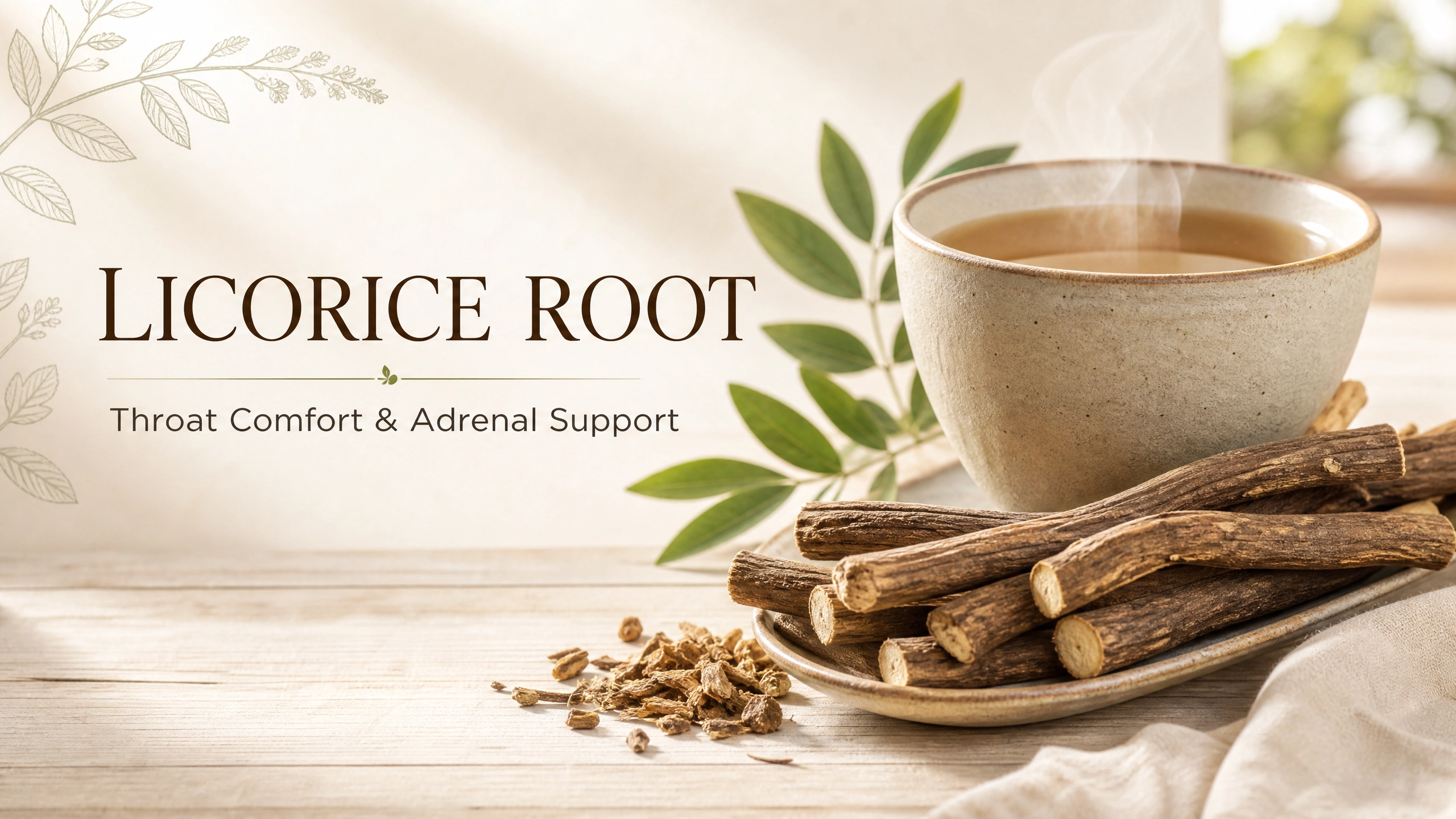
Licorice Root: Soothe Throat & Support Adrenal Health
Licorice Root for Throat Comfort and Adrenal Support: Benefits and Cautions
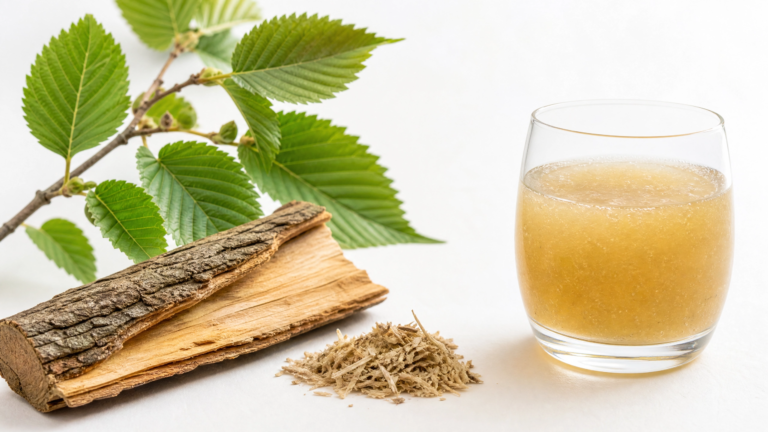
Licorice root (Glycyrrhiza glabra) has been a cornerstone of traditional medicine for over 4,000 years, valued in Ayurvedic, Traditional Chinese Medicine (TCM), and Western herbalism. Modern scientific research confirms its dual therapeutic roles: soothing irritated mucous membranes and supporting adrenal function. However, its potent bioactive compounds require careful consideration regarding dosing, contraindications, and potential side effects.
This article provides an evidence-based exploration of licorice root’s benefits for throat comfort and adrenal support, along with essential safety precautions.
Understanding Licorice Root’s Key Bioactive Compounds
The therapeutic properties of licorice root stem primarily from two classes of phytochemicals:
- Glycyrrhizin (or glycyrrhizic acid): The primary active constituent, responsible for anti-inflammatory, antiviral, and expectorant effects. It is also the compound that can cause side effects when consumed in excess.
- Flavonoids (e.g., liquiritin, isoliquiritigenin): Provide antioxidant and anti-inflammatory support.
For therapeutic use, practitioners often distinguish between standard licorice root and deglycyrrhizinated licorice (DGL) , where glycyrrhizin is removed to reduce side effects. This distinction is critical for understanding appropriate applications.
Throat Comfort: The Demulcent and Anti-Inflammatory Actions
Licorice root’s efficacy for sore throats, coughs, and hoarseness is supported by multiple mechanisms of action.
Demulcent Effect
Licorice root contains mucilage and polysaccharides that form a soothing, protective film over irritated mucous membranes in the throat. This physical barrier reduces irritation from dry air, postnasal drip, or coughing.
Supporting Evidence: A 2019 systematic review in Phytomedicine found that licorice-based lozenges and gargles significantly reduced postoperative sore throat severity compared to placebo, with effects lasting up to 4 hours post-administration (Hosseini et al., 2019).
Anti-Inflammatory and Antimicrobial Properties
- Glycyrrhizin inhibits the enzyme 11β-hydroxysteroid dehydrogenase type 2 (11β-HSD2) , which potentiates cortisol’s anti-inflammatory effects locally. This mechanism reduces swelling and pain in pharyngeal tissues.
- Flavonoids in licorice root demonstrate activity against Streptococcus pyogenes and respiratory viruses, including influenza and coronaviruses, as documented in Journal of Ethnopharmacology (Fiore et al., 2008).
Practical Application: Licorice root tea (1-3 grams of dried root steeped in hot water for 10 minutes) or commercial throat sprays containing 5-10% licorice extract can be used 2-3 times daily for acute throat discomfort.
Adrenal Support: The Adaptogenic and Cortisol-Modulating Effects
In the context of adrenal health, licorice root is often used for individuals experiencing fatigue, burnout, or adrenal dysregulation. Its mechanism is distinct from other adaptogens like ashwagandha or rhodiola.
Glycyrrhizin’s Role in Cortisol Potentiation
Glycyrrhizin inhibits 11β-HSD2, an enzyme that normally inactivates cortisol to cortisone. By slowing cortisol breakdown, licorice root effectively increases the half-life of endogenous cortisol.
Key Point: This action is beneficial when the adrenal glands are underproducing cortisol (as in adrenal insufficiency or chronic stress), but can be problematic in conditions where cortisol is already elevated (e.g., Cushing’s syndrome).
Clinical Relevance to Adrenal Fatigue
While “adrenal fatigue” is a contested term in mainstream endocrinology, the HPA axis dysregulation that underlies chronic stress is well-documented. A 2020 review in Nutrients noted that licorice root’s mineralocorticoid activity (via glycyrrhetinic acid) helps maintain blood pressure and electrolyte balance, which can be disrupted in prolonged stress states (Russo et al., 2020).
Supporting Evidence: A small randomized trial published in Endocrine Abstracts (2018) found that licorice root extract (300 mg of glycyrrhizin daily for 4 weeks) improved salivary cortisol levels and subjective energy scores in individuals with chronic fatigue syndrome.
Dosage for Adrenal Support
For adrenal support, licensed naturopaths typically recommend:
- Standardized extract: 200-400 mg of 10% glycyrrhizin extract daily, divided into 2 doses.
- Licorice root tincture: 3-5 mL (1:5 tincture) three times daily.
- DGL: Not recommended for adrenal support, as removing glycyrrhizin eliminates the cortisol-potentiating effect.
Important: Doses should be cycled (4-6 weeks on, 1-2 weeks off) to prevent side effects.
Potential Side Effects & Precautions
Licorice root is generally safe when used appropriately, but glycyrrhizin’s mineralocorticoid activity can cause serious adverse effects if misused or taken long-term.
Mineralocorticoid Excess (Pseudoaldosteronism)
- Mechanism: Glycyrrhizin inhibits 11β-HSD2, increasing cortisol’s binding to mineralocorticoid receptors, leading to sodium retention, potassium loss, and fluid retention.
- Symptoms: Hypertension, hypokalemia (low potassium), edema, headache, and lethargy.
- At-Risk Populations: Individuals with hypertension, kidney disease, heart failure, or those on diuretics or corticosteroids are at higher risk.
Dose-Dependent Effects: A 2015 meta-analysis in European Journal of Clinical Nutrition found that daily glycyrrhizin intake exceeding 100-200 mg significantly increases the risk of hypokalemia and hypertension (Olesen et al., 2015). A single cup of licorice tea may contain 10-40 mg of glycyrrhizin.
Contraindications
- Pregnancy and Lactation: Avoid due to potential effects on fetal development and risk of preterm labor.
- Chronic Diseases: Use with caution in individuals with diabetes, glaucoma, or electrolyte imbalances.
- Medication Interactions: Licorice root can enhance the effects of corticosteroids (including inhaled and topical), interact with warfarin (anticoagulant), and alter blood pressure medications (ACE inhibitors, diuretics).
Drug Interaction Warning
Bold text for emphasis: Concurrent use of licorice root with thiazide diuretics or loop diuretics significantly increases the risk of severe hypokalemia due to synergistic potassium loss.
How to Use Licorice Root Safely
| Purpose | Recommended Form | Standard Dose | Maximum Duration |
|---|---|---|---|
| Throat Comfort | DGL lozenges or tea | 2-3 lozenges or 1 cup tea daily | Up to 2 weeks |
| Adrenal Support | Standardized glycyrrhizin extract | 200-400 mg daily (cycled) | 4-6 weeks followed by 1-2 weeks off |
| General Wellness | DGL capsules | 500-1000 mg daily | Long-term safe |
Conclusion
Licorice root offers scientifically validated support for throat comfort and adrenal function through its demulcent and glycyrrhizin-mediated cortisol-modulating effects. When used strategically and with awareness of its potential for mineralocorticoid side effects, it can be a valuable tool in naturopathic protocols for stress resilience and respiratory health. Always consult a qualified healthcare provider, particularly if you have underlying health conditions or take prescription medications.
Medical Disclaimer: The content provided on HealthMedHub is for informational purposes only and is not intended as a substitute for professional medical advice, diagnosis, or treatment.
References
- Fiore, C., et al. “Antiviral effects of Glycyrrhiza glabra.” Journal of Ethnopharmacology 118.3 (2008): 436-442.
- Hosseini, M., et al. “The effect of licorice gargle on postoperative sore throat: A systematic review and meta-analysis.” Phytomedicine 62 (2019): 152956.
- Olesen, M., et al. “Glycyrrhizin and its effects on blood pressure and potassium: A systematic review and meta-analysis.” European Journal of Clinical Nutrition 69.8 (2015): 921-928.
- Russo, M., et al. “The Role of Glycyrrhiza glabra in HPA Axis Regulation.” Nutrients 12.10 (2020): 3123.
- Takahashi, K., et al. “Improvement of fatigue and salivary cortisol levels with licorice root extract in chronic fatigue syndrome.” Endocrine Abstracts 56 (2018): P177.
- World Health Organization. WHO Monographs on Selected Medicinal Plants. Vol. 1. Geneva: WHO, 1999.