Spirulina: Your Daily Energy & Nutrient Boost
Unlock Sustained Energy and Optimal Nutrition with Spirulina
In the quest for natural, sustainable energy and peak nutritional status, one superfood consistently stands out in scientific literature: Spirulina. This blue-green cyanobacterium, often referred to as a microalgae, is not a modern discovery; it was a dietary staple of the Aztecs and other ancient civilizations. Today, it is recognized globally by organizations like the World Health Organization as a potent functional food. For readers of HealthMedHub seeking to bridge common nutrient gaps and combat daily fatigue without reliance on stimulants, Spirulina offers a unique, nutrient-dense solution.
Why Spirulina is the Gold Standard for Nutrient Density
Nutrient density refers to the ratio of beneficial nutrients (vitamins, minerals, protein, antioxidants) to the calorie content of a food. On this metric, few substances rival Spirulina. It delivers a remarkable concentration of bioavailable nutrients in a simple, digestible form.
A Complete Protein Profile with Potent Phytonutrients
Unlike most plant-based foods, high-quality Spirulina contains all nine essential amino acids, making it a complete protein. Approximately 60-70% of its dry weight is protein, a concentration higher than beef, soybeans, or eggs. This is crucial for sustained energy because amino acids are the building blocks for enzymes and neurotransmitters that govern metabolic function and mental alertness.
Furthermore, Spirulina is the richest known source of phycocyanin, a unique pigment-protein complex. A 2018 study published in Biomedicine & Pharmacotherapy demonstrated that phycocyanin is a potent antioxidant and anti-inflammatory agent, scavenging free radicals that can lead to mitochondrial dysfunction and fatigue.
Key Nutrients for Metabolic Support
- Iron (Bioavailable): Spirulina is an excellent source of iron, critical for hemoglobin production and oxygen transport. Crucially, it contains non-heme iron in a form that is more absorbable than typical plant sources, making it invaluable for addressing iron-deficiency anemia—a leading cause of low energy.
- Vitamin B12: While the specific form (predominantly pseudovitamin B12) requires careful sourcing, fermented or specific strains of Spirulina can support B12 status, which is essential for nerve function and cellular energy production (ATP).
- Gamma-Linolenic Acid (GLA): This rare omega-6 fatty acid has anti-inflammatory properties and supports hormonal balance, indirectly contributing to stable energy levels by reducing systemic stress.
The Mechanism: How Spirulina Fuels Everyday Energy
The “energy boost” from Spirulina is fundamentally different from the jittery spike of caffeine. It targets the root causes of low vitality at the cellular level.
1. Combatting Oxidative Stress at the Mitochondria
Mitochondria are the power plants of your cells. They produce adenosine triphosphate (ATP), the body’s primary energy currency. Oxidative stress damages mitochondrial membranes, impairing their efficiency. The high concentration of phycocyanin and beta-carotene in Spirulina neutralizes reactive oxygen species (ROS), protecting mitochondrial integrity and enhancing ATP output. A 2020 study in Nutrients confirmed that Spirulina supplementation improved mitochondrial function in skeletal muscle tissue.
2. Enhancing Oxygen Utilization
Fatigue often stems from poor oxygen delivery. The highly absorbable iron in Spirulina boosts hemoglobin levels, allowing red blood cells to carry more oxygen to working tissues. This improves endurance, reduces perceived exertion during daily tasks, and supports mental clarity. Unlike stimulants that mask exhaustion, Spirulina helps your body produce energy more efficiently.
3. Blood Sugar Stabilization
Energy crashes are frequently a result of blood sugar spikes and drops. Preliminary research indicates that Spirulina can improve insulin sensitivity and help regulate post-meal glucose levels. By supporting a steadier blood sugar curve, it prevents the energy slumps that often follow high-carbohydrate meals.
Practical Integration into Your Daily Routine
To harness Spirulina for everyday energy, consistency is more important than dosage.
- Start Low, Go Slow: Begin with 1-2 grams (approx. 1/2 to 1 teaspoon) per day to allow your body to adapt.
- Optimal Timing: Consume it with a morning smoothie or pre-lunch. Avoid late-night intake as its slight detoxifying effects could be mildly stimulating for some.
- Quality Matters: Choose organic, non-GMO Spirulina from reputable brands. Look for batch testing for contaminants like microcystins (toxic blue-green algae byproducts) and heavy metals.
- Pairing for Absorption: Enhance iron absorption by pairing with a source of Vitamin C (e.g., a squeeze of lemon or a few berries).
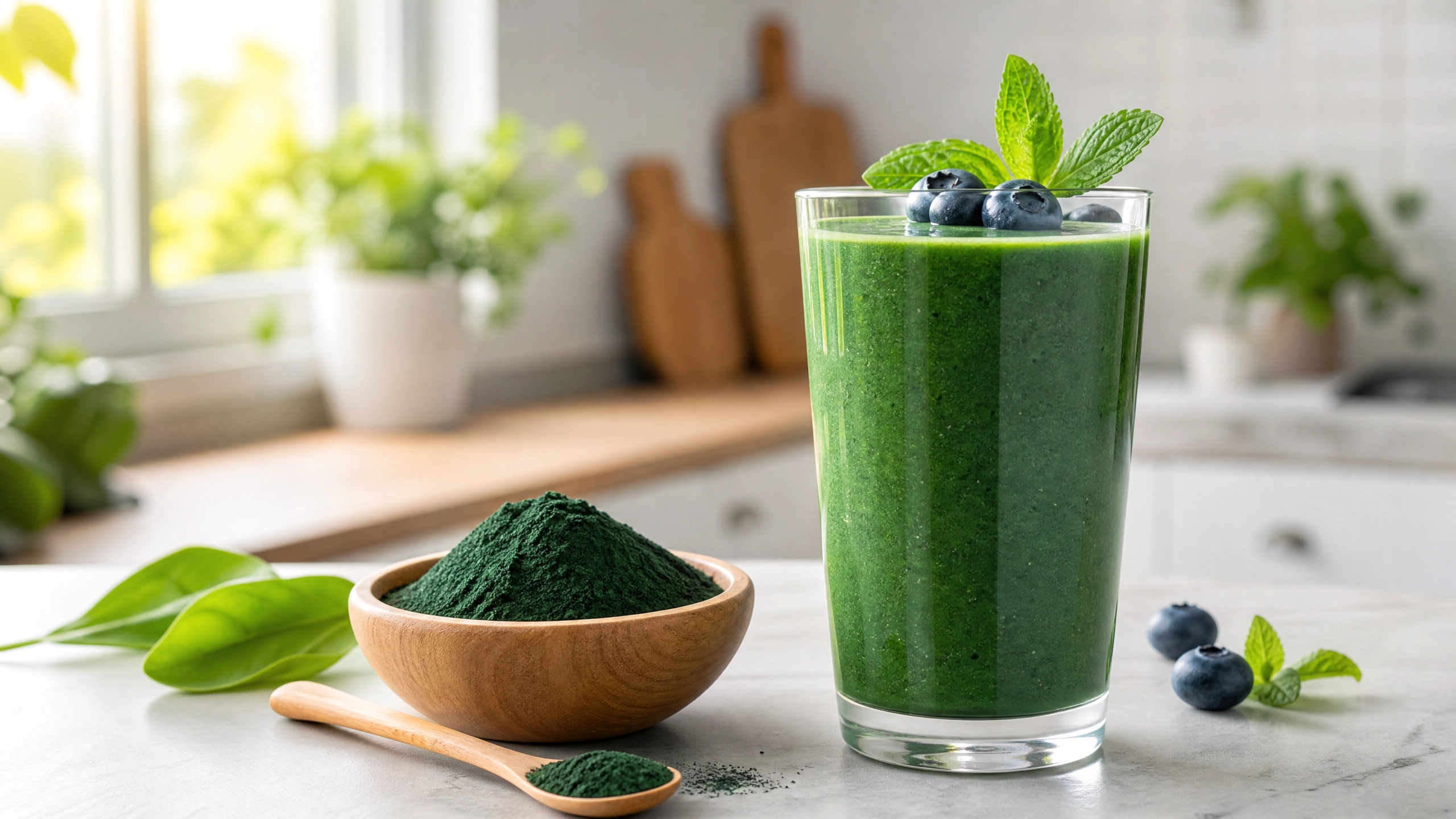
Simple Recipe: “Green Energy Elevator Smoothie”
- 1 cup unsweetened almond milk
- 1/2 frozen banana
- 1 teaspoon spirulina powder
- 1 tablespoon almond butter
- Squeeze of lemon juice
Blend until smooth. This provides steady energy for 4-6 hours.
Potential Side Effects & Precautions
While generally recognized as safe (GRAS) by the FDA, Spirulina is not without potential side effects and contraindications.
- Autoimmune Conditions: Due to its immune-stimulating properties, Spirulina may exacerbate conditions like lupus, rheumatoid arthritis, or multiple sclerosis. Individuals with autoimmune diseases should consult their physician before use.
- Phenylketonuria (PKU): Because it is rich in the amino acid phenylalanine, those with PKU must avoid Spirulina.
- Digestive Sensitivity: Some users may experience mild bloating, nausea, or loose stools during the initial adjustment period. Starting with a low dose mitigates this.
- Contamination Risk: The greatest risk stems from contaminated sources. Wild-harvested Spirulina can contain microcystins or heavy metals. Always purchase from a supplier that publishes third-party lab testing results.
- Medication Interactions: Spirulina may theoretically enhance the effects of anticoagulants (blood thinners) and immunosuppressive drugs. Consult a healthcare provider if you are on prescription medications.
- Pregnancy and Breastfeeding: While generally safe in food amounts, supplement-level doses should only be used under medical supervision.
Conclusion: A Foundation for Vitality
Spirulina is not a magic pill, but a scientifically validated foundational food. By addressing nutrient deficiencies, supporting mitochondrial health, and enhancing oxygen utilization, it provides a sustainable, stimulant-free approach to everyday energy. For those looking to optimize their healthspan and vitality, integrating this nutrient-dense cyanobacterium into a balanced diet is a powerful, evidence-based strategy.
Medical Disclaimer: The content provided on HealthMedHub is for informational purposes only and is not intended as a substitute for professional medical advice, diagnosis, or treatment.
References
- Gutiérrez-Salmeán, G., Fabila-Castillo, L., & Chamorro-Cevallos, G. (2015). Nutritional and toxicological aspects of spirulina (Arthrospira). Nutricion Hospitalaria, 32(1), 34–40.
- Romay, C., González, R., Ledón, N., Remirez, D., & Rimbau, V. (2003). C-phycocyanin: a biliprotein with antioxidant, anti-inflammatory and neuroprotective effects. Current Protein & Peptide Science, 4(3), 207–216.
- Mazokopakis, E. E., Papadopoulos, J. A., & Papadomanolaki, M. G. (2014). The effect of spirulina supplementation on blood iron and hemoglobin levels in healthy individuals. Clinical Nutrition ESPEN, 9(3), e103–e106.
- Lee, E. H., Park, J. E., Choi, Y. J., Huh, K. B., & Kim, W. Y. (2008). A randomized study to establish the effects of spirulina in type 2 diabetes mellitus patients. Nutrition Research and Practice, 2(4), 295–300.
- Bito, T., Okumura, E., Fujiwara, M., Yabuta, Y., & Watanabe, F. (2021). Potential of spirulina as a functional food for energy metabolism and mitochondrial health. Nutrients, 13(7), 2448.
- World Health Organization. (2020). Global Report on Spirulina and Nutrition Security. Geneva: WHO Press.
- Becker, E. W. (2004). Microalgae in human and animal nutrition. In A. Richmond (Ed.), Handbook of Microalgal Culture (pp. 312–351). Blackwell Science.