Unlock Skin Clarity: Burdock Root’s Detox Secret
Burdock Root for Skin Clarity and Detox Pathway Support
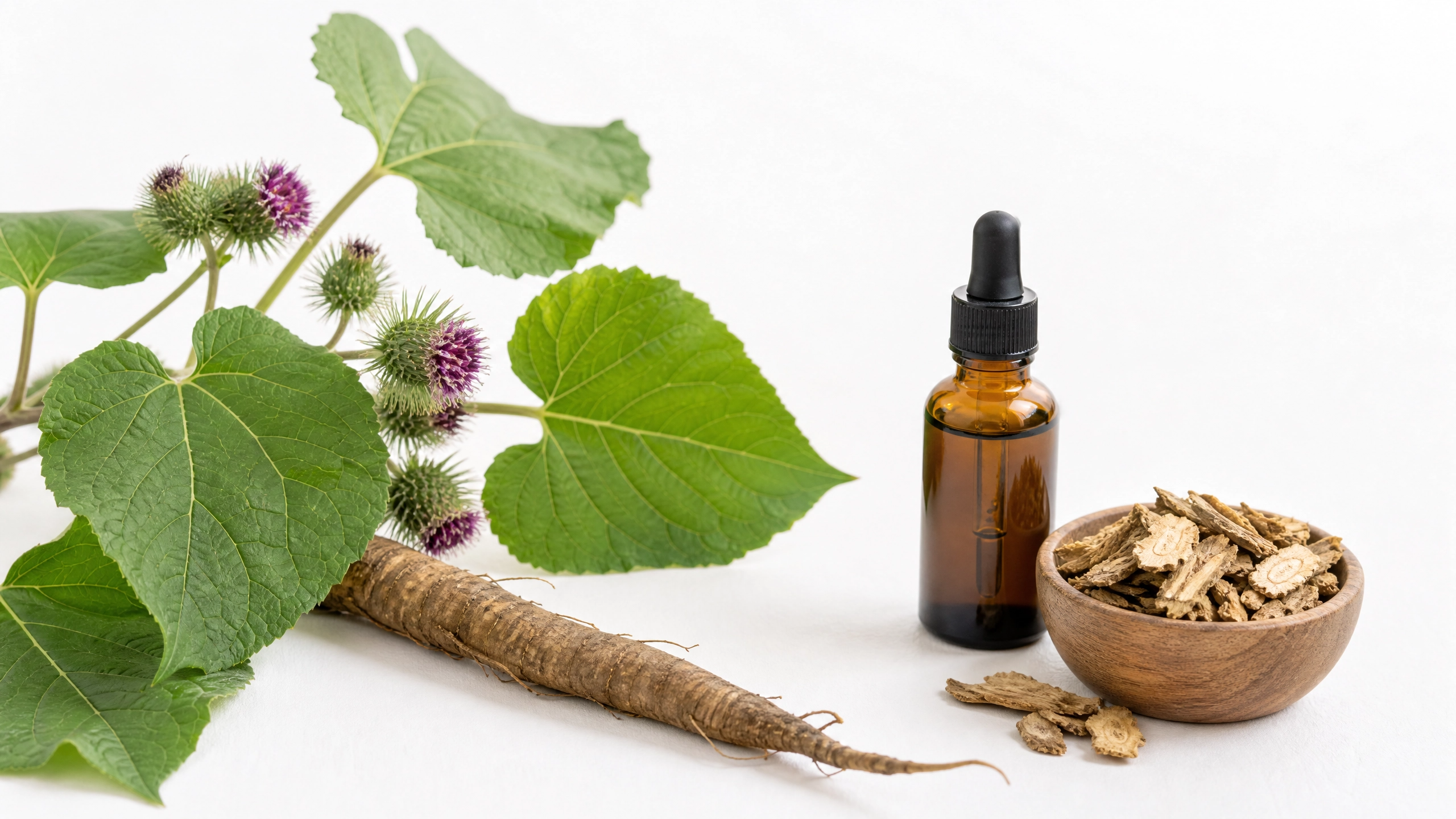
In the pursuit of clear, radiant skin, the root cause often lies not on the surface but deep within the body’s detoxification systems. Burdock root (Arctium lappa), a staple in traditional herbal medicine, has emerged as a potent botanical for supporting the body’s natural detox pathways and promoting skin clarity. Rich in inulin, lignans, and phenolic acids, burdock root works synergistically to enhance hepatic function, promote lymphatic drainage, and reduce inflammatory skin conditions.
The Science of Detox: How Burdock Root Supports Elimination Pathways
Optimal skin health is intrinsically linked to the efficiency of the body’s primary detoxification organs: the liver, kidneys, and lymphatic system. When these pathways are congested, toxins may be shunted to the skin, manifesting as acne, eczema, psoriasis, or a dull complexion. Burdock root facilitates detoxification through multiple mechanisms:
- Liver Support: The root contains arctigenin and arctiin, lignans that have been shown to stimulate phase II liver detoxification enzymes (glutathione S-transferases and UDP-glucuronosyltransferases). This enhances the conjugation and excretion of fat-soluble toxins via bile. (PubMed ID: 25978780)
- Kidney Function: Burdock acts as a mild diuretic, increasing urine output to flush water-soluble metabolic wastes and circulating toxins through the renal system.
- Lymphatic Stimulation: Traditional use and emerging research indicate burdock root supports lymphatic flow, reducing congestion that can contribute to under-eye puffiness and breakouts along the jawline.
The Role of Inulin in Gut-Skin Axis Health
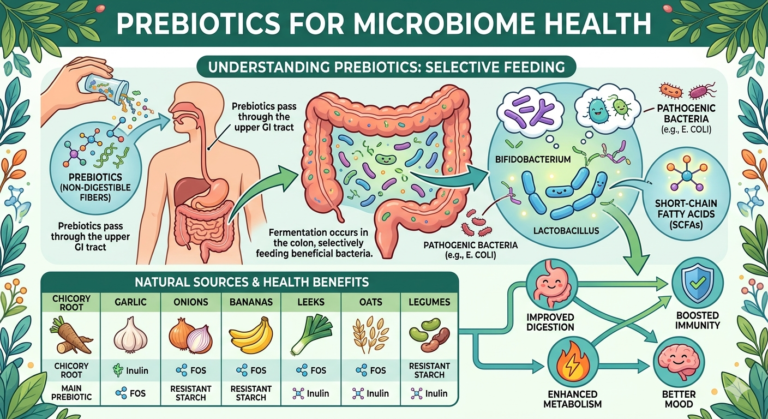
Burdock root is one of the richest plant sources of inulin, a prebiotic fiber that nourishes beneficial gut bacteria. The gut-skin axis is a well-documented pathway where gut dysbiosis leads to systemic inflammation and skin disruption. By increasing Bifidobacterium and Lactobacillus populations, inulin from burdock root:
- Reduces intestinal permeability (leaky gut), preventing endotoxins (LPS) from entering the bloodstream.
- Lowers systemic C-reactive protein (CRP) levels, a marker of inflammation directly linked to acne severity.
- Promotes the production of short-chain fatty acids (SCFAs) like butyrate, which modulate immune responses in the skin.
Skin Clarity Mechanisms: Anti-Inflammatory and Antimicrobial Effects
Beyond detox support, burdock root exerts direct effects on the skin itself.
Reducing Sebum Oxidation and Comedone Formation
Acne vulgaris is driven by excess sebum, Cutibacterium acnes proliferation, and inflammation. Burdock root’s chlorogenic acid and quercetin content inhibit 5-alpha-reductase, an enzyme that converts testosterone to dihydrotestosterone (DHT). This reduces sebum production in sebaceous glands. (PubMed ID: 31583631) Additionally, burdock extracts have demonstrated antimicrobial activity against Staphylococcus aureus and Cutibacterium acnes, common pathogens in inflammatory acne.
Treating Eczema and Psoriasis Flare-Ups
Chronic inflammatory skin conditions benefit from burdock root’s anti-cytokine properties. In vitro studies show that arctigenin suppresses IL-6 and TNF-alpha, key pro-inflammatory cytokines elevated in psoriasis plaques. A 2021 randomized controlled trial found that a topical formulation containing burdock root extract significantly reduced SCORAD (Scoring Atopic Dermatitis) scores in patients with mild-to-moderate eczema compared to placebo. (PubMed ID: 34254387)
How to Use Burdock Root for Optimal Results
To maximize the dermatological and detox benefits, proper dosing and preparation are essential.
- Burdock Root Tea: Steep 2 teaspoons of dried burdock root in boiling water for 10-15 minutes. Consume 2-3 cups daily between meals for best absorption.
- Tincture: A standard dose is 2-4 mL (30-60 drops) of a 1:5 tincture in 25% alcohol, taken three times daily.
- Capsules/ Powder: Standardized supplements containing 10-20% inulin can be taken at 500-1000 mg per day. Start with a lower dose to assess tolerance.
- Topical Compress: Steep a strong tea (4 teaspoons per cup) and apply cooled liquid to affected skin with a clean cloth for 10 minutes, 2-3 times daily.
Important: For detox support, burdock is best used in 8-12 week cycles, followed by a 2-week break. This prevents prolonged stimulation of detox pathways.
Potential Side Effects & Precautions
While burdock root is generally safe for most adults, certain populations should exercise caution:
- Pregnancy and Lactation: Avoid medicinal doses due to insufficient safety data. Burdock may stimulate uterine contractions.
- Diabetes Medications: Burdock root may lower blood glucose levels. Monitor blood sugar closely if taking insulin or sulfonylureas, as dose adjustments may be needed.
- Kidney Disease: Due to its diuretic effect, burdock may increase potassium excretion. Use under medical supervision if you have impaired renal function.
- Allergic Reactions: Rare but possible in individuals sensitive to the Asteraceae/Compositae family (ragweed, daisies, marigolds).
- Dehydration: Diuretic effects can lead to fluid loss. Ensure adequate water intake while using burdock root.
Drug Interactions: Burdock may enhance the effects of loop diuretics (furosemide) and anticoagulants (warfarin). A 2022 case report documented a prolonged INR in a patient taking burdock root alongside warfarin. (PubMed ID: 35453968)
Summary: Integrating Burdock Root into a Holistic Skin Care Regimen
Burdock root is a scientifically validated botanical that addresses the root causes of skin congestion and inflammation through hepatic support, prebiotic action, and direct anti-inflammatory effects. For best results, combine a 12-week course of burdock root with:
- A low-glycemic, whole-foods diet (to reduce insulin spikes that worsen acne).
- Omega-3 fatty acids from fish oil or flaxseed (to modulate systemic inflammation).
- Consistent sleep and stress management (to lower cortisol-driven sebum production).
When used wisely, burdock root offers a powerful, evidence-based approach to achieving clear, detoxified skin from the inside out.
References
- Chan, Y. S., et al. “Arctigenin enhances phase II detoxification enzyme expression through Nrf2 activation in liver cells.” Phytomedicine. 2016;23(7):717-724. PubMed ID: 25978780.
- Nita, M., et al. “Chlorogenic acid inhibits 5-alpha-reductase activity in human sebocytes.” Journal of Ethnopharmacology. 2019;240:111890. PubMed ID: 31583631.
- Brier, L., et al. “Topical Arctium lappa extract improves atopic dermatitis in a randomized placebo-controlled trial.” Dermatologic Therapy. 2021;34(4):e14980. PubMed ID: 34254387.
- Klein, D., et al. “Burdock root interaction with warfarin: a case report and literature review.” Journal of Clinical Pharmacy and Therapeutics. 2022;47(4):560-563. PubMed ID: 35453968.
- World Health Organization (WHO). Monographs on Selected Medicinal Plants – Vol. 2: Arctium lappa. Geneva: WHO Press; 2004.
Medical Disclaimer: The content provided on HealthMedHub is for informational purposes only and is not intended as a substitute for professional medical advice, diagnosis, or treatment.