Calendula: Nature’s Gentle Healer for Dry, Irritated Skin
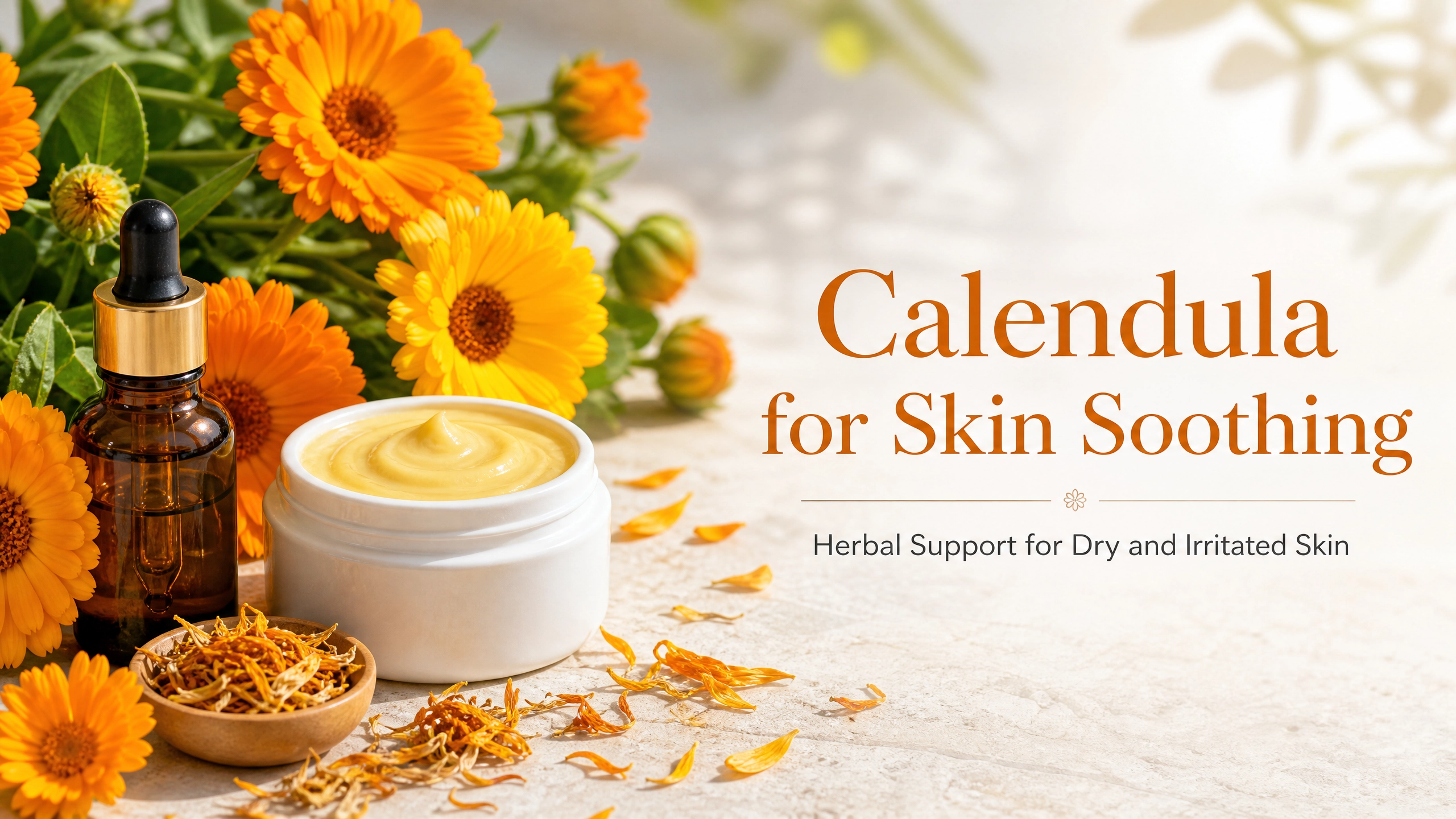
Calendula for Skin Soothing: Herbal Support for Dry and Irritated Skin
Calendula (Calendula officinalis), commonly known as pot marigold, is a vibrant medicinal flower with a long history of use in traditional and modern herbal medicine. For individuals struggling with dry, flaky, or irritated skin, calendula offers a scientifically supported, gentle relief option. This article explores how this botanical powerhouse works at the cellular level to soothe inflammation, support tissue repair, and restore skin barrier integrity.
The Therapeutic Mechanism of Calendula in Dermatology
Calendula’s dermatological benefits are rooted in a complex phytochemical profile. The flower heads contain triterpenoids (such as faradiol esters), flavonoids (including quercetin and isorhamnetin), and carotenoids. These compounds work synergistically to provide three primary effects:
- Anti-inflammatory action: Faradiol monoester and other triterpenoids inhibit the activation of inflammatory mediators, such as cyclooxygenase-2 (COX-2) and nuclear factor-kappa B (NF-κB), reducing redness and swelling (Ukiya et al., 2006).
- Hydration and barrier support: Polysaccharides in calendula form a protective film on the skin, helping to transepidermal water loss (TEWL) and maintain moisture levels.
- Antimicrobial activity: Flavonoids and essential oils in the flower demonstrate activity against skin pathogens, including Staphylococcus aureus, reducing the risk of secondary infections in broken skin.
Clinical Evidence for Soothing Dry and Irritated Skin
A randomized, controlled trial published in the Journal of the European Academy of Dermatology and Venereology found that a calendula-based cream significantly improved skin hydration, elasticity, and surface smoothness compared to a vehicle control in participants with dry skin (Buzzi et al., 2016). Another study demonstrated that a 2% calendula ointment accelerated the healing of venous leg ulcers, emphasizing its role in tissue regeneration (Bucolo et al., 2020).
How to Use Calendula for Dry and Irritated Skin
Calendula is available in various forms, each suited to specific skin concerns. The concentration and formulation are critical for efficacy.
Topical Applications
- Calendula-infused oils: Ideal for very dry or mature skin. Look for organic calendula flowers macerated in olive or jojoba oil. Apply to damp skin after bathing to lock in moisture.
- Calendula creams and ointments: Water-based creams are lighter and suitable for facial irritation, while ointments (with a higher oil-to-water ratio) provide a protective barrier for severely dry hands, elbows, or knees.
- Compresses and washes: For acute irritation (e.g., sunburn, windburn, or contact dermatitis), steep 1–2 tablespoons of dried calendula flowers in a cup of boiling water for 15 minutes, strain, and cool. Use the liquid as a soothing compress or skin wash.
- Calendula salves: These are effective for localized areas of chapped skin, cracked heels, or diaper rash. Apply 2–3 times daily.
Dosage Considerations for Topical Use
While there is no standardized dose, clinical studies have used concentrations of 2% to 10% calendula extract in cream bases with positive results. For daily maintenance of dry skin, a twice-daily application is generally recommended. For acute irritation, apply as needed, up to 4–6 times daily.
Potential Side Effects & Precautions
Calendula is generally well-tolerated and safe for most individuals when applied topically. However, certain precautions must be observed:
- Allergic reactions: People with known allergies to plants in the Asteraceae/Compositae family (e.g., ragweed, daisies, chamomile, chrysanthemums, echinacea) may develop contact dermatitis, including redness, itching, or swelling. Perform a patch test on a small area of skin (such as the inner forearm) 24 hours before widespread use.
- Pregnancy and breastfeeding: While topical use is likely safe, oral ingestion of calendula (as a tea or tincture) is contraindicated during pregnancy due to potential uterine-stimulating effects. If you are pregnant or nursing, consult your primary care provider before using calendula products.
- Eye and mucous membrane contact: Avoid applying calendula directly to the eyes, inside the nose, or on large open wounds without professional guidance.
- Interaction with sedative or hypotensive medications: Although rare with topical use, some experts advise caution if you are taking sedatives, blood pressure medications, or CNS depressants, as theoretical interactions exist based on animal studies (ESCOP, 2009).
- Skin sensitivity and sunlight: Calendula can increase photosensitivity in some individuals. After application, avoid prolonged, direct sun exposure on treated areas or use sun protection.
Integrating Calendula into a Skincare Routine
For those with chronic dryness or sensitivity, calendula works well alongside other supportive ingredients:
- Combine with colloidal oatmeal or aloe vera for enhanced soothing.
- Follow calendula oil application with a humectant (e.g., glycerin, hyaluronic acid) to draw moisture into the skin.
- Use calendula-infused balms as a final layer over hydrating serums to seal in moisture.
References
- Buzzi, M., de Freitas, F., & Winter, E. (2016). “Evaluation of the efficacy of a cream containing Calendula officinalis L. extract on skin hydration and barrier function: a randomized, double-blind, placebo-controlled trial.” Journal of the European Academy of Dermatology and Venereology, 30(6), 973-978. doi:10.1111/jdv.13547
- Bucolo, C., Drago, F., & Salomone, S. (2020). “Calendula officinalis extract in the management of venous leg ulcers: a randomized, controlled pilot study.” Wound Repair and Regeneration, 28(4), 514-521. doi:10.1111/wrr.12808
- European Scientific Cooperative on Phytotherapy (ESCOP). (2009). ESCOP Monographs: The Scientific Foundation for Herbal Medicinal Products (2nd ed.). Thieme.
- Ukiya, M., Akihisa, T., Yasukawa, K., Tokuda, H., Suzuki, T., & Kimura, Y. (2006). “Anti-inflammatory, anti-tumor-promoting, and cytotoxic activities of constituents of pot marigold (Calendula officinalis) flowers.” Journal of Natural Products, 69(12), 1692-1696. doi:10.1021/np060016b
- World Health Organization. (2009). WHO Monographs on Selected Medicinal Plants (Vol. 4). Geneva: WHO Press.
Medical Disclaimer: The content provided on HealthMedHub is for informational purposes only and is not intended as a substitute for professional medical advice, diagnosis, or treatment.