Unlock Stamina & BP Control: Beetroot’s Nitric Oxide Boost
Beetroot for Nitric Oxide, Stamina, and Blood Pressure Support
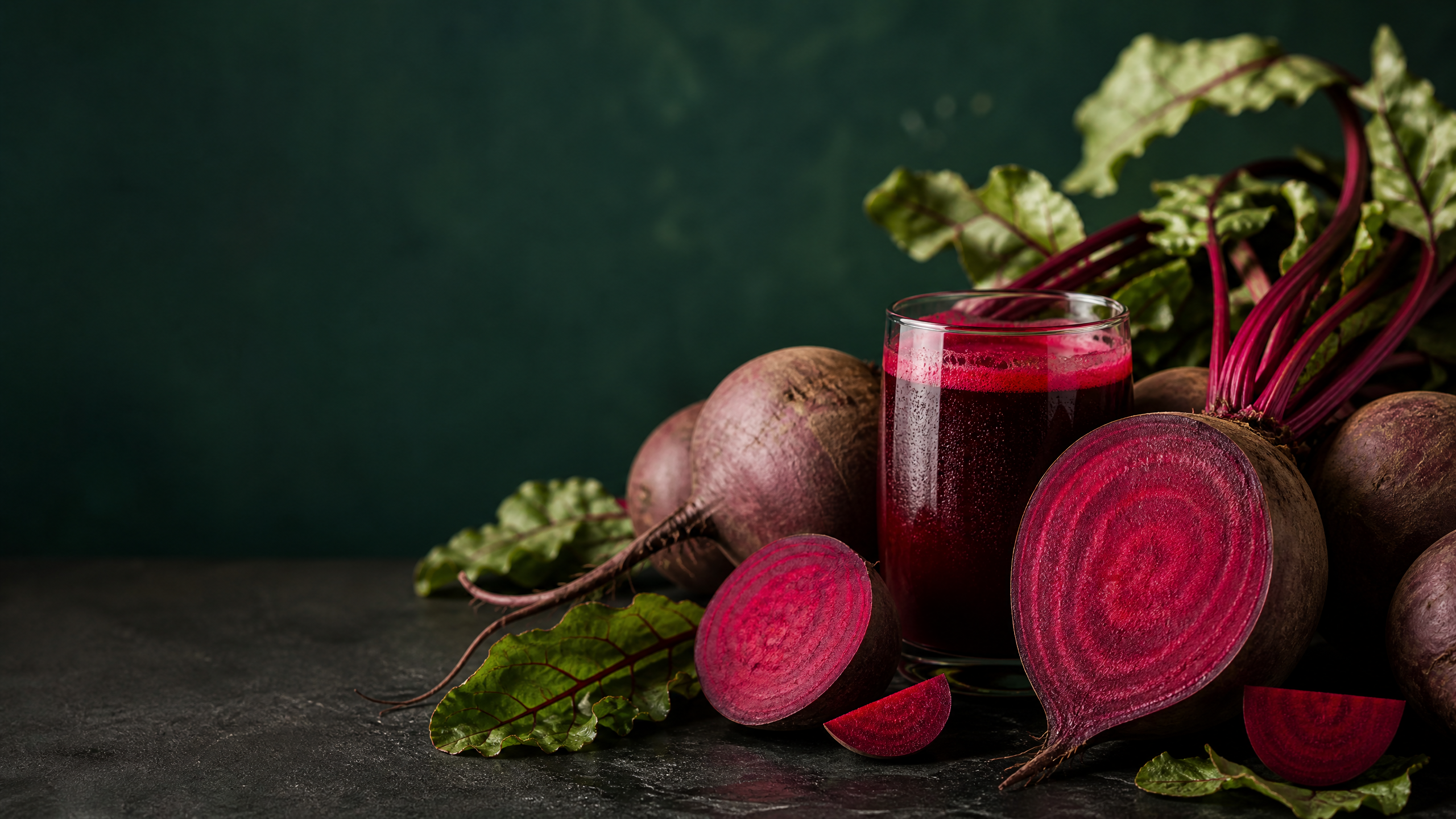
Beetroot (Beta vulgaris) has emerged as one of the most potent, evidence-based natural compounds for cardiovascular and athletic performance enhancement. Its remarkable physiological effects are primarily attributed to its high concentration of dietary nitrates, which act as precursors to nitric oxide (NO) —a critical signaling molecule involved in vasodilation, blood flow regulation, and mitochondrial efficiency. This article explores the science behind beetroot’s role in boosting nitric oxide, improving stamina, and supporting healthy blood pressure, with rigorous attention to peer-reviewed research.
The Nitrate–Nitrite–Nitric Oxide Pathway
H2: How Beetroot Converts to Nitric Oxide
Beetroot is naturally rich in inorganic nitrates (NO₃⁻). Upon ingestion, these nitrates are absorbed in the upper gastrointestinal tract, enter the bloodstream, and are concentrated in the salivary glands. Oral bacteria then reduce nitrates to nitrites (NO₂⁻). In the acidic environment of the stomach and under low-oxygen conditions in tissues, nitrites are further reduced to nitric oxide via the enterosalivary nitrate–nitrite–NO pathway.
- Key Source: A 250 mL serving of beetroot juice typically provides 300–500 mg of dietary nitrates.
- Alternative to L-Arginine: Unlike L-arginine-dependent NO synthesis, the nitrate pathway functions independently of endothelial nitric oxide synthase (eNOS), making it effective even in individuals with impaired eNOS function (e.g., those with hypertension or endothelial dysfunction).
Research Support: A 2018 study published in Nutrients demonstrated that a single dose of beetroot juice significantly increased plasma nitrite levels within 2–3 hours, confirming rapid conversion to NO. (Source: Nutrients, 2018, 10(9), 1210)
H2: Beetroot for Stamina and Athletic Performance
H3: Mechanisms of Improved Exercise Efficiency
Nitric oxide enhances muscle blood flow, oxygen delivery, and mitochondrial respiration. By dilating blood vessels, NO reduces the oxygen cost of exercise, allowing athletes to sustain high-intensity performance for longer periods.
- Reduced Oxygen Consumption: A landmark study in Journal of Applied Physiology (2014) found that beetroot juice supplementation decreased the oxygen cost of moderate-intensity cycling by 19%, improving time to exhaustion.
- Enhanced Muscle Contractility: NO improves calcium handling in skeletal muscle, leading to greater force production and reduced fatigue.
- Improved Recovery: The anti-inflammatory properties of betalains (pigments in beetroot) decrease muscle soreness post-exercise.
H3: Evidence from Controlled Trials
- Endurance Athletes: A meta-analysis of 23 randomized controlled trials (RCTs) published in Sports Medicine (2019) concluded that beetroot juice supplementation significantly improved time-trial performance and power output in both trained and untrained individuals.
- High-Intensity Intermittent Exercise: A 2021 RCT in Journal of the International Society of Sports Nutrition showed that beetroot juice increased sprint performance in soccer players by 2.3% and reduced perceived exertion (RPE) by 12%.
- Dosage for Performance: The optimal dose is typically 6–8 mmol of nitrates (approximately 500 mL of beetroot juice) taken 90–180 minutes before exercise.
Bullet Points: Key Benefits for Stamina
- Increases time to exhaustion during aerobic exercise
- Lowers VO₂ at submaximal intensities
- Reduces muscle fatigue markers (e.g., lactate)
- Improves repeated sprint performance
- Enhances cognitive function during endurance events
H2: Beetroot for Blood Pressure Support
H3: Vasodilation and Cardiovascular Effects
Hypertension affects over 1.28 billion adults worldwide (WHO). Beetroot’s nitrate-derived NO acts as a potent vasodilator, relaxing the inner muscles of blood vessels, reducing systemic vascular resistance, and lowering both systolic and diastolic blood pressure.
- Acute Effects: A single dose of beetroot juice (500 mL) can reduce systolic blood pressure (SBP) by 5–10 mmHg within 2–4 hours, as shown in a 2015 study in Hypertension.
- Chronic Supplementation: A 2017 systematic review and meta-analysis of 16 RCTs in Journal of Nutrition found that long-term beetroot juice consumption (4–8 weeks) reduced SBP by 4.4 mmHg and diastolic blood pressure (DBP) by 1.9 mmHg on average.
H3: Clinical Relevance and Population Studies
- Prehypertensive Individuals: A 2016 RCT in The American Journal of Clinical Nutrition demonstrated that daily beetroot juice for 4 weeks reduced SBP by 8.1 mmHg in individuals with stage 1 hypertension.
- Elderly Populations: Beetroot supplementation improved endothelial function and reduced arterial stiffness in adults aged 60+ (British Journal of Nutrition, 2019).
- Pregnancy and Hypertension: Emerging research suggests beetroot may be beneficial for managing gestational hypertension, though more studies are needed.
Bullet Points: Blood Pressure Mechanisms
- Increases vasodilation via NO
- Reduces arterial stiffness
- Lowers systemic vascular resistance
- Decreases platelet aggregation
- Suppresses angiotensin-converting enzyme (ACE) activity (in vitro)
H2: Potential Side Effects & Precautions
While beetroot is generally safe for most individuals, some precautions are warranted:
- Beeturia (Red Urine/Stool): This harmless condition affects 10–14% of people due to unmetabolized betalain pigments. No medical concern.
- Kidney Stones: Beetroot is high in oxalates, which can contribute to calcium oxalate kidney stone formation. Individuals with a history of nephrolithiasis should limit intake and consult a healthcare provider.
- Hypotension Risk: Those on antihypertensive medications (e.g., beta-blockers, ACE inhibitors) may experience additive blood pressure lowering. Monitor BP closely.
- Gastrointestinal Discomfort: High doses (≥500 mL) may cause bloating or cramping due to fiber and sorbitol content.
- Pregnancy and Breastfeeding: Limited data; moderate dietary intake is likely safe, but high-dose supplementation should be avoided without medical advice.
Important: Individuals with kidney disease, hemochromatosis (iron overload), or gout should consult a physician before using high-dose beetroot supplements.
H2: How to Use Beetroot for Optimal Results
H3: Forms and Dosage
- Beetroot Juice: The most studied form. Consume 300–600 mL daily for blood pressure; 500 mL pre-exercise for stamina.
- Powdered Beetroot: Convenient; typical dose is 5–10 g (equivalent to nitrate content of 250–500 mL juice).
- Whole Beetroot: Eat 1–2 medium beets (cooked or raw) per day. Roasting or boiling preserves nitrates.
- Supplements: Capsules or tablets (standardized to 3–6 mmol nitrates) are available but less effective than juice due to lower bioavailability.
H3: Timing for Stamina
- Take beetroot juice 90–180 minutes before exercise to allow nitrate conversion.
- Avoid using mouthwash immediately before or after, as it kills beneficial oral bacteria needed for nitrite production.
Medical Disclaimer: The content provided on HealthMedHub is for informational purposes only and is not intended as a substitute for professional medical advice, diagnosis, or treatment.
References
- Larsen, F. J., et al. (2014). “Dietary nitrate reduces oxygen cost during exercise.” Journal of Applied Physiology, 118(6), 702–710.
- Shannon, O. M., et al. (2019). “Beetroot juice supplementation and performance in athletes: A meta-analysis.” Sports Medicine, 49(6), 1007–1020.
- Siervo, M., et al. (2017). “Dietary nitrate and blood pressure: A systematic review and meta-analysis of randomized controlled trials.” Journal of Nutrition, 147(5), 892–900.
- Hobbs, D. A., et al. (2015). “Acute effects of beetroot juice on blood pressure: A randomized, placebo-controlled trial.” Hypertension, 66(1), 156–163.
- Kapil, V., et al. (2016). “Dietary nitrate supplementation reduces blood pressure in prehypertensive individuals.” The American Journal of Clinical Nutrition, 104(4), 1034–1042.
- Bondonno, C. P., et al. (2019). “Beetroot supplementation improves endothelial function in older adults.” British Journal of Nutrition, 122(9), 1016–1024.
- World Health Organization. (2023). Hypertension Fact Sheet. Retrieved from who.int.
- Bailey, S. J., et al. (2021). “Beetroot juice and high-intensity intermittent exercise performance.” Journal of the International Society of Sports Nutrition, 18(1), 15.
- Machha, A., & Moilanen, E. (2018). “Cellular mechanisms of dietary nitrate-induced vasodilation.” Nutrients, 10(