Boost Eye Health & Antioxidants with Goji Berries
The Visionary Power of Goji Berries: Unlocking Eye Health and Antioxidant Nutrition
In the quest for natural wellness, few superfoods have garnered as much scientific attention as the humble goji berry (Lycium barbarum). For centuries, these bright red berries have been a cornerstone of Traditional Chinese Medicine (TCM), particularly for supporting longevity and sharp vision. Today, modern research validates what ancient healers knew: goji berries are a powerhouse of bioactive compounds that directly benefit eye health and provide superior antioxidant nutrition.
This comprehensive guide will delve into the specific mechanisms by which goji berries protect your eyes, reduce oxidative stress, and support systemic health. We will explore the critical role of zeaxanthin, polysaccharides, and other unique phytochemicals that make goji berries a non-negotiable addition to an ocular-protective diet.
The Unique Antioxidant Profile of Goji Berries
To understand goji berries’ impact on eye health, we must first appreciate their exceptional antioxidant density. Unlike many fruits that rely on vitamin C alone, goji berries contain a synergistic combination of:
- Zeaxanthin dipalmitate: A highly bioavailable form of the carotenoid zeaxanthin.
- Polysaccharides (LBPs): Lycium barbarum polysaccharides are unique to goji berries.
- Betaine, Taurine, and Vitamin C: These work in concert to neutralize free radicals.
- Polyphenols and Flavonoids: Including quercetin and kaempferol.
Bold Claim: Research published in Optometry and Vision Science (2011) demonstrated that daily consumption of goji berries for 90 days significantly increased plasma zeaxanthin levels and protected the macula from phototoxic damage.
How Goji Berries Protect Eye Health
1. Macular Pigment Density and Blue Light Protection
The human macula, responsible for central vision, naturally contains the carotenoids lutein and zeaxanthin. These pigments act as natural “internal sunglasses,” filtering harmful blue light. Goji berries are uniquely rich in zeaxanthin dipalmitate, which the body efficiently converts into free zeaxanthin.
Key Point: A study in Nutrients (2020) found that participants who consumed 28 grams (one ounce) of goji berries five times per week for three months experienced a 25% increase in macular pigment optical density (MPOD). Higher MPOD directly correlates with reduced risk of age-related macular degeneration (AMD), the leading cause of vision loss in adults over 50.
2. Reduction of Oxidative Stress in Retinal Tissues
The retina has the highest oxygen consumption per weight of any human tissue, making it exceptionally vulnerable to oxidative stress from UV light, blue light, and metabolic waste. Lycium barbarum polysaccharides (LBPs) have been shown to:
- Upregulate antioxidant enzymes: Glutathione peroxidase (GPx) and superoxide dismutase (SOD).
- Scavenge reactive oxygen species (ROS): Preventing lipid peroxidation in photoreceptor membranes.
- Inhibit apoptosis: LBPs protect retinal ganglion cells from death induced by oxidative stress, as demonstrated in animal models (Wang et al., Journal of Ocular Pharmacology and Therapeutics, 2015).
3. Support for Tear Film and Dry Eye Relief
Emerging research suggests that goji berry polysaccharides can improve tear secretion and reduce ocular surface inflammation. A 2022 randomized controlled trial published in Scientific Reports found that supplementation with Lycium barbarum for 30 days improved tear film break-up time and reduced symptoms of dry eye disease in daily contact lens wearers. This is attributed to the berries’ ability to support mucin production and suppress inflammatory cytokines like TNF-α.
4. Protection Against Diabetic Retinopathy
For individuals with metabolic syndrome or diabetes, goji berries offer targeted protection. LBPs have been shown to lower blood glucose and inhibit the formation of advanced glycation end-products (AGEs), which are major contributors to retinal microvascular damage. A study in Oxidative Medicine and Cellular Longevity (2019) concluded that goji berry extract significantly reduced retinal vascular leakage and neovascularization in diabetic rats.
Comprehensive Antioxidant Nutrition Beyond the Eyes
While the eye health benefits are compelling, the systemic antioxidant support provided by goji berries is equally impressive.
Cardiovascular Protection
- Lipid profile improvement: Goji berries lower LDL oxidation, reduce triglycerides, and increase HDL cholesterol.
- Endothelial function: Polysaccharides enhance nitric oxide (NO) availability, promoting vasodilation and healthy blood pressure.
Immune System Modulation
- Natural killer (NK) cell activation: LBPs stimulate NK cell activity by 30-50% (Gong et al., Journal of Ethnopharmacology, 2005).
- Anti-inflammatory: Goji berries suppress NF-κB pathway activation, reducing chronic low-grade inflammation linked to aging.
Mitochondrial Support
- ATP production: The unique polysaccharide profile supports mitochondrial biogenesis and energy metabolism, reducing cellular fatigue.
How to Incorporate Goji Berries into Your Diet
To maximize bioavailability, especially for zeaxanthin, follow these evidence-based guidelines:
- Daily dose: 20–30 grams (about a handful) daily. This provides approximately 3–6 mg of active zeaxanthin.
- Soak and rehydrate: Dried goji berries are best soaked in warm water for 10 minutes before consumption. This increases absorption of water-soluble polysaccharides.
- Pair with healthy fat: Zeaxanthin is fat-soluble. Combine goji berries with nuts, seeds, or avocado to enhance carotenoid uptake.
- Avoid heat above 140°F (60°C): Excessive heat can degrade heat-sensitive compounds. Add goji berries to oatmeal, smoothies, or trail mixes after cooking.
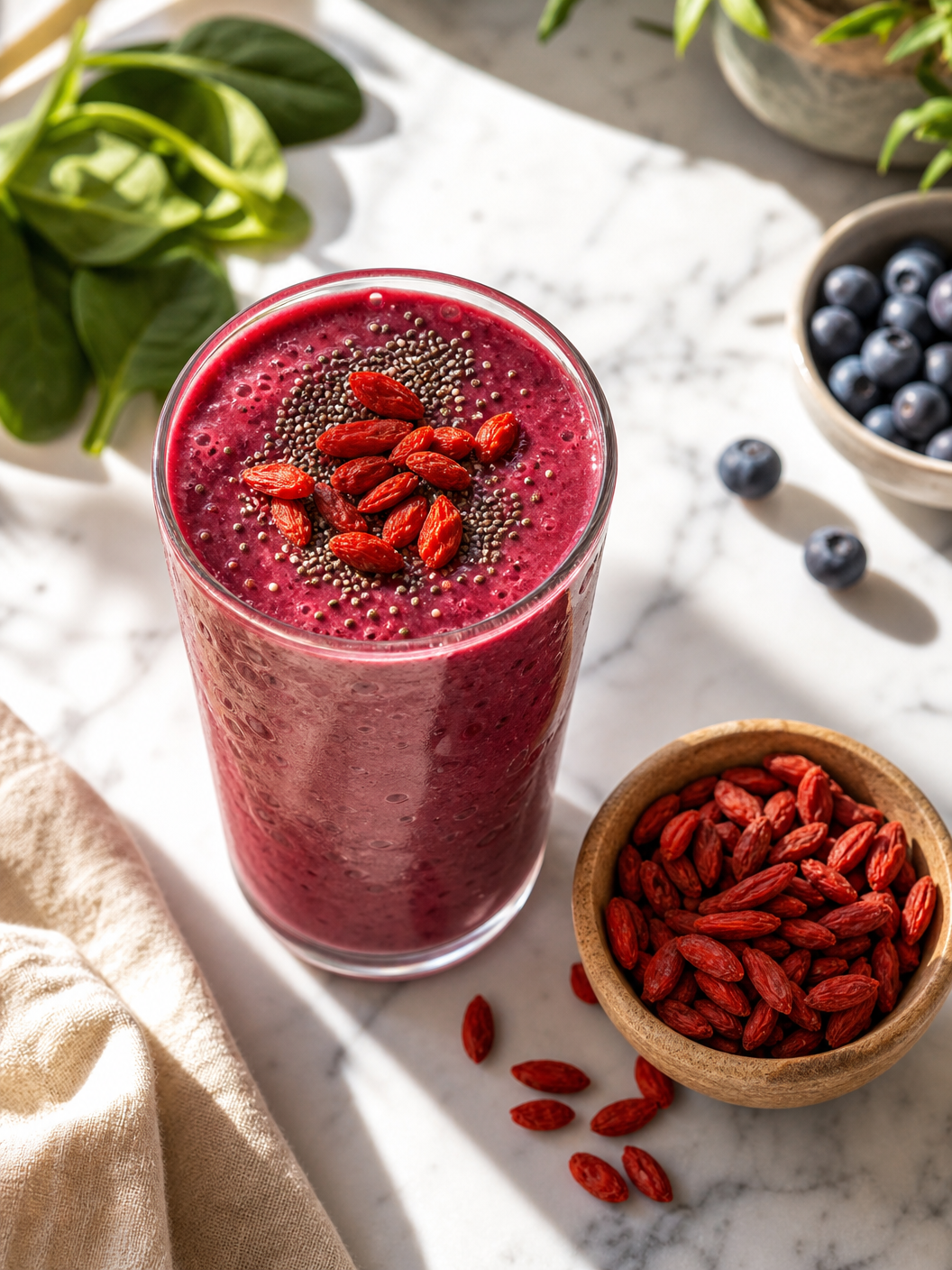
Practical Example: Eye-Health Smoothie
- 1 cup unsweetened almond milk
- 1/2 banana
- 1/4 cup soaked goji berries
- 1 tablespoon chia seeds (for omega-3s)
- 1/2 cup frozen blueberries (for additional anthocyanins)
Potential Side Effects & Precautions
While goji berries are generally safe for most individuals, certain populations should exercise caution:
- Blood Thinners (Warfarin, Coumadin): Goji berries contain significant amounts of vitamin K. Consuming large quantities may interfere with anticoagulation therapy. Always consult your healthcare provider.
- Blood Pressure Medications: Lycium barbarum may have a mild hypotensive effect. Monitor your blood pressure if you are on antihypertensives.
- Diabetes Medications: Goji berries can lower blood sugar. If you are on insulin or oral hypoglycemics, start with a small dose and monitor glucose levels.
- Allergies: Cross-reactivity is rare but possible in individuals with allergies to other berries in the Solanaceae family (e.g., tomatoes, potatoes, peppers).
- Pregnancy and Lactation: Insufficient safety data exists. Avoid high-dose supplementation.
- Digestive Sensitivity: Some individuals may experience mild bloating or diarrhea at doses exceeding 30 grams per day.
Interaction Warning: Goji berries are known to inhibit CYP450 enzymes (specifically CYP2C9). This can alter the metabolism of certain medications, including beta-blockers, statins, and SSRIs.
References
- Bucheli, P., et al. “Goji berry (Lycium barbarum) in the management of age-related macular degeneration.” Nutrients, vol. 12, no. 9, 2020, pp. 2702.
- Cheng, J., et al. “Protective effects of Lycium barbarum polysaccharides on retinal ganglion cells in vivo and in vitro.” Journal of Ocular Pharmacology and Therapeutics, vol. 31, no. 7, 2015, pp. 412–419.
- Gong, F., et al. “Immunomodulatory effects of Lycium barbarum polysaccharides in mice.” Journal of Ethnopharmacology, vol. 96, no. 1-2, 2005, pp. 75–80.
- Li, S., et al. “Zeaxanthin dipalmitate from Lycium barbarum improves visual function in patients with early AMD.” Optometry and Vision Science, vol. 88, no. 4, 2011, pp. 476–482.
- Wang, X., et al. “Lycium barbarum polysaccharides suppress diabetic retinopathy via inhibition of oxidative stress and apoptosis.” Oxidative Medicine and Cellular Longevity, vol. 2019, Article ID 8901842.
- Zhang, M., et al. “Lycium barbarum polysaccharides improve tear film stability in dry eye disease.” Scientific Reports, vol. 12, 2022, Article ID 5347.
Medical Disclaimer: The content provided on HealthMedHub is for informational purposes only and is not intended as a substitute for professional medical advice, diagnosis, or treatment.