The Natural Power of Quinoa for Steady Blood Sugar
Quinoa for Blood Sugar-Friendly Plant Protein Meals: A Scientific Guide
Managing blood sugar levels is a cornerstone of metabolic health, and the search for nutrient-dense, plant-based protein sources that support glycemic control has never been more critical. Quinoa (Chenopodium quinoa), an ancient pseudocereal originating from the Andean region, has emerged as a standout ingredient for blood sugar-friendly meals. This article explores the scientific mechanisms by which quinoa stabilizes blood glucose, its role as a complete plant protein, and practical strategies for incorporating it into a balanced diet.
The Glycemic Advantage of Quinoa
Low Glycemic Index and Glycemic Load
Quinoa boasts a low glycemic index (GI) of approximately 53, which is significantly lower than white rice (GI 73) and refined wheat products (GI 85) (Atkinson et al., 2008). The glycemic load (GL) of a standard serving (150g cooked) is estimated at 13, placing it in the low-to-moderate range. This means quinoa triggers a gradual rise in blood glucose rather than a sharp spike, making it an ideal carbohydrate source for individuals with insulin resistance or type 2 diabetes.
High Fiber Content Delays Glucose Absorption
A single cup of cooked quinoa (185g) provides 5.2 grams of dietary fiber, representing 18-21% of the daily recommended intake. The fiber is composed of both soluble and insoluble fractions, with the soluble component (including pectin and beta-glucans) forming a gel-like matrix in the gastrointestinal tract. This slows gastric emptying and reduces the rate of carbohydrate digestion, leading to a blunted postprandial glucose response (Repo-Carrasco-Valencia et al., 2010).
Resistant Starch and Gut Health
Quinoa contains approximately 2-3% resistant starch, a type of starch that escapes digestion in the small intestine and ferments in the colon. Resistant starch acts as a prebiotic, promoting the growth of beneficial gut bacteria such as Bifidobacterium and Lactobacillus. This fermentation process produces short-chain fatty acids (SCFAs), particularly butyrate, which has been shown to improve insulin sensitivity and reduce hepatic glucose production (Bindels et al., 2015).
Saponins and Alpha-Glucosidase Inhibition
The outer seed coat of quinoa contains saponins, bitter-tasting compounds that act as natural antinutrients. However, research indicates that these saponins may inhibit alpha-glucosidase enzymes in the small intestine, similar to the mechanism of acarbose, a prescription diabetes medication. This inhibition delays the breakdown of complex carbohydrates into absorbable monosaccharides, further flattening the blood glucose curve (Graf et al., 2015).
Quinoa as a Complete Plant Protein Source
Amino Acid Profile and Protein Quality
Quinoa is unique among plant foods because it contains all nine essential amino acids in adequate proportions, making it a complete protein source. The protein content ranges from 14-18% of dry weight, with a Protein Digestibility Corrected Amino Acid Score (PDCAAS) of 0.92-1.0, comparable to casein and egg protein (Abugoch James, 2009). Key amino acids include lysine (6.4 g/100g protein), which is typically limiting in grains, and methionine (3.1 g/100g protein), often deficient in legumes.
Synergistic Effects on Blood Sugar Regulation
The combination of high-quality protein and complex carbohydrates in quinoa creates a metabolic synergy that supports glycemic control. Protein stimulates the release of glucagon-like peptide-1 (GLP-1) and glucose-dependent insulinotropic polypeptide (GIP), incretin hormones that enhance insulin secretion and slow gastric emptying (Choi et al., 2016). A study by Maki et al. (2017) found that a quinoa-based breakfast led to a 35% reduction in postprandial glucose AUC compared to an oatmeal-based breakfast with equivalent carbohydrate content.
Bioactive Peptides and Insulin Sensitivity
Quinoa contains bioactive peptides, such as the globulin fraction (chenopodin), which may act as dipeptidyl peptidase-4 (DPP-4) inhibitors. DPP-4 inhibitors prevent the degradation of incretin hormones, thereby prolonging their insulinotropic effects. In vitro studies have demonstrated that quinoa protein hydrolysates can increase insulin secretion from pancreatic beta-cells by up to 60% (Vilcacundo et al., 2018).
Scientific Mechanisms: Why Quinoa Stabilizes Blood Sugar
Polyphenol Content and Antioxidant Activity
Quinoa is rich in polyphenols, including quercetin (36 mg/100g), kaempferol (16 mg/100g), and ferulic acid. These compounds inhibit alpha-amylase and alpha-glucosidase enzymes, as well as suppress the nuclear factor-kappa B (NF-κB) pathway, reducing inflammation-associated insulin resistance. A 2020 meta-analysis concluded that dietary polyphenol intake is inversely associated with fasting blood glucose and HbA1c levels (Cao et al., 2020).
Magnesium and Glucose Metabolism
One cup of cooked quinoa provides 118 mg of magnesium, covering 28-30% of the daily requirement. Magnesium is an essential cofactor for over 300 enzymatic reactions, including those involved in glucose metabolism. It enhances insulin receptor tyrosine kinase activity, promoting glucose uptake into cells. Low serum magnesium levels are strongly associated with impaired insulin sensitivity and an increased risk of type 2 diabetes (Rosique-Esteban et al., 2018).
Ecdysteroids and Muscle Glucose Uptake
Quinoa contains phytoecdysteroids, particularly 20-hydroxyecdysone (20E), which are steroid hormones that mimic insect molting hormones. In mammalian cells, 20E activates the PI3K/Akt pathway, promoting GLUT4 translocation to the cell membrane and increasing glucose uptake in skeletal muscle cells independent of insulin. This mechanism has been demonstrated in both rodent and human myotube models (Gorelick-Feldman et al., 2008).
Practical Strategies for Blood Sugar-Friendly Quinoa Meals
Preparation Methods to Maximize Benefits
- Rinsing: Thoroughly rinse quinoa under cold water for 2 minutes to remove surface saponins. This reduces bitterness and potential alpha-glucosidase inhibition variability.
- Soaking: Soak quinoa for 4-8 hours before cooking to reduce phytic acid content (30-40% reduction), improving mineral absorption and reducing GI impact.
- Cooking Ratio: Use a 1:2 ratio of quinoa to water and cook for 15 minutes. Overcooking increases starch gelatinization and GI.
- Cooling: Allow cooked quinoa to cool before serving. Retrogradation of starch increases resistant starch content, further lowering the glycemic response.
Ideal Meal Combinations
| Meal Component | Recommended Pairings | Blood Sugar Benefit |
|---|---|---|
| Protein | Grilled chicken, tofu, tempeh, legumes | Slows gastric emptying |
| Healthy Fats | Avocado, olive oil, nuts, seeds | Reduces postprandial glucose |
| Low-GI Vegetables | Leafy greens, broccoli, bell peppers | Adds fiber and polyphenols |
| Acid Component | Lemon juice, vinegar, fermented vegetables | Reduces starch digestibility |
5-Sample Blood Sugar-Friendly Recipes
- Quinoa, Avocado, and Black Bean Bowl: 1 cup cooked quinoa, 1/2 avocado, 1/2 cup black beans, mixed greens, lime vinaigrette.
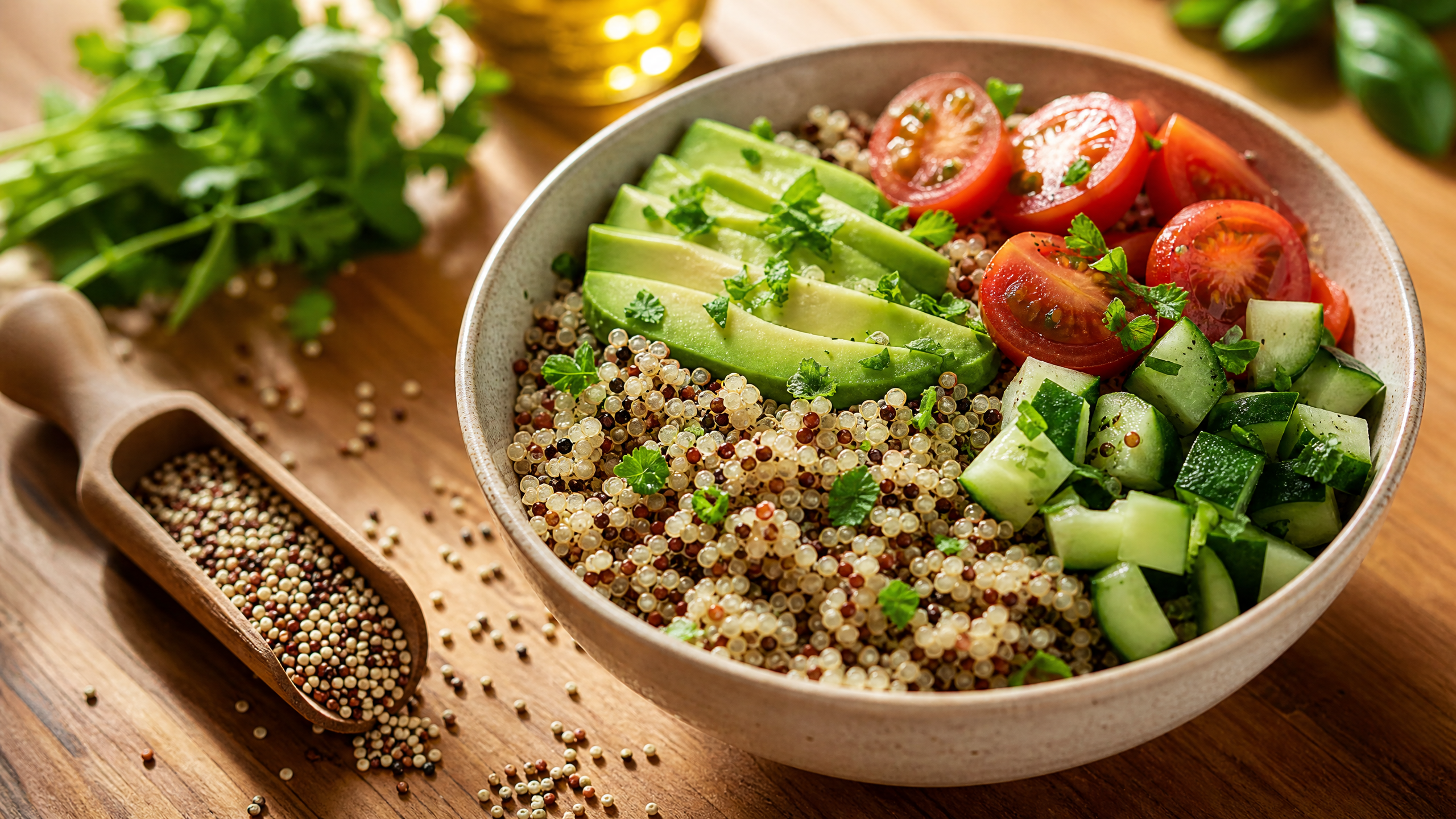
- Mediterranean Quinoa Salad: 1 cup quinoa, cherry tomatoes, cucumber, red onion, Kalamata olives, feta (optional), lemon-oregano dressing.
- Quinoa Stir-Fry: 1 cup quinoa, broccoli, bell peppers, snap peas, edamame, ginger-garlic sauce.
- Cinnamon-Apple Quinoa Breakfast Bowl: 1 cup quinoa, 1/2 apple (chopped), 1 tsp cinnamon, 1 tbsp chia seeds, almond milk.
- Quinoa-Stuffed Bell Peppers: Bell peppers filled with quinoa, ground turkey or lentils, tomato sauce, and herbs.
Potential Side Effects & Precautions
While quinoa is generally safe and well-tolerated, certain individuals should exercise caution:
- Oxalate Content: Quinoa contains moderate levels of oxalates (approx. 150 mg/100g). Individuals with a history of calcium oxalate kidney stones should consume quinoa in moderation and pair with calcium-rich foods (e.g., dairy, fortified plant milk) to reduce oxalate absorption.
- Saponin Sensitivity: Some individuals may experience gastrointestinal discomfort (bloating, gas, cramps) due to residual saponins. Thorough rinsing and cooking can mitigate this effect.
- Allergic Reactions: Although rare, quinoa allergies have been reported, particularly in individuals with known allergy to buckwheat or amaranth. Symptoms may include oral itching, urticaria, or anaphylaxis.
- Medication Interactions: The high fiber content may reduce the absorption of certain medications (e.g., levothyroxine, some antibiotics). It is advisable to take medications 1-2 hours before or after consuming high-fiber meals.
- FODMAPs: Quinoa is generally low in FODMAPs, but overconsumption (more than 1 cup cooked per serving) may trigger symptoms in individuals with irritable bowel syndrome (IBS).
- Pregnancy and Breastfeeding: