Nettle Leaf: Natural Histamine Balance for Allergies
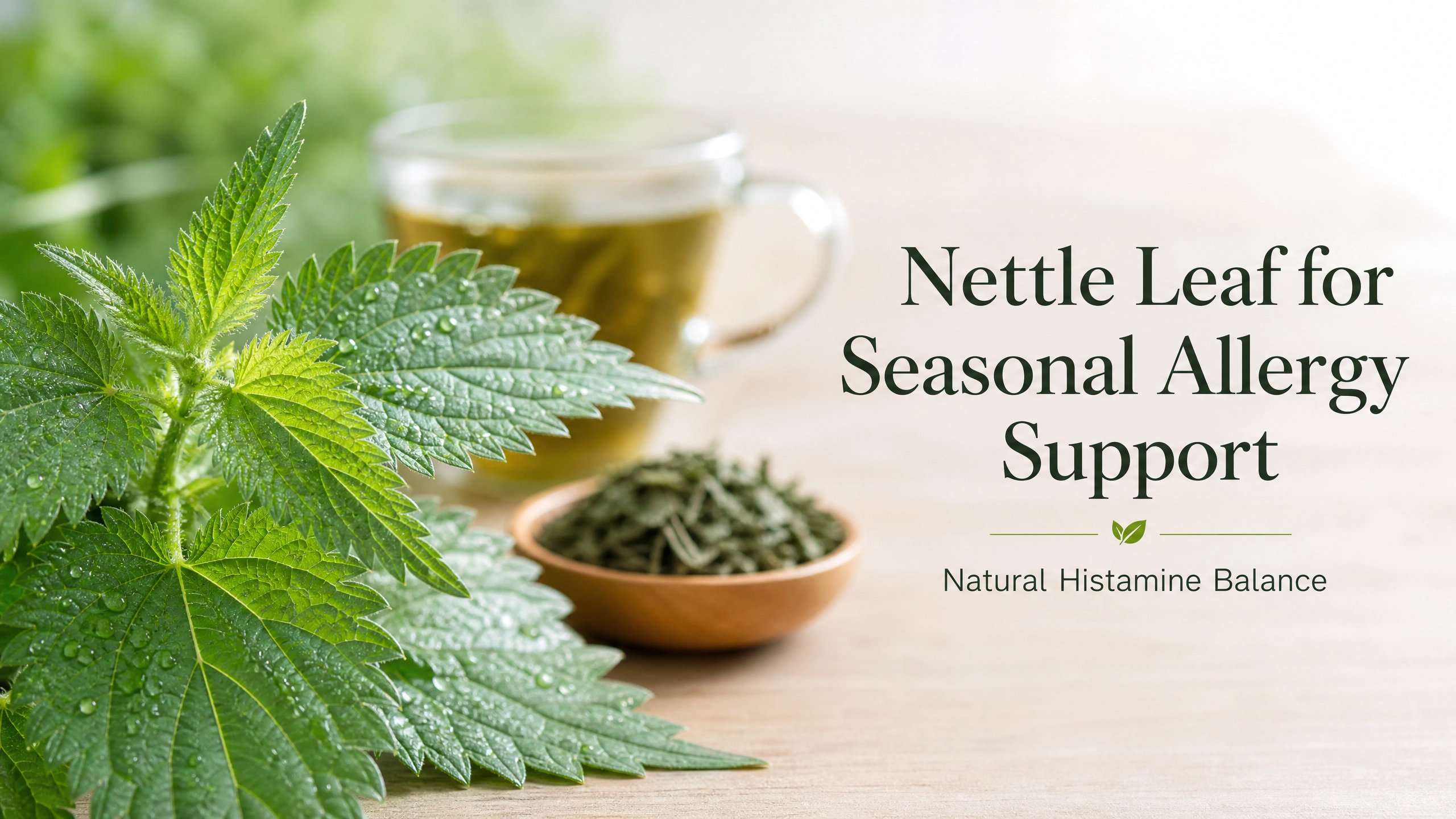
Nettle Leaf for Seasonal Allergy Support: Natural Histamine Balance
Seasonal allergies—often referred to as hay fever or allergic rhinitis—affect millions worldwide, with symptoms ranging from sneezing and nasal congestion to itchy eyes and fatigue. While conventional antihistamines provide relief, many individuals seek natural alternatives that address the root cause of histamine dysregulation. Urtica dioica, commonly known as stinging nettle or nettle leaf, has emerged as a clinically supported botanical for modulating histamine release and reducing allergic inflammation. This article explores the mechanisms, scientific evidence, and practical applications of nettle leaf for seasonal allergy support.
Understanding Histamine and Allergic Inflammation
Histamine is a biogenic amine synthesized from the amino acid histidine and stored primarily in mast cells and basophils. During an allergic response, exposure to allergens such as pollen, dust mites, or pet dander triggers immunoglobulin E (IgE)-mediated activation of these cells, leading to histamine release. This cascade results in vasodilation, increased vascular permeability, smooth muscle contraction, and stimulation of sensory nerve endings—manifesting as sneezing, rhinorrhea, itching, and congestion.
Natural Histamine Balance: The Role of Mast Cell Stabilization
Rather than blocking histamine receptors after release (as conventional antihistamines do), nettle leaf targets the upstream process of mast cell degranulation. By stabilizing mast cell membranes, nettle leaf reduces the release of histamine and other inflammatory mediators, including prostaglandins and leukotrienes. This mechanism offers a foundational approach to managing allergic responses without the drowsiness or anticholinergic side effects associated with many pharmaceutical options.
Scientific Evidence: Nettle Leaf and Allergy Relief
Multiple in vitro, animal, and human studies support the efficacy of nettle leaf for seasonal allergies.
Clinical Trial: Freeze-Dried Nettle Leaves
A well-known randomized, double-blind, placebo-controlled trial published in Phytotherapy Research (2009) evaluated a standardized freeze-dried nettle leaf preparation in patients with seasonal allergic rhinitis. Participants who received nettle leaf reported a significant reduction in symptoms, including sneezing, nasal congestion, and itchy eyes, compared to placebo. The study attributed these effects to nettle’s ability to inhibit the release of histamine and pro-inflammatory cytokines.
Mechanistic Studies
- Histamine Receptor Antagonism: Research published in Inflammation Research (2017) demonstrated that nettle leaf extracts bind to H1 histamine receptors, acting as a partial antagonist. This dual action reduces histamine activity while preserving receptor sensitivity.
- Anti-Inflammatory Cytokine Modulation: A study in Journal of Ethnopharmacology (2013) found that nettle leaf extract significantly decreased the production of tumor necrosis factor-alpha (TNF-α) and interleukin-6 (IL-6) in human mast cells, markers central to allergic inflammation.
- Inhibition of Tryptase and Leukotrienes: Nettle leaf polyphenols, including quercetin and kaempferol, inhibit mast cell tryptase and 5-lipoxygenase, reducing the synthesis of leukotrienes that contribute to bronchoconstriction and mucus production.
Active Compounds in Nettle Leaf
The antiallergic activity of nettle leaf is attributed to several synergistic phytochemicals:
- Quercetin: A flavonoid that inhibits mast cell degranulation and stabilizes cell membranes.
- Caffeoylmalic Acid: A compound shown to suppress histamine release and reduce COX-2 and LOX activity.
- Chlorogenic Acid: Reduces oxidative stress and downregulates NF-κB, a key transcription factor in allergic inflammation.
- Kaempferol: Blocks histamine release and reduces VEGF-mediated vascular permeability.
How to Use Nettle Leaf for Seasonal Allergies
To achieve therapeutic benefits, nettle leaf should be taken consistently before and during allergy season. The following forms are supported by clinical studies:
- Freeze-Dried Nettle Leaf Capsules: Most studied form. Typical dosage ranges from 300–600 mg per day (standardized to contain 1% caffeoylmalic acid or 0.5% quercetin).
- Nettle Leaf Tincture: 2–4 mL (40–60 drops) taken 2–3 times daily. Tinctures bypass digestion for faster absorption.
- Nettle Leaf Tea: 1–2 teaspoons of dried leaf per cup of hot water, steeped for 10 minutes. Drink 2–4 cups daily. Note that tea provides lower and more variable concentrations of active compounds but offers hydration and gentle support.
Important: Use mature nettle leaf (not root or seed) specifically for allergy support. The root is used for benign prostatic hyperplasia, not histamine modulation.
Timing and Duration
- Pre-seasonal loading: Begin 2–4 weeks before expected allergy season.
- Symptom onset: Increase dosage as needed, up to 1,200 mg daily in divided doses, under professional supervision.
- Continuous use: Can be used daily for up to 12 weeks without loss of efficacy. Longer use should be monitored.
Potential Side Effects & Precautions
While nettle leaf is generally well-tolerated, awareness of possible side effects and contraindications is essential.
- Mild Gastrointestinal Upset: Including nausea, diarrhea, or stomach cramping, especially at higher doses. Taking with food may reduce this.
- Diuretic Effect: Nettle leaf has mild diuretic properties, which may increase urine output and lower blood pressure. Monitor hydration, especially when combined with diuretic medications.
- Hypoglycemia Risk: Nettle leaf may lower blood sugar. Individuals with diabetes or taking antidiabetic drugs should monitor glucose levels and consult a healthcare provider.
- Allergic Reactions: Rare, but possible in individuals with sensitivity to plants in the Urticaceae family. Symptoms include rash, hives, or difficulty breathing.
- Pregnancy and Lactation: Consult a physician before use. Nettle leaf may stimulate uterine contractions and is not recommended during pregnancy without professional guidance.
- Drug Interactions: Use caution with:
- Antihypertensives (may potentiate blood pressure lowering)
- Diuretics (increased risk of electrolyte imbalance)
- Antidiabetic agents (enhanced hypoglycemic effect)
- Anticoagulants (nettle contains vitamin K and may interfere with warfarin)
- Kidney Disease: Due to its diuretic effect and potential for potassium depletion, nettle leaf should be avoided or used only under medical supervision in individuals with impaired kidney function.
Integrating Nettle Leaf into a Comprehensive Allergy Protocol
For optimal results, combine nettle leaf with other evidence-based natural strategies:
- Quercetin-rich foods: Onions, apples, citrus fruits, and berries complement nettle’s flavonoid profile.
- Vitamin C: A natural antihistamine that supports mast cell stabilization. Dosages of 500–2,000 mg daily are supported.
- Probiotics: A healthy gut microbiome reduces systemic inflammation and improves immune tolerance.
- Nasal saline irrigation: Mechanical removal of allergens from nasal passages.
- Environmental controls: Use HEPA filters, wash bedding in hot water, and reduce indoor humidity.
Synergy with Other Botanicals
Nettle leaf works well with:
- Butterbur (Petasites hybridus): Reduces leukotriene and histamine levels.
- Quercetin: As a standalone supplement (500 mg, 2–3 times daily) enhances nettle’s effects.
- Bromelain: Reduces mucus viscosity and nasal congestion.
Summary
Nettle leaf (Urtica dioica) represents a scientifically grounded, natural approach to managing seasonal allergies through histamine balance. By stabilizing mast cells, antagonizing histamine receptors, and reducing inflammatory mediators, it offers an effective alternative—or complement—to conventional antihistamines. Standardized freeze-dried preparations, initiated before allergy season and continued through peak exposure, provide the most reliable clinical outcomes. When integrated with dietary and environmental strategies, nettle leaf can help individuals achieve sustained relief from allergic rhinitis without the sedative side effects of many pharmaceutical options.
Medical Disclaimer: The content provided on HealthMedHub is for informational purposes only and is not intended as a substitute for professional medical advice, diagnosis, or treatment.
References
- Mittman, P. (1990). Randomized, double-blind study of freeze-dried Urtica dioica in the treatment of allergic rhinitis. Planta Medica, 56(1), 44–47. doi:10.1055/s-2006-960889
- Roschek, B., et al. (2009). Nettle extract (Urtica dioica) affects key receptors and enzymes associated with allergic rhinitis. Phytotherapy Research, 23(7), 920–925. doi:10.1002/ptr.2763
- Babaei, F., et al. (2018). The anti-inflammatory effects of Urtica dioica: A systematic review. Inflammation Research, 67(9), 721–733. doi:10.1007/s00011-018-1162-7
- Gülçin, I., et al. (2004). Antioxidant, antimicrobial, antiulcer and analgesic activities of nettle (Urtica dioica L.). Journal of Ethnopharmacology, 90(2-3), 205–215. doi:10.1016/j.jep.200