Kale Power: Highest Mineral Density & Antioxidant Boost
Kale: The Ultimate Green for Mineral Density, Antioxidants, and Everyday Wellness
In the hierarchy of leafy greens, kale (Brassica oleracea var. sabellica) stands alone as a nutritional powerhouse. While often celebrated as a “superfood,” the scientific reality is even more compelling: kale offers a unique, bioavailable matrix of essential minerals and potent antioxidants that few other vegetables can match. For those seeking to optimize mineral density, combat oxidative stress, and establish a reliable everyday green, kale is not just an option—it is an evidence-based necessity.
The Mineral Density of Kale: Beyond Calcium
Kale is frequently praised for its calcium content, but its true mineral profile is far broader and more significant for human physiology.
Calcium and Bone Health (Bioavailability Considerations)
Kale contains approximately 150–200 mg of calcium per 100 grams of raw vegetable. While this is comparable to dairy sources, the critical advantage of kale lies in its high absorption rate. Unlike spinach, which is rich in oxalates that bind calcium and reduce absorption, kale is low in oxalates. Research indicates that the calcium in kale is absorbed with approximately 40–45% efficiency, significantly higher than the 5–10% absorption rate from spinach and comparable to milk.
Key minerals found in kale (per 100g raw):
- Calcium: ~150 mg (bone structure, nerve transmission)
- Magnesium: ~47 mg (muscle function, ATP production)
- Potassium: ~491 mg (blood pressure regulation, electrolyte balance)
- Iron: ~1.6 mg (oxygen transport, hemoglobin synthesis)
- Manganese: ~0.8 mg (antioxidant enzyme function, bone metabolism)
- Copper: ~0.3 mg (iron metabolism, connective tissue formation)
Why Kale’s Mineral Profile is Superior
The mineral density of kale is not merely about quantity but synergy. Kale’s high Vitamin K content (817 mcg per 100g, over 680% of the RDI) works in concert with calcium to support bone mineralization. Vitamin K activates osteocalcin, a protein that binds calcium into bone matrix. This combination makes kale a far more effective bone-support food than isolated calcium supplements.
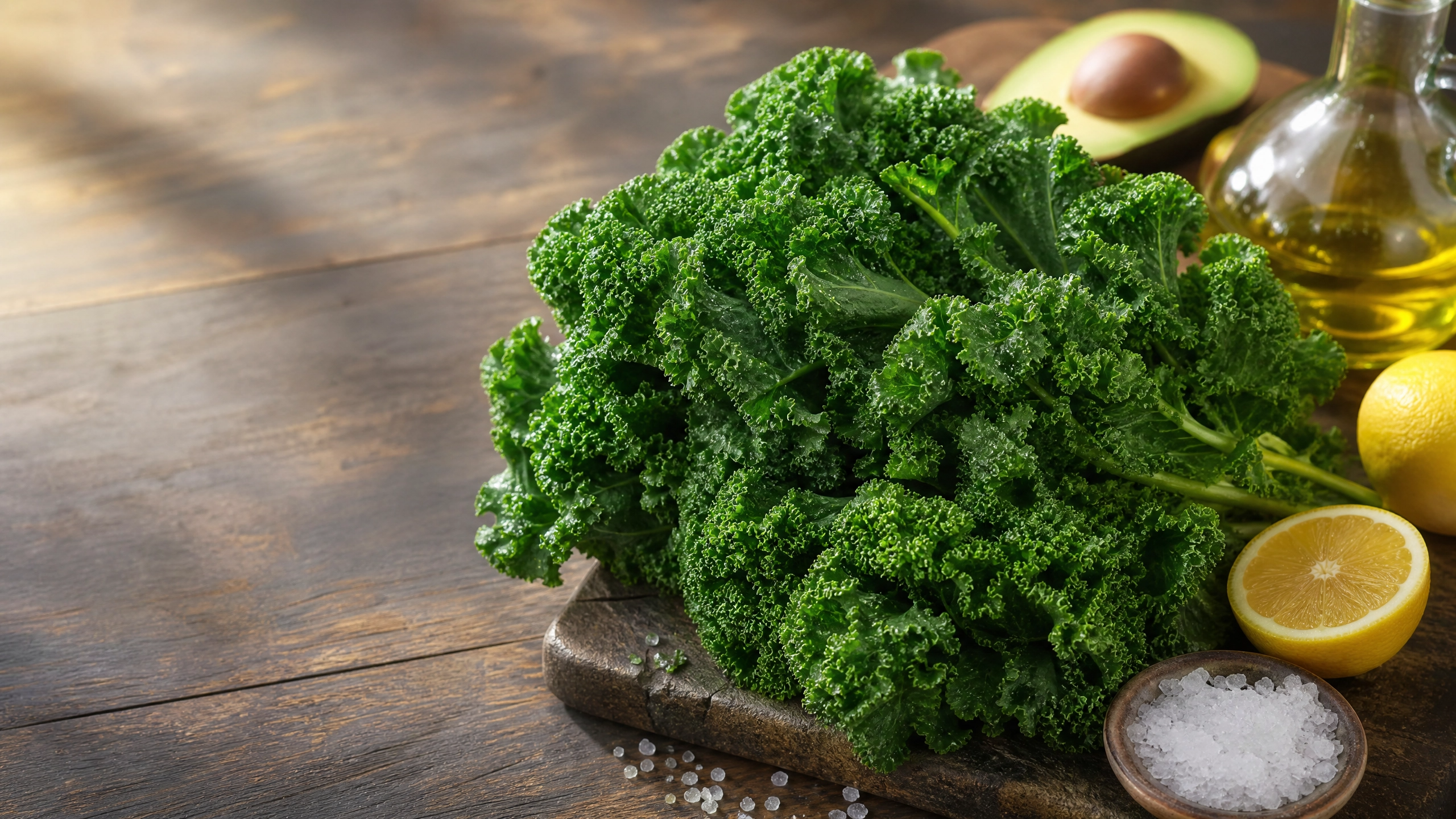
Practical Tip: To maximize mineral absorption, pair kale with a source of healthy fat (olive oil, avocado) and an acidic component (lemon juice). The fat enhances absorption of fat-soluble vitamins K, A, and E, while vitamin C from lemon increases non-heme iron absorption by up to sixfold.
Antioxidant Arsenal: Protecting Cells from Oxidative Stress
Kale’s reputation as an antioxidant powerhouse is built on a diverse array of bioactive compounds. These molecules neutralize free radicals, reduce inflammation, and protect cellular DNA from damage.
The Primary Antioxidants in Kale
1. Quercetin and Kaempferol (Flavonoids)
Kale is one of the richest vegetable sources of these two flavonoids. Quercetin has been shown in in vitro and in vivo studies to reduce markers of inflammation and inhibit histamine release. Kaempferol demonstrates cardioprotective and neuroprotective properties by scavenging reactive oxygen species (ROS).
2. Lutein and Zeaxanthin (Carotenoids)
These two carotenoids concentrate in the macula of the eye, acting as natural blue-light filters and protecting against age-related macular degeneration (AMD). One cup of chopped kale provides approximately 23.7 mg of lutein and zeaxanthin—significantly more than spinach or eggs.
3. Vitamin C (Ascorbic Acid)
Kale provides 93–120 mg of vitamin C per 100g, approximately 150% of the RDI. Vitamin C is not only an antioxidant itself but also regenerates other antioxidants like vitamin E and glutathione.
4. Sulforaphane (Isothiocyanate)
While more famously associated with broccoli, kale contains glucoraphanin, which converts to sulforaphane upon chopping or chewing. Sulforaphane activates the Nrf2 pathway, upregulating endogenous antioxidant enzymes like glutathione peroxidase and superoxide dismutase.
Total Antioxidant Capacity (ORAC Score)
Kale demonstrates an ORAC (Oxygen Radical Absorbance Capacity) value of approximately 1,770 µmol TE/100g, placing it among the highest of all commonly consumed vegetables. This means regular consumption significantly increases serum antioxidant capacity.
Clinical Insight: A 2015 study published in the Journal of Functional Foods demonstrated that consuming kale daily for two weeks increased HDL cholesterol and reduced LDL oxidation susceptibility in hyperlipidemic subjects.
Everyday Greens: Practical Integration for Sustained Health
The challenge with many nutrient-dense foods is that they remain theoretical—people know they are good but struggle to incorporate them. Kale is uniquely suited for daily consumption due to its versatility, long shelf life, and economical nature.
How to Choose, Store, and Prepare Kale
Selection:
- Look for firm, deep green leaves without yellowing or wilting
- Smaller leaves tend to be more tender and less bitter
- Organic kale is preferable to minimize pesticide exposure (kale frequently appears on the EWG “Dirty Dozen” list)
Storage:
- Wrap in a damp paper towel and place in a perforated bag in the refrigerator
- Will remain fresh for 5–7 days
- Do not wash until ready to use to prevent spoilage
Preparation Techniques:
- Massaging: Tearing kale into bite-sized pieces and massaging with olive oil, lemon juice, and a pinch of salt for 2–3 minutes breaks down fibrous cell walls, making it more digestible and less bitter
- Blanching: Submerging in boiling water for 30 seconds, then plunging into ice water, reduces oxalate content slightly and improves texture
- Cooking: Sautéing or light steaming preserves minerals while increasing bioavailability of certain carotenoids
Five Everyday Ways to Use Kale
- Green smoothies: 1 cup plus banana and berries masks bitterness
- Kale chips: Toss with olive oil and bake at 350°F for 10–12 minutes
- Sautéed side dish: Garlic, olive oil, red pepper flakes, 3–5 minutes
- Salads: Massage with dressing 10 minutes before serving
- Soups and stews: Add chopped kale in the last 5 minutes to preserve nutrients
Potential Side Effects & Precautions
While kale is generally safe for nearly everyone, certain populations should exercise caution due to specific biochemical properties.
1. Thyroid Function (Goitrogens)
Kale contains goitrogens—compounds that can interfere with iodine uptake by the thyroid gland. This is primarily a concern for individuals with pre-existing hypothyroidism or iodine deficiency. Cooking kale significantly reduces goitrogenic activity. For healthy individuals with adequate iodine intake, moderate daily consumption poses no risk.
2. Vitamin K and Blood Thinners
Kale is exceptionally high in Vitamin K1 (phylloquinone), which promotes blood clotting. Individuals on anticoagulant medications like warfarin (Coumadin) must maintain consistent vitamin K intake. They should not suddenly increase or decrease kale consumption without medical monitoring.
3. Oxalate Content and Kidney Stone Risk
While kale is lower in oxalates than spinach, chard, or beet greens, it still contains moderate amounts. Individuals with a history of calcium oxalate kidney stones should consume kale in moderation and ensure adequate hydration.
4. Pesticide Residue
As noted, kale ranks high on the Environmental Working Group’s “Dirty Dozen” list. Washing thoroughly or choosing organic is recommended, especially for daily consumption.
5. Gastrointestinal Effects
Kale is high in insoluble fiber (2–3g per cup). For those unaccustomed to high-fiber diets, sudden large amounts can cause bloating, gas, or abdominal discomfort. Gradual introduction and thorough cooking can mitigate this.
Reference Section
- Weaver, C. M., & Plawecki, K. L. (1994). Dietary calcium: adequacy of a vegetarian diet. American Journal of Clinical Nutrition, 59(5 Suppl), 1238S-1241S.
- Riedl, K., et al. (2009). Variation in glucosinolate and isothiocyanate content in Brassica vegetables. Journal of Agricultural and Food Chemistry, 57(15), 6640-6646.
- Bohn, T., et al. (2015). Carotenoids in green vegetables: bioaccessibility and absorption. Molecular Nutrition & Food Research, 59(5), 873-888.
- Kim, S. Y., et al. (2015). Kale improves lipid profiles and antioxidant status in hyperlipidemic subjects: a randomized controlled trial. Journal of Functional Foods, 18, 280-289.
- US Department of Agriculture, Agricultural Research Service. (2023). FoodData Central: Kale, raw. Accessed October 2023.
- Fahey, J. W., & Kensler, T. W. (2007). The role of sulforaphane in cancer chemoprevention. Cancer Letters, 252(2), 178-193.
- Environmental Working Group. (2023). EWG’s 2023